


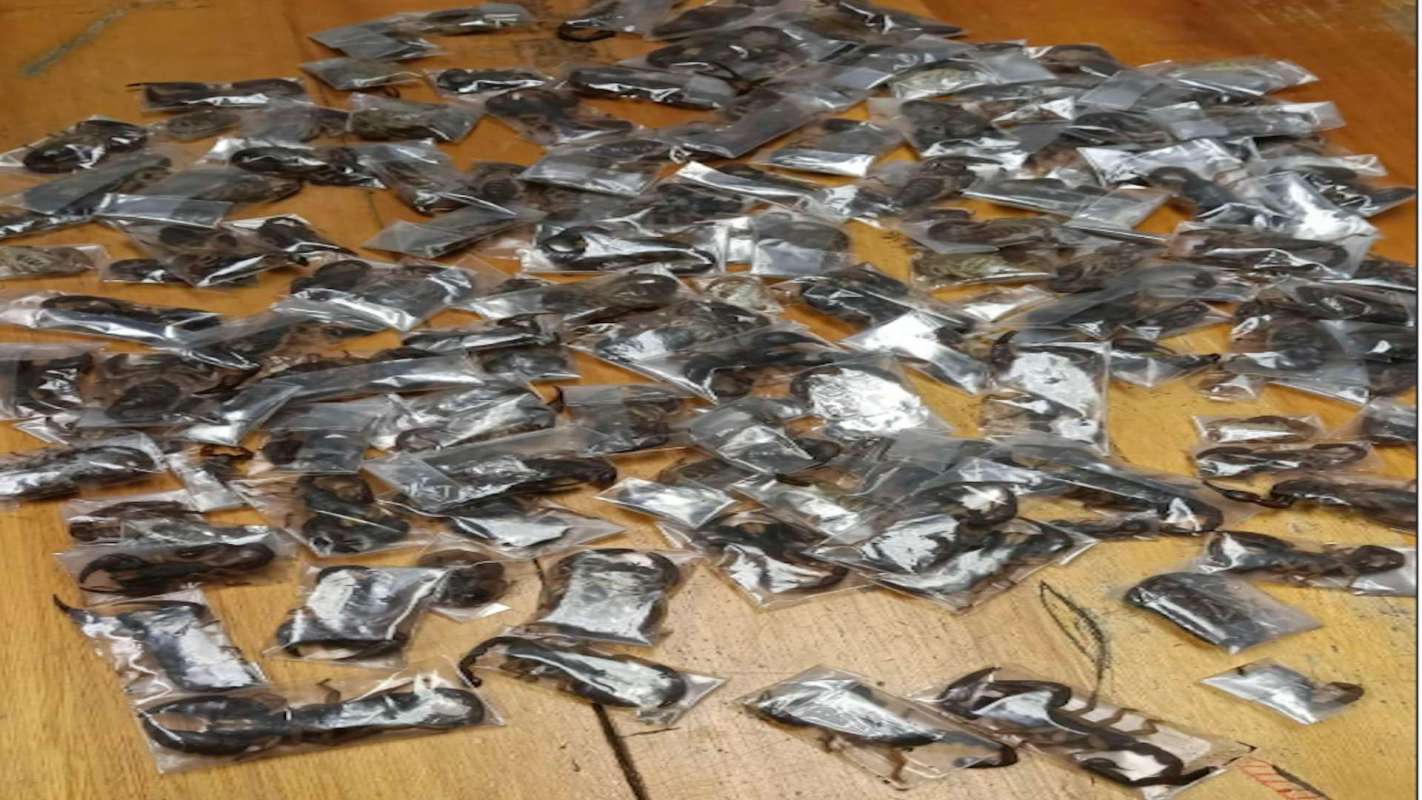
A traveler in South Africa was arrested after authorities found 150 live venomous scorpions hidden in his luggage at Cape Town airport.
Here's what to know
When officers searched the suitcase, they found the scorpions alive and tucked among clothing, police said. The traveler, identified by police only as a 28-year-old man, was later detained at the airport, according to Global News.
Officials added that the man was arrested under South Africa's Nature and Environmental Ordinance Act for possessing a wild animal. Police did not identify him or say where he was headed.
An image released by authorities appeared to show the scorpions individually wrapped in plastic. After the seizure, police said the animals were taken to a sanctuary for safekeeping.
The case reflects a larger global trade in wild animals. Trafficking networks move everything from insects to mammals across borders, often in ways that endanger the animals while also creating risks for the people who handle or encounter them.
More background
According to Global News, citing the BBC, six people were arrested in an alleged $14 million international rhino horn trafficking network.
TCD Picks » Quince Spotlight
💡These best-sellers from Quince deliver affordable, sustainable luxury for all




The environmental damage tied to this trade can be severe. Wildlife trafficking removes species from their natural habitats, weakens biodiversity, and disrupts ecosystems that people rely on for stability, food systems, and economic activity such as tourism.
The problem also stretches far beyond one country. A 2024 report from the United Nations Office on Drugs and Crime, quoted by Global News, found that the "global scope and scale of wildlife crime remain substantial."
According to that report, data from 2015 to 2021 linked seizures to illicit trade across 162 countries and territories involving about 4,000 plant and animal species, including 3,250 species listed under the Convention on International Trade in Endangered Species of Wild Fauna and Flora.
What's being done?
Police said they circulated the suspect's description before locating him and taking him into custody at the airport.
Customs and border agencies have intercepted similar smuggling attempts elsewhere as well. In India, officials stopped a passenger traveling from Thailand who authorities said had dozens of venomous snakes and other small reptiles concealed in checked baggage. In another case, agents intercepted a smuggler carrying five siamang gibbons, an endangered ape species.
The agency has warned that trafficking networks are organized, international, and persistent, and that governments need sustained enforcement, anti-corruption efforts, and stronger protections for vulnerable species.
Wildlife trafficking is often treated as a niche crime, but authorities and conservation experts have warned that its ripple effects are wider.
Where can I learn more?
Wildlife smuggling often leads to dangerous encounters, sometimes involving venomous animals, and it can put border officers, rescuers, and everyday people at risk.
In South Africa, rescuers removed a venomous cobra from a woman's room before relocating it safely, and wildlife crime fighters elsewhere have exposed a shark fin trafficking network tied to a wider illegal trade.
Wildlife crime has consequences well beyond the animals being trafficked. It can create immediate danger for anyone who comes into contact with these displaced or illegally transported species.
As a United Nations Office on Drugs and Crime report put it, "The criminal industry involved in wildlife trafficking runs organized multibillion-dollar operations worldwide, and their criminal enterprises by themselves will not stop without serious and sustained intervention."

Get TCD's free newsletters for easy tips, smart advice, and a chance to earn $5,000 toward home upgrades. To see more stories like this one, change your Google preferences here.






