


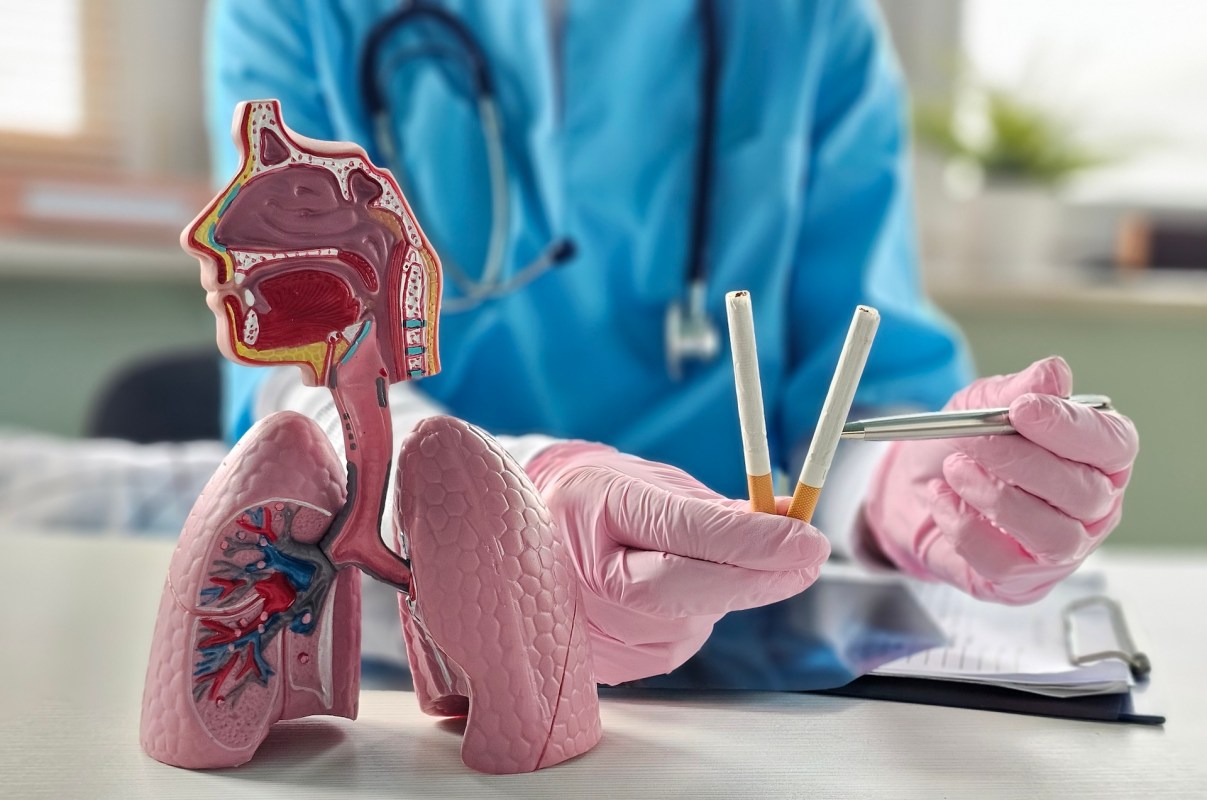
The way lung cancer responds to therapy may depend partly on environmental exposures.
In a new study, published in Cell Death Discovery, a mix of metals associated with smoking and air pollution helped lung cancer cells better withstand chemotherapy.
Here's what to know
At Durham University, researchers in the Biosciences and Chemistry Department teamed up with Pleco Therapeutics in the Netherlands to study small amounts of six metals tied to lung cancer, as they outlined in a news release.
The metals were copper, zinc, manganese, chromium, cadmium, and lead. When they were tested individually, their effects were modest. But when they were combined into a substance known as MiADMSA, lung cancer cells became much more resistant to chemotherapy drugs, the researchers found.
The study is described as the first to show that several metals can cooperate inside tumor cells in a way that drives resistance to treatment.
The researchers also found that the effect could be reversed. When chemotherapy was given with MiADMSA, a compound developed to treat metal poisoning, the cancer cells responded to treatment again.
TCD Picks » Quince Spotlight
💡These best-sellers from Quince deliver affordable, sustainable luxury for all




A similar result showed up in mice, where the paired treatment reduced tumor growth associated with metal exposure.
More background
Tobacco smoke and some forms of air pollution can expose people to toxic metals, and this research suggests that such exposure may continue to affect health even after a cancer diagnosis.
If future research confirms the findings in people, doctors may one day consider whether a patient's exposure to certain pollutants will shape how their cancer responds to chemotherapy.
Cutting exposure to harmful pollutants has long been seen as a way to lower disease risk. This study suggests it could also affect treatment outcomes, broadening the stakes for cleaner air and reduced tobacco exposure.
Scientists are learning more about why some tumors stop responding to drugs, and environmental exposure may be part of the answer.
What's being done?
For now, the next steps are still in the lab. The release noted the team plans to study how these metals help tumors survive chemotherapy and whether the same strategy might apply in other cancers where metal buildup has also been reported.
MiADMSA remains one of the most promising leads. Because it can enter cells and remove several metals at once, it could be paired with chemotherapy in a combination treatment to restore drug sensitivity.
That does not mean the approach is ready for routine care. More research is needed to confirm safety, effectiveness, and which patients might benefit most. Rather than replacing chemotherapy, the findings point to possible ways of helping it work better.
The study adds to the case for reducing exposure to harmful metals in daily life through anti-smoking efforts and cleaner-air policies. Those interventions will not solve cancer treatment challenges on their own, but they remain important tools for protecting health before and after illness.
Cancer treatment may be influenced by environmental factors in ways scientists are only beginning to understand. If those patterns hold up in future research, they could shape more effective care for patients with lung cancer.
Where can I learn more?
These articles add context on the environmental side of the story. They look at how smoke and dirty air can affect the body right away and over the long haul, revealing just how pollution exposure may shape both disease risk and what happens after a diagnosis.
• Indoor biomass smoke can have serious health consequences long after exposure becomes routine.
• In New Delhi, air quality much worse than official data shows raises lifelong health risks.
• Even short bursts of air pollution can disrupt attention and clear thinking.
• For older adults, reducing air pollution can lower dementia risk alongside greener neighborhoods.
Seen alongside the lung cancer research, they put the findings in a public health frame. As evidence builds on pollution's effects across the body, cleaner air looks increasingly important for health both before and after the onset of disease.

Get TCD's free newsletters for easy tips, smart advice, and a chance to earn $5,000 toward home upgrades. To see more stories like this one, change your Google preferences here.






