


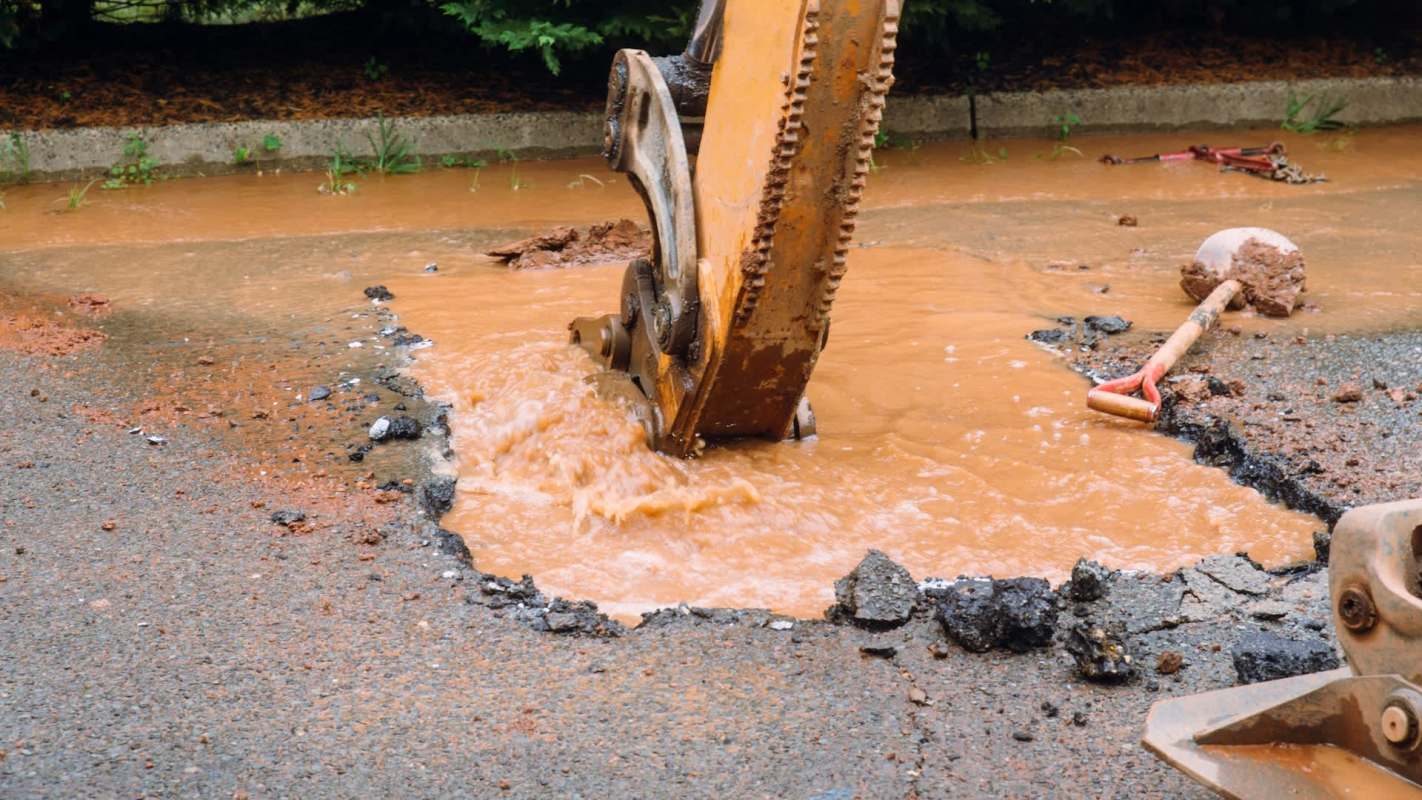
Some sewer pipes beneath Lowell, Massachusetts, have been in operation for 150 years. The city is moving forward with a $300 million infrastructure program to reduce sewage backups into homes, curb street flooding, and protect local rivers.
Here's what to know
In the Lower Highlands neighborhood, test-pit investigations are underway to prepare for new drainage pipelines, according to The Lowell Sun.
Aqua Line Utility will provide planners with information for construction by digging trenches to assess underground materials and identify existing utilities, according to the city.
At least half of Lowell's combined sewer pipes are more than a century old. Those combined lines account for 60% of the city's sewer pipes, making replacement a substantial undertaking.
Test-pit locations include School Street's intersections with Sawtelle Place, Spring Avenue, and Middlesex Street; Queen Street's intersections with Middlesex and Branch streets; and the intersection of Westford and Fernald streets. The Lower Highlands investigations are expected to continue through mid-November.
Preparatory work for Centralville's Apple Orchard housing project and the Highlands' new Rourke Bridge project also included test-pit investigations.
TCD Picks » Quince Spotlight
💡These best-sellers from Quince deliver affordable, sustainable luxury for all




More background
Intense, prolonged rain can overwhelm Lowell's combined sewers with runoff from roofs and streets. Those pipes also carry household wastewater from kitchens, toilets, washing machines, and sinks to the Lowell Regional Wastewater Utility, known as Duck Island.
The Lowell Sun reported that the resulting mixture can reach the Merrimack River, Concord River, and Beaver Brook through nine outfalls permitted by the Environmental Protection Agency. It can also back up into homes and streets.
The annual volume of sewage and stormwater discharged through those outlets is about 430 million gallons. That mixture poses a public health hazard.
Some 700,000 residents of Lowell and nearby communities get their drinking water from the 117-mile Merrimack River.
What's being done?
Lowell plans to improve capacity at Duck Island and build an overflow tank where Douglas and Windward roads meet in Belvidere. The program also includes a $200 million sewer-separation project in Centralville.
The Acre, Back Central, and South Lowell neighborhoods are also slated for sewer-separation work while the Centralville project is underway.
Lowell has never undertaken a larger or more expensive civil engineering effort in its modern history, according to The Lowell Sun. The projects have staggered completion dates extending through 2032.
Federal and state grants, together with municipal bonds, are funding the city's roughly $300 million program.
The separated system will send sewage to the treatment plant and route rainwater directly into local waterways.
"The project includes upgrades to aging sewer infrastructure that has been in operation for over a century and the upgrade and replacement of critical local water distribution systems," the city announced in a statement. "Together, these upgrades will help strengthen long-term resilience across the neighborhood."
Where can I learn more?
Other communities are grappling with sewage problems and the cost of replacing aging pipes.
• In Massachusetts, a couple trying to reopen a store uncovered a townwide sewage crisis.
• In Ohio, Medina County residents face water and sewer rate hikes as infrastructure costs mount.
• Florida's St. Pete Beach approved $1.5 million in sewer upgrades after hurricane-related warnings against flushing.
• Ben Bolt, Texas, received $31 million for sewer expansion, with schools first for hookups.
• Zavalla, Texas, secured $5.3 million to replace 60-year-old pipes after losing 30% of its water.

Get TCD's free newsletters for easy tips, smart advice, and a chance to earn $5,000 toward home upgrades. To see more stories like this one, change your Google preferences here.
Cool Picks






