


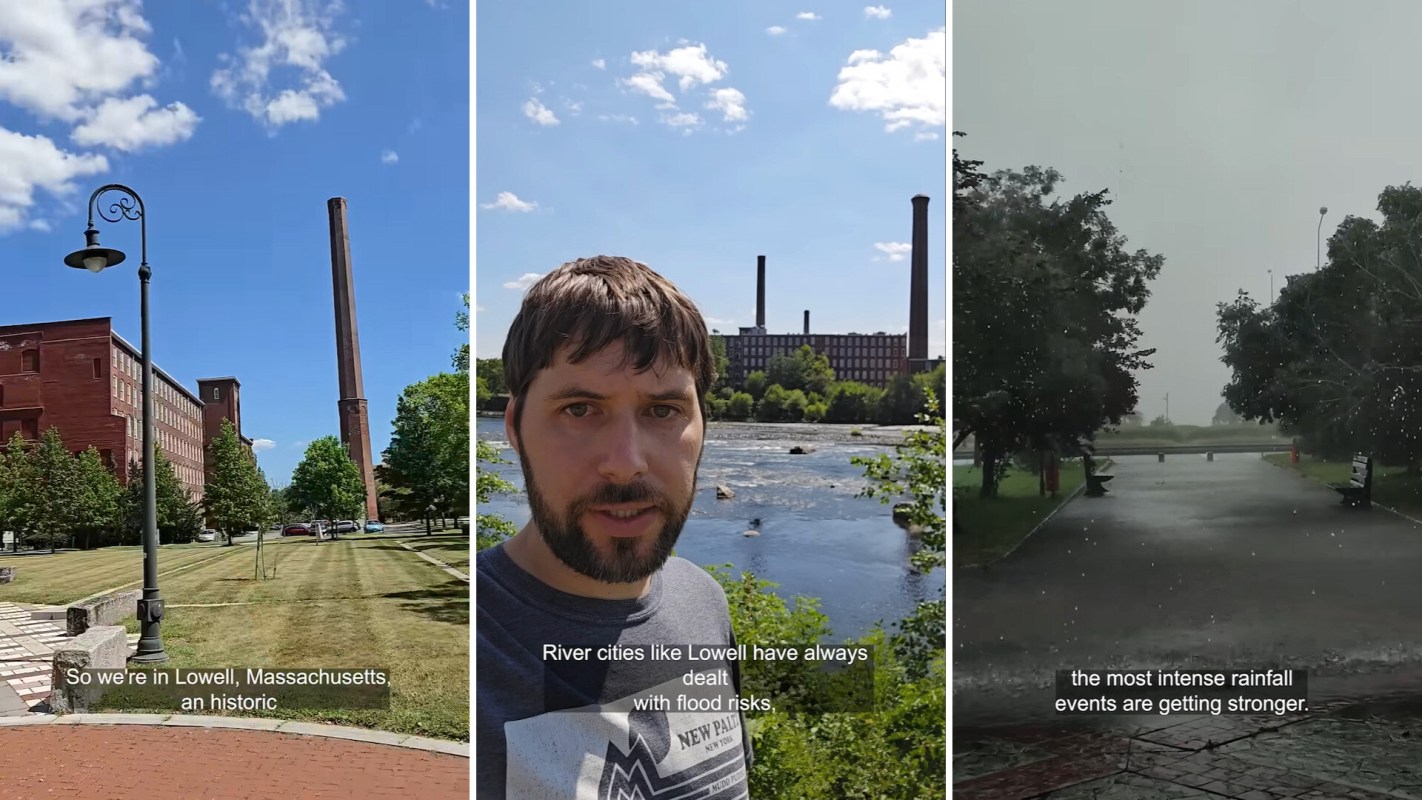
Flood threats are usually discussed in coastal terms, but a Massachusetts climate scientist says inland communities need to watch the risk as well.
Lowell, a historic mill city along the Merrimack and Concord rivers, faces a growing chance of flooding as the warmer atmosphere drives heavier rain, putting homes and buildings at risk.
Here's what to know
In a YouTube video by Ask MIT Climate (@AskMITClimate), Mathew Barlow — a UMass Lowell climate science professor — said planetary warming is making the heaviest storms stronger, increasing the vulnerability of river cities that already deal with flooding.
To explain why, Barlow compared the atmosphere to a sponge, saying, "The warmer the atmosphere gets, the bigger the sponge is."
Lowell's development has long depended on nearby water. Barlow said the rivers made the area valuable for transportation and water power and that dams and canals were built to direct that water through the city.
That history put neighborhoods and infrastructure dangerously close to high water.
TCD Picks » Quince Spotlight
💡These best-sellers from Quince deliver affordable, sustainable luxury for all




As an illustration, Barlow recalled the 2006 Mother's Day flood. He said some sections of the riverwalk, despite being about 15 feet above the river in places, were submerged, and multiple mill buildings took on water.
More background
River flooding may receive less coverage than sea level rise, even though it can be just as disruptive to daily life.
When a storm drops a large amount of rain in a short period, rivers can surge and threaten surrounding communities.
Barlow said a major flood can make the Merrimack River rise by 20 to 30 feet.
What can be done?
According to Barlow, cities can reduce flood risk by reshaping urban areas so they can absorb more water.
He pointed to grass, rain gardens, and trees — green features that can reduce runoff during major storms.
"People will be happier, air quality will be better, and it will be cooler in addition to really reducing the amount of flooding," Barlow said.
Where can I learn more?
This is part of a global picture. The stories below look at how warming can strengthen storms and create sharp swings between flood and drought.
• Globally, rivers may ricochet from floods to droughts more often as warming accelerates.
• In 2025, a disrupted jet stream drove intense flooding across regions and raised rain fears.
• In Miami, chronic high water pushed officials toward a flood emergency declaration.

Get TCD's free newsletters for easy tips, smart advice, and a chance to earn $5,000 toward home upgrades. To see more stories like this one, change your Google preferences here.






