


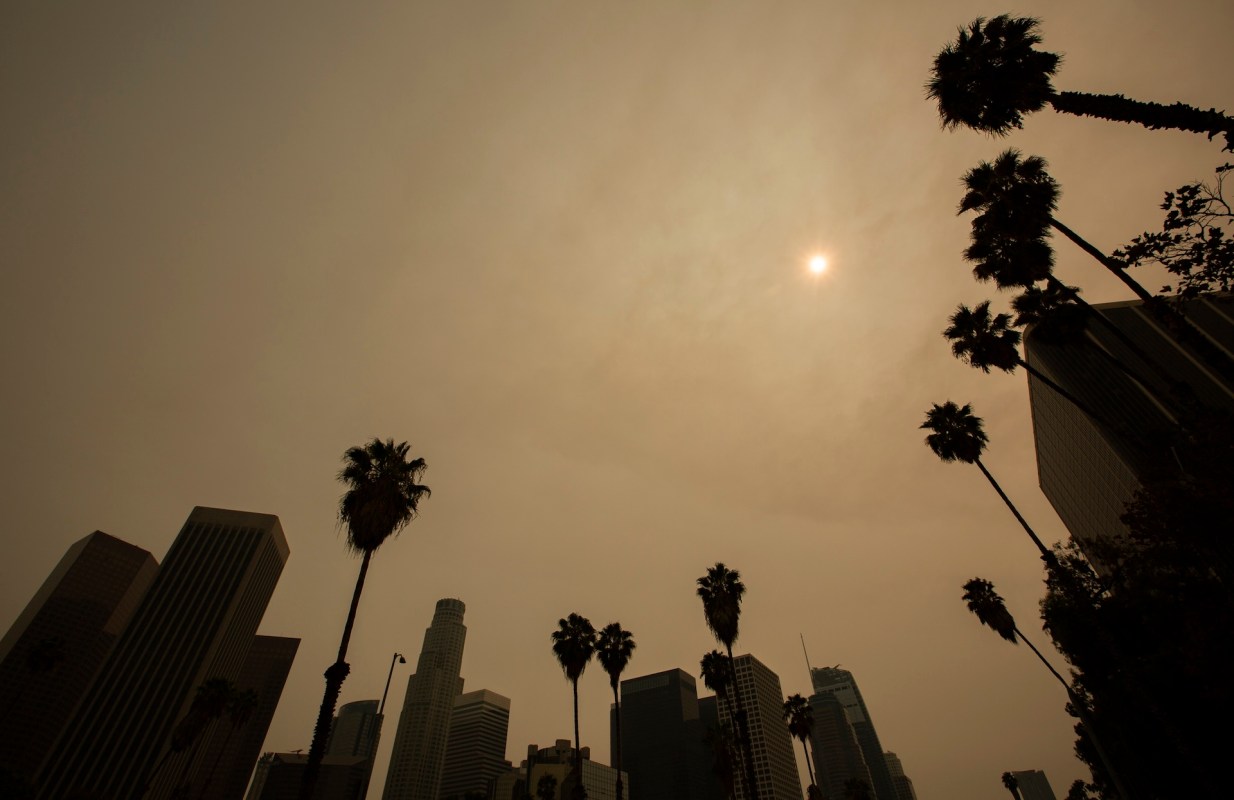
Smoke from the 2025 Los Angeles-area fires carried lead levels far above those measured in a wildfire fueled mostly by vegetation.
The record-breaking urban blazes are believed to have exposed millions to toxic metals and chemicals.
Here's what to know
A new study published in Science Advances examined pollution from the Eaton Fire, which swept through Altadena, California, in early 2025, killing 18 people and destroying over 9,000 structures.
The study co-authors compared Eaton Fire pollution measurements to measurements from a 2024 wildland fire near Riverside and found that both caused comparable rises in PM2.5, or fine particulate matter pollution. But smoke from the Eaton Fire caused lead levels to soar to more than 50 times higher than lead levels linked to the wildland fire.
Alongside its much higher lead content, the Eaton Fire's smoke was found to have contained chlorine and bromine levels sevenfold higher and arsenic levels threefold higher compared to wildland fire levels.
The Debrief, reporting on the study findings, noted that lead paint and bromine-containing flame retardants were widely used when many of Altadena's older homes were built.
TCD Picks » Quince Spotlight
💡These best-sellers from Quince deliver affordable, sustainable luxury for all




Rather than a wildfire burning mainly vegetation, the urban Eaton Fire drew its fuel from building materials, furnishings, vehicles, electronics, and plastics.
More background
Researchers estimated that during what they called "peak structural burning," about 7 million residents in the Los Angeles area encountered "24-hour lead concentrations exceeding 50 nanograms per cubic meter," or roughly 80 times the concentration on a typical day.
Lead is a neurotoxin that poses particular risks to young children, especially those who might lick or consume contaminated surfaces or soils. In adults, exposure may cause high blood pressure as well as brain, kidney, and reproductive health issues. Arsenic exposure has also been linked to adverse pregnancy outcomes, cardiovascular disease, diabetes, and cancer risks.
The Eaton Fire study did not assess how much lead individuals may have absorbed or any health impacts residents may have experienced after the fire. But while the potential effects of temporary exposures to such concentrations are not yet fully understood, the findings point to the need for more research into urban fire fallout.
Fires blazing at the border between forests and cities are increasing, according to the Washington Post, due to climate factors and development.
What's being done?
To identify the chemicals in the Eaton Fire smoke, researchers relied on continuous monitoring by the Atmospheric Science and Chemistry Measurement Network, or ASCENT.
Conventional monitoring networks often rely on laboratory analysis that can take weeks or months, according to The Debrief. That delay can leave officials without crucial information about toxic smoke components while a fire is still burning.
Tracking these elements could help officials identify especially hazardous emissions while fires are burning, the researchers argued, potentially informing evacuation plans and long-term response efforts.
Where can I learn more?
These stories address Los Angeles-area fire and recovery, as well as widespread wildfire smoke pollution:
• A California group sued the EPA over withheld air quality records concerning Los Angeles residents' exposure.
• In Los Angeles, homes that look intact can still harbor contamination after the 2025 fires.
• Across the U.S., wildfire smoke exposed 120 million people to hazardous air after record heat.

Get TCD's free newsletters for easy tips, smart advice, and a chance to earn $5,000 toward home upgrades. To see more stories like this one, change your Google preferences here.






