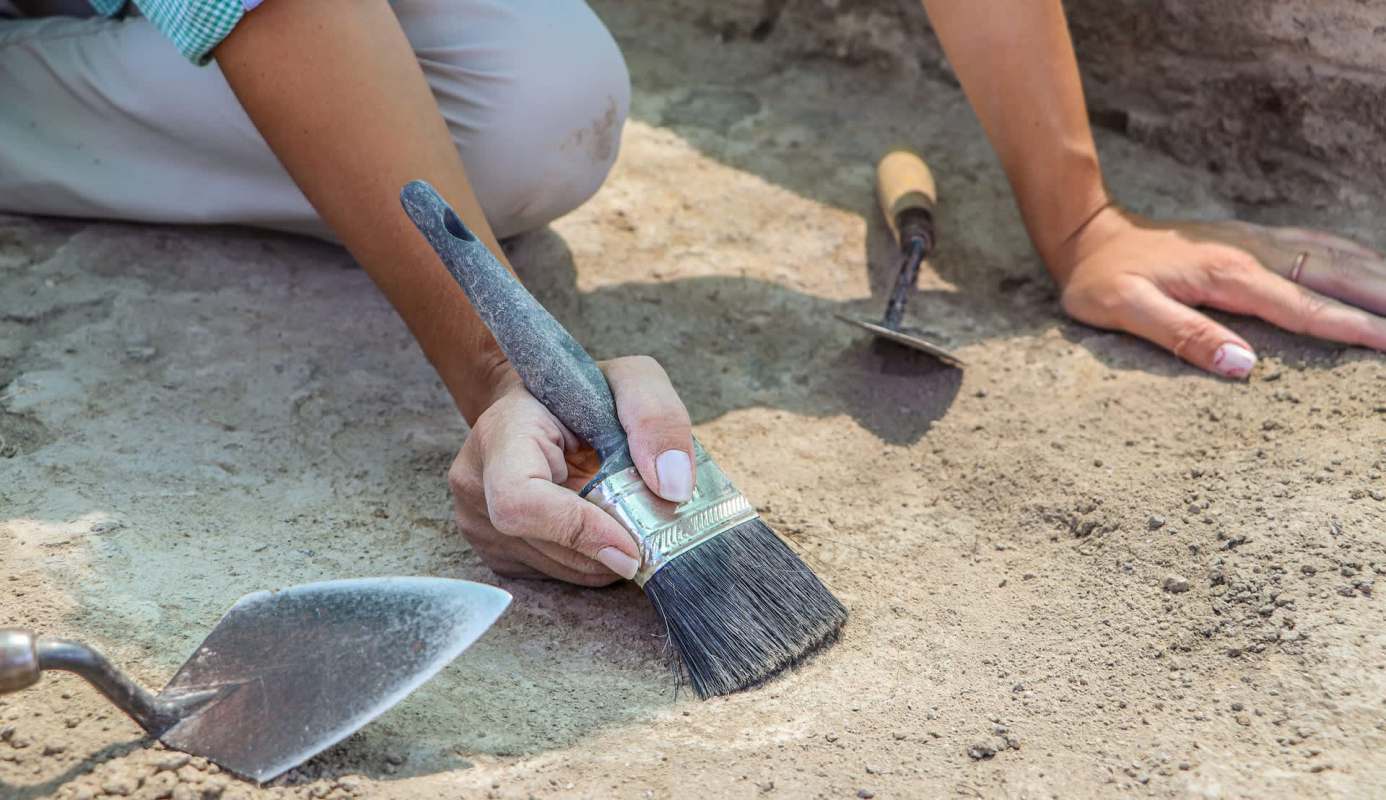
Archaeologists in northwest China have identified two ancient Liubo game boards carved into ordinary bricks inside nearly 2,000-year-old Han Dynasty tombs.
The rare find is offering new clues about one of ancient China's best-known games and what daily life may have looked like during the Han era, as Greek Reporter detailed.
What happened?
This month, the Shaanxi Provincial Institute of Archaeology announced that two Liubo boards had been identified from a 2022 excavation on Shaanxi Normal University's Chang'an campus in Xi'an, where new student dormitories were planned.
Archaeologists in China have uncovered two rare Liubo game boards carved into ordinary bricks inside nearly 2,000-year-old Han Dynasty tombs in Xi'an.
— Tom Marvolo Riddle (@tom_riddle2025) July 16, 2026
The discovery offers new insight into one of ancient China's most popular board games and shows recreation and daily life. pic.twitter.com/eXPh7AX87j
The broader dig uncovered 25 tombs and two ash pits, including 10 Han Dynasty burials in notably good condition and largely untouched by looting or later disturbance, Greek Reporter said. Those graves span the period from the late Western Han Dynasty to the late Eastern Han Dynasty, or roughly the first century BCE to the second century CE.
Of the roughly 130 artifact groups recovered, two drew particular attention. They were the Liubo boards incised onto square bricks from tombs M4 and M17. Rather than being made of lacquered wood or stone, one board was cut into a plain brick, while the other was carved onto a reused brick bearing a geometric fret pattern, Greek Reporter noted.
Why does it matter?
Even though its exact rules are no longer known, Liubo was once among the most popular games in ancient China. Archaeologists think it was played by two people with six pieces per side, combining strategy and luck, with sticks or dice likely used for scoring.
TCD Picks » Quince Spotlight
💡These best-sellers from Quince deliver affordable, sustainable luxury for all




A game board carved into a building brick suggests recreation was not confined to elite craftsmanship, but could also take shape through simpler, more practical expressions of daily life and identity.
Burial goods are often interpreted as signs of status or ritual, but game equipment points to something more personal. It shows how people spent their time, how they socialized, and what they may have wanted beside them in the afterlife.
What's being done?
Researchers are now using the cemetery to trace how burial customs changed over roughly 200 years, Greek Reporter said. Differences in tomb architecture, coins, pottery, and grave goods are helping them chart shifts across the Han period, from simple earthen chamber burials to more elaborate brick-built tombs.
One of those tombs, identified as M18, may also show how graves were reused and expanded over time. Archaeologists found two wooden coffins there and believe the chamber was enlarged for a later second burial, offering a rare glimpse into how families may have adapted burial spaces.
As Greek Reporter described, the salvage excavation preserved details about ancient games, household symbolism, and local burial practices that otherwise could have been lost.

Get TCD's free newsletters for easy tips, smart advice, and a chance to earn $5,000 toward home upgrades. To see more stories like this one, change your Google preferences here.