


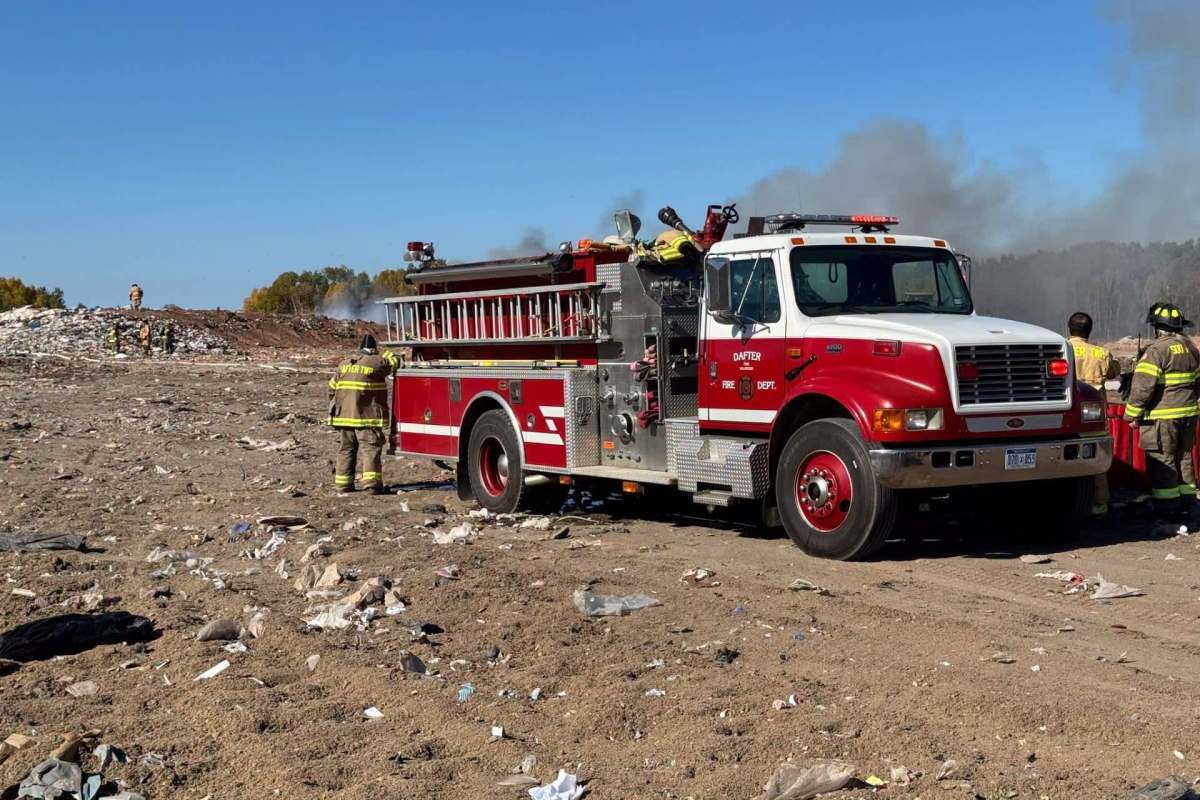
Improperly discarded lithium-ion batteries sparked a 1.5-acre landfill fire in Michigan on Oct. 11, and it took tanker trucks, heavy equipment, and firefighters from three departments to contain it.
The fire at GFL Landfill in Dafter Township shows how batteries tucked inside ordinary consumer products can become a serious threat once they enter the waste stream.
Here's what to know
According to My UP Now, crews from the Dafter Township Fire Department arrived at the GFL landfill on W. 12 Mile Road after heavy smoke was reported around 1:42 p.m. They did not clear the scene until roughly 5:40 p.m.
A total of 10 firefighters worked at the site.
Tanker trucks from the Kinross Township Fire Department and Soo Township Fire Department provided water supply, while GFL employees used heavy equipment to help firefighters reach the burning area and put it out. Bay Mills EMS remained in case emergency medical support was needed.
Devices such as smartphones, laptops, power tools, and e-bikes rely on lithium-ion batteries, and the Dafter Township Fire Department said fires involving them take substantial resources and are hard to put out.
TCD Picks » Quince Spotlight
💡These best-sellers from Quince deliver affordable, sustainable luxury for all




Even after those products stop working, the batteries inside them can still catch fire if they wind up in the trash and are crushed or otherwise damaged.
More background
The department also said damaged lithium-ion batteries can ignite in garbage trucks during pickup, endangering workers and equipment before the trash ever arrives at a landfill or other processing site.
As more consumer products rely on rechargeable batteries, a single discarded battery can trigger a response involving multiple departments, heavy equipment, and hours of labor.
The problem also extends to the vaping industry. Disposable vapes combine the negative health effects associated with nicotine use — particularly for young people — with a growing waste issue involving single-use plastics, toxic e-waste, and small lithium batteries. When tossed into household trash or recycling bins, they can contribute to the same battery-fire risk seen at the Michigan landfill.
Battery disposal sits at the intersection of public health, consumer waste, and worker safety, especially as more products are designed to be quickly replaced instead of repaired or properly recycled.
What can be done?
My UP Now reported that Dafter Township fire officials told residents not to put lithium-ion batteries in household trash or recycling bins.
The warning applies to used or damaged batteries from items like phones, laptops, power tools, and e-bikes.
Instead, residents should take them to battery recyclers or household hazardous waste collection sites. Many retailers also offer free battery recycling, giving people an alternative to tossing batteries in the trash.
Where can I learn more?
These stories look at how battery-powered products, especially disposable vapes, can spark the same kind of fires when they end up in the trash. They cover landfill and garbage-truck fires tied to discarded batteries, along with recycling options meant to keep those products out of household bins.
• Across the U.S., discarded vapes in trash cause fires in landfills when hidden batteries rupture.
• In the U.K., waste companies seek a £5 vape deposit as garbage truck fires grow.
• Across Britain, millions of banned vapes are tossed weekly as battery fires rise.
• Call2Recycle offers free battery drop-off options that keep damaged cells out of curbside bins.
• Disposable vape cartridges contain small lithium batteries inside that can still ignite in trash.

Get TCD's free newsletters for easy tips, smart advice, and a chance to earn $5,000 toward home upgrades. To see more stories like this one, change your Google preferences here.






