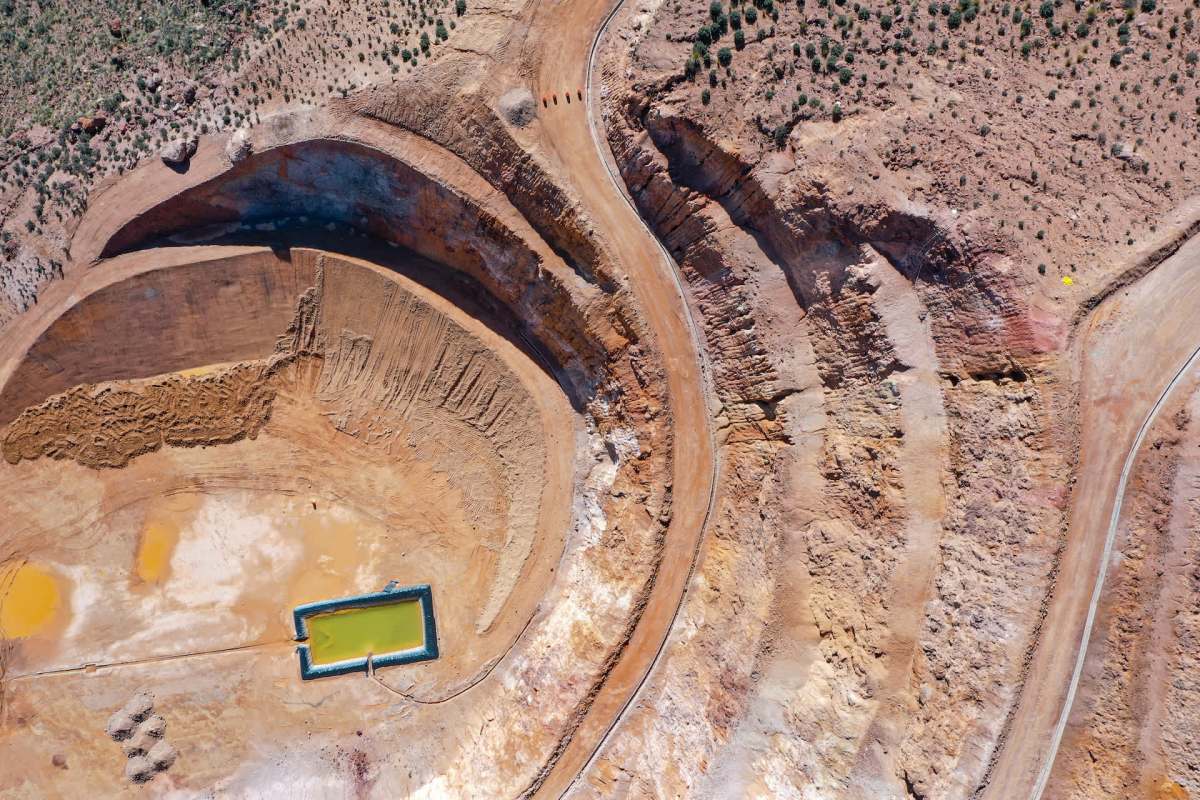
Researchers from the Department of Energy's Argonne National Laboratory and the University of Chicago have developed an advanced membrane technology that efficiently extracts lithium from water.
This innovation could reduce the cost of electric cars as the metal becomes more abundant.
A press release from the laboratory explained that the tech could help meet soaring demand and possible supply chain issues. Lithium is extracted via hard-rock mining and salt lakes in only a few countries, putting supply chains at increasing risk.
While most of the world's lithium reserves are underwater, getting to them is a time-consuming and expensive endeavor.
The researchers stated that the new membrane is made from vermiculite, a naturally abundant clay that costs around $350 per ton.
The team developed a method to separate the layers and reassemble them to form a type of filter that eliminates other elements in water. The membrane selectively captures lithium ions while removing magnesium, sodium, and potassium.
TCD Picks » Quince Spotlight
💡These best-sellers from Quince deliver affordable, sustainable luxury for all




"Filtering by both ion size and charge, our membrane can pull lithium out of water with much greater efficiency," said first author Yining Liu, a Ph.D. candidate at UChicago and a member of the Advanced Materials for Energy-Water Systems team.
"Such a membrane could reduce our dependence on foreign suppliers and open the door to new lithium reserves in places we never considered."
The findings were published in the journal Advanced Materials.
Researchers noted that the innovation could be applied in other ways, including recovering valuable materials such as cobalt, nickel, and rare earth elements, while also filtering out toxic pollutants in water supplies.
|
Should the government be allowed to control how restaurants run their business? Click your choice to see results and speak your mind. |
 Never 👎
 In addition to electric vehicle batteries, lithium can be used in laptops, cellphones, and many other technologies that are becoming an increasingly large part of daily life.
The invention could also revolutionize poorer countries' access to clean drinking water. According to World Vision, around 2.2 billion people globally lack access to safe drinking water, and more than 1,000 children under 5 years old die each day because of waterborne illnesses.
The membrane technology could finally give these populations a healthier, safer future in which they don't have to walk miles every day to find water.
Scientists have developed other membrane technologies that could filter factory waste, reduce planet-warming pollution, and contribute to the creation of green hydrogen, which is expected to be a game-changer for the long-haul trucking and shipping industries.

Join our free newsletter for weekly updates on the latest innovations improving our lives and shaping our future, and don't miss this cool list of easy ways to help yourself while helping the planet.