


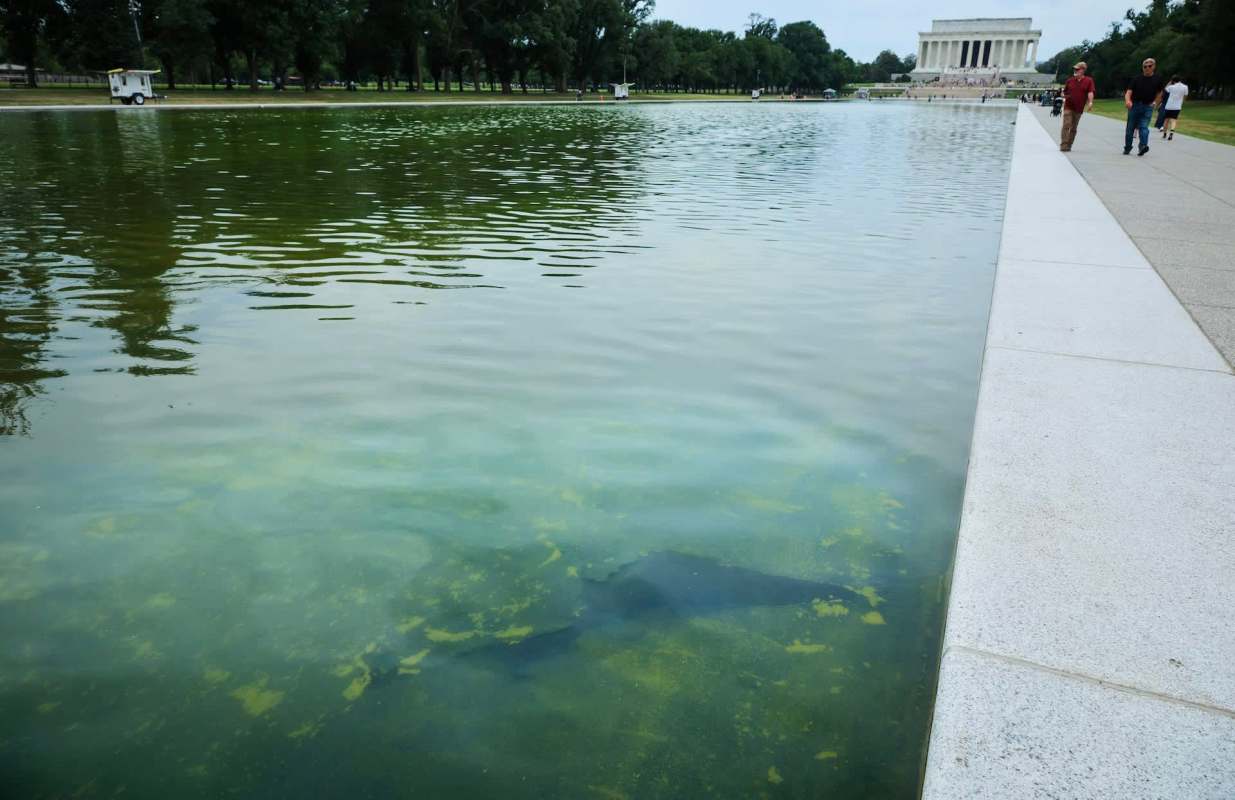
The Lincoln Memorial Reflecting Pool will likely be drained again, according to a social media post by President Donald Trump, after it has continued to turn green from algae and has paint chipping following a costly renovation.
Trump's initial plan was to repaint the pool's neutral gray bottom as "American flag blue," as NPR noted, but the Trump administration said pre-existing algae remnants in the piping system led to a recurrence. Scientists have also said the darker paint color may be raising the temperature of the water by absorbing more heat, which then creates conditions more beneficial for algae growth.
Crews used hydrogen peroxide to get the algae under control, which had some effect, but also appears to have contributed to some of the paint beginning to peel.
As of publish time, a viewing of a live camera feed on Monday confirmed the pool was full and beginning to look less green again. Still, the multimillion-dollar project has not yet produced the sought-after consistent improvement. This has prompted scrutiny of whether the renovation addressed longstanding maintenance issues or simply changed the look of one of the nation's best-known landmarks.
What happened?
The 2,030-foot-long reflecting pool was recently refilled after renovations overseen by Secretary of the Interior Doug Burgum.
Workers changed the pool floor from its original concrete gray to blue during the renovation. The hope was that the renovation would improve the appearance of the pool, but algae began spreading in the shallow water just days after the pool was refilled.
TCD Picks » Quince Spotlight
💡These best-sellers from Quince deliver affordable, sustainable luxury for all




To specialists, the bloom was not unexpected. Steve Goodale, a Canadian pool specialist known online as "Swimming Pool Steve," called the phenomenon "New Pond Syndrome," NPR reported.
"It's a known thing that happens when you take a natural, clear body of water like this that sits in an open air environment and you try to start it up, very often you end up with green water almost immediately," Goodale said.
After examining the water, Rosalina Stancheva Christova, an aquatic ecology professor at George Mason University in Virginia, told NPR the algae was of the Desmodesmus genus, which means it's "growing in excessive amounts" and "not toxic or harmful."
The vacuuming is the final maintenance step after refilling the pool, and it will be complete in a few days. Already, the section of the Reflecting Pool closest to the Lincoln Memorial has been vacuumed up, and the beautiful American Flag Blue coating on the bottom of the pool… pic.twitter.com/A5xJz7jQ4Q
— U.S. Interior Press (@interiorpress47) June 18, 2026
The Interior Department wrote on the social platform X that its nanobubble technology had "very effectively killed the algae." But NPR reported that large sections of the pool remained bright green late last week, and crews worked around it with pumps and vacuums.
Why does it matter?
According to Christova, the pool's mix of shallow, still water and heavy sun exposure creates ongoing "excellent conditions" for algae to grow. Typically, artificial bodies of water can combat algae with water fountains or filtration bubblers that move the water, but for a reflecting pool, this movement would ruin the intended effect.
The nanobubble tech may help to solve that without damaging the reflection, but it's still an uphill battle if algae growth has already obtained a significant foothold.
The work to remediate the issues and add color caused the price tag to increase as well. Trump initially estimated the cost of the renovation would be $2 million, but NPR said the cost has reached at least $14 million, including $1.7 million for the nanobubble technology, according to federal contract records.
If the problems persist, taxpayers could end up paying for repeated cleanups instead of lasting improvements to a heavily used civic space.
What are people saying?
Goodale described the remediation as "a monumental effort, literally" and warned that simply killing algae is "like the equivalent of mowing the lawn" if the underlying nutrient and filtration issues remain unresolved, according to NPR.
Loay Hidmi, a Washington, D.C., resident and civil engineer who specializes in water treatment, told NPR: "I'm hopeful. But we'll have to see if it gets sustained."
Christova also called for closer oversight, saying, "If we don't have any control over algal growth, we don't know what is growing."

Get TCD's free newsletters for easy tips, smart advice, and a chance to earn $5,000 toward home upgrades. To see more stories like this one, change your Google preferences here.






