


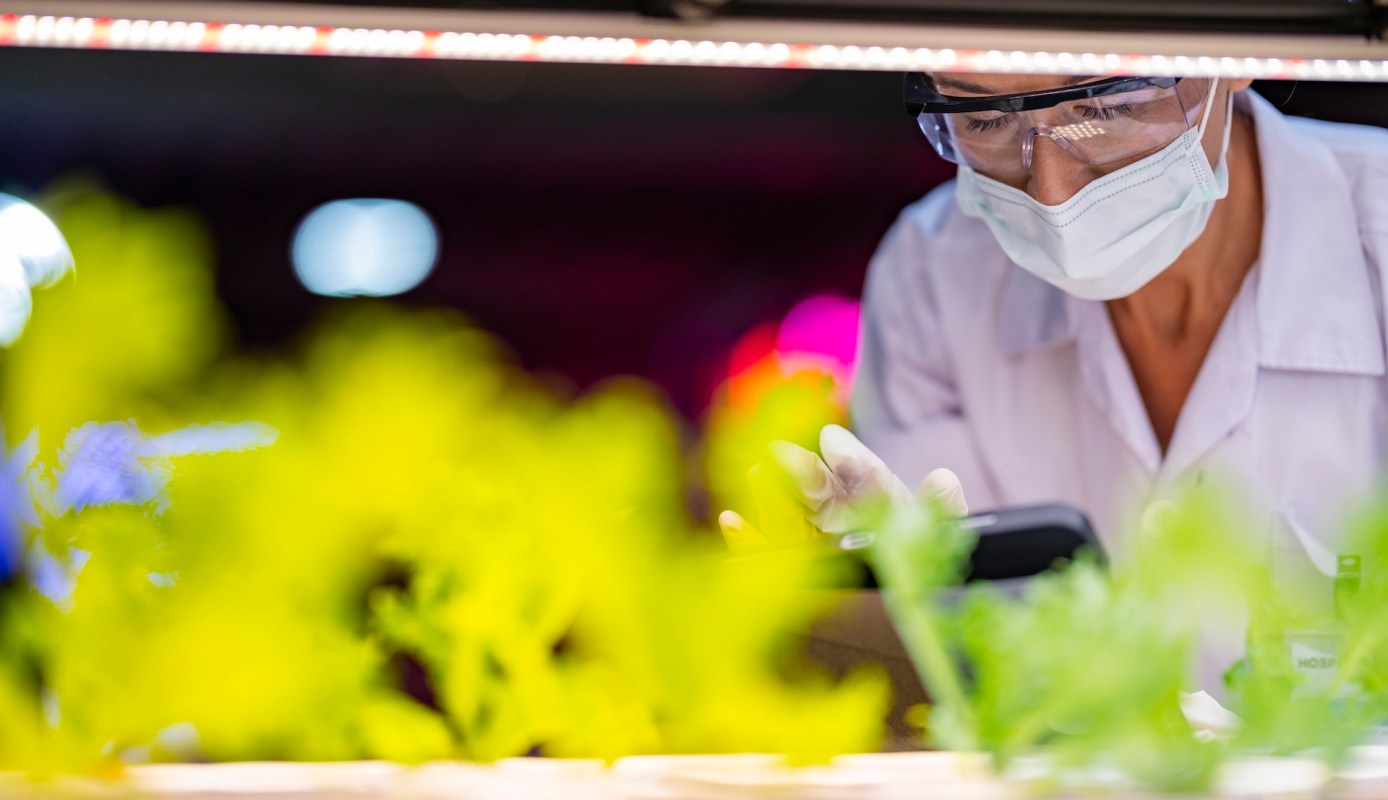
Scientists have engineered lettuce to produce one of meat's signature proteins, giving it the nutrition and taste of a burger without relying on animals.
Here's what to know
As Study Finds reported, researchers at Imperial College London and Kyomei Ltd. permanently engineered lettuce and tobacco plants to produce myoglobin — a protein linked to meat's red color, savory taste, and heme iron that absorbs more readily than the iron in many plant foods.
Their findings were published in the journal Frontiers in Plant Science, and they described stable myoglobin production in plant chloroplasts. In the study, tobacco plants reached 2.7% of total soluble protein, while edible lettuce reached 1.5%.
Rather than placing the new gene in the plant's main DNA, the researchers used chloroplasts, the cell structures involved in converting sunlight into energy. Because each plant cell contains many chloroplasts, that route can increase how much of the target protein is made.
The chloroplast approach outperformed more conventional plant engineering. Among the 37 plants produced with those methods, myoglobin accumulation remained at least threefold below what the chloroplast approach achieved.
More background
Because lettuce is an edible crop, unlike tobacco, it suggests scientists may eventually be able to introduce meat-like characteristics into crops people can eat directly.
TCD Picks » Quince Spotlight
💡These best-sellers from Quince deliver affordable, sustainable luxury for all




If producing the protein inside crops reduces the need to make it in tanks and then isolate and purify it separately, the method could lead to plant-based foods that more closely match meat in color, flavor, and nutrition.
The protein produced in plants did not fully load with heme, the iron-containing component that gives myoglobin much of its value. In the tobacco analysis, only about 35% of purified plant-produced myoglobin had heme attached, compared with 80% in bacteria-produced myoglobin.
What's being done?
The researchers are set on improving heme availability within the plants, testing additional plant lines, and seeing how the protein performs in actual food systems.
Because livestock production consumes significant land and water while creating substantial planet-warming pollution, meat alternatives grown in crops could eventually reduce some environmental strain while expanding consumer options.
Related proteins have already been used by companies such as Impossible Foods to help plant-based burgers resemble meat more closely. This study suggests a more direct production route where growing those kinds of proteins inside plants themselves may be possible in the future.
If later studies improve heme loading and reproduce the findings in more edible crops, this research could help move a new generation of animal-free foods closer to store shelves — and closer to the qualities many consumers want from meat.
Where can I learn more?
Researchers and food companies have been on a mission to make plant-based foods look, taste, and feel more like meat without using animals.
• Scientists have used sunflower flour to create a meat-like appearance and texture in burger patties.
• At T. Hasegawa, developers created a game-changing flavor aimed at stubborn plant-protein off-notes.
• Across the alternative-protein sector, start-ups are adding a surprising ingredient: animal fats.
• Scientists say blue-green algae could offer the ultimate way to make protein with fewer resources.

Get TCD's free newsletters for easy tips, smart advice, and a chance to earn $5,000 toward home upgrades. To see more stories like this one, change your Google preferences here.






