


Lake Mead is one of the country's most closely watched reservoirs, and Las Vegas relies on it heavily — but the city also has added protection built deep below the waterline.
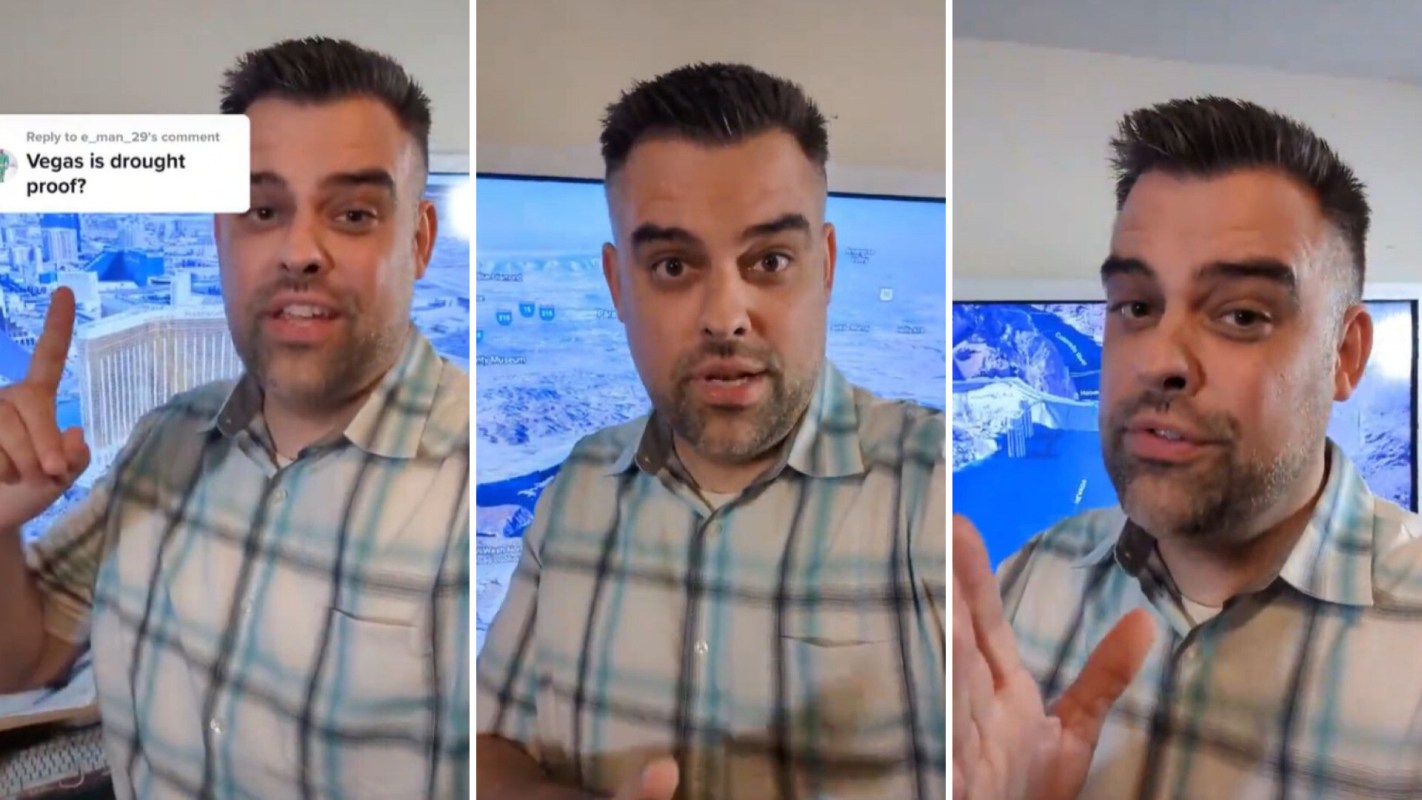
A recent explainer from Armchair Engineer (@armchairengineer) on TikTok breaks down why Las Vegas can continue drawing water even if the reservoir falls below Hoover Dam's "dead pool" level.
What's happening?
The video presents Las Vegas as more prepared for water shortages than many people may assume.
"Las Vegas may be huge and sprawling, but they actually know what they're doing when it comes to conserving water," they said, describing it as potentially "the most water-efficient big city in North America."
@armchairengineer Las Vegas is drought proof? It's all thanks to something called the "Third Straw" #lasvegas #drought #lakemead #hooverdam #thirdstraw #coloradoriver ♬ original sound - Armchair Engineer
Instead of relying on just one route from Lake Mead, Las Vegas built out three intake points over time. The oldest line goes back to the 1950s and has resurfaced only recently as the reservoir has shrunk, while a later expansion added a larger intake at Saddle Island.
Roughly two decades ago, with drought concerns intensifying, officials moved ahead with what became the most important of those additions.
TCD Picks » Quince Spotlight
💡These best-sellers from Quince deliver affordable, sustainable luxury for all




City leaders "spent over a billion dollars building what's been called the Third Straw," a deep tunnel connected to an intake much farther below the lake's surface than the earlier systems.
What makes that project so significant is its elevation. The video says the dead pool sits at 895 feet above sea level, while the Third Straw is at 860 feet, so Las Vegas could still have about 35 feet of water above its intake after the reservoir drops below the level where Hoover Dam can no longer move water in the usual way.
Why does it matter?
Calling something "drought proof" can suggest a level of certainty that the situation does not actually offer.
What Las Vegas has done, instead, is extend how long it can keep accessing Lake Mead compared with what its older infrastructure allowed.
For a desert metro area that depends heavily on the reservoir, that extra margin matters.
As Armchair Engineer noted, "If it drops too far, they won't even be able to run water through Hoover Dam. This is what's called Deadpool."
The Third Straw does not stop drought, but it does help shield the city's water intake from the lake's decline. A deeper intake can buy time, but it does not create new water in the Colorado River system.
What's being done?
The biggest step is the infrastructure Las Vegas already put in place. Rather than waiting for Lake Mead to hit emergency levels, the city added a deeper intake ahead of time and linked it to the existing network.
The video also highlighted conservation as a major part of the strategy.
Having access to lower water levels does not eliminate the need to reduce demand. They portrayed Las Vegas as unusually efficient for a city of its size, suggesting that careful planning and less waste help make the Third Straw a backup, not a free pass.

Get TCD's free newsletters for easy tips, smart advice, and a chance to earn $5,000 toward home upgrades. To see more stories like this one, change your Google preferences here.






