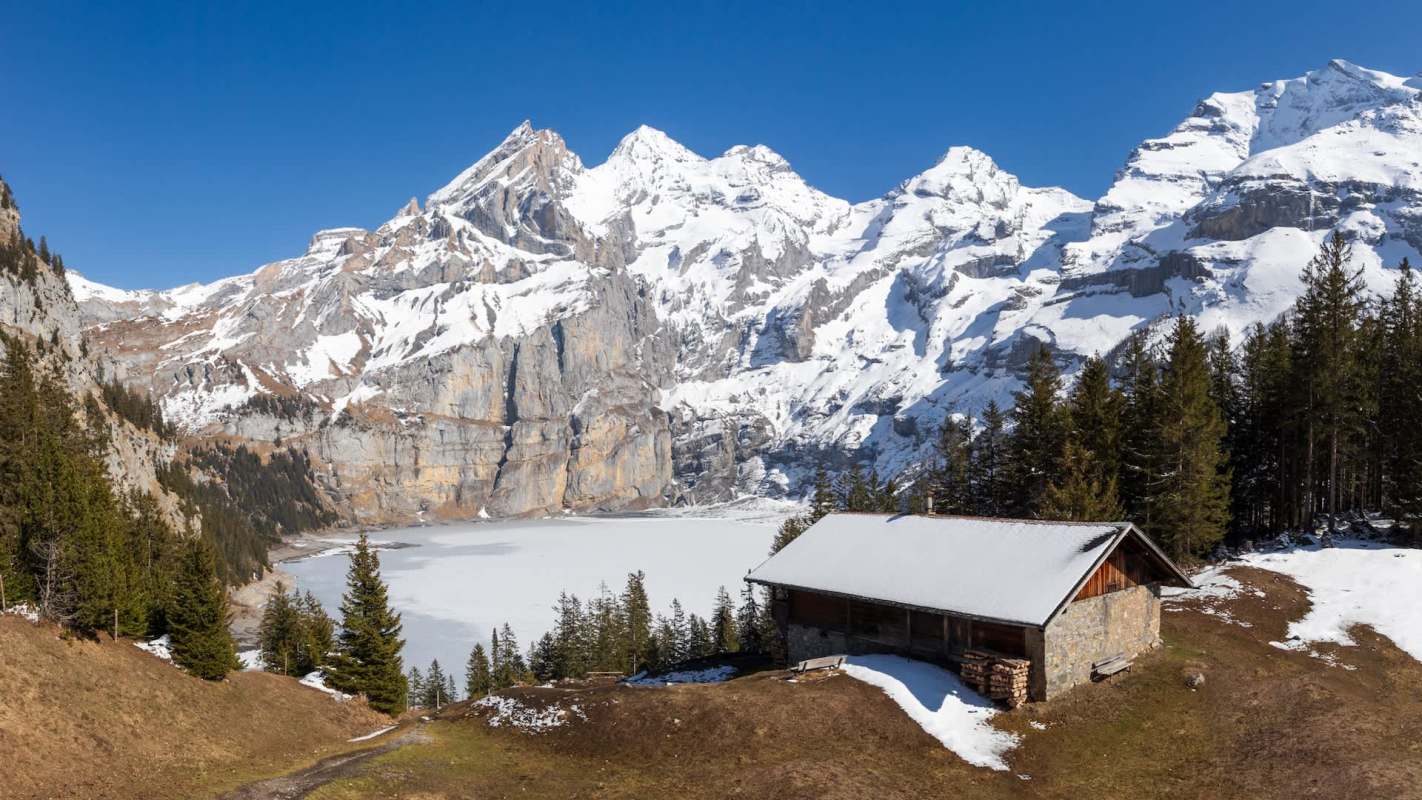
A destabilized mountainside above Kandersteg has raised alarm about a potential major rockslide threatening the Swiss village, despite its idyllic Alpine setting.
Researchers and local authorities are closely monitoring the slope, with the 2025 collapse that overwhelmed much of nearby Blatten serving as a warning of what a failure here could look like.
Here's what to know
Experts estimate that roughly 530 million to 710 million cubic feet of rock — about 15 million to 20 million cubic meters — is unstable at Spitze Stei above Kandersteg, a Bern canton village of about 1,300 people, as Phys.org reported.
Concerns have grown since the disaster in the nearby Loetschental valley in May 2025, when Blatten was evacuated before a massive rock-and-ice release buried nearly the entire village in mud. Scientists tied that event to melting permafrost and glacier-related changes.
University of Geneva professor Markus Stoffel, who studies climate change and natural hazards, said rising temperatures are making these mountain slopes less stable.
"In the mountains and in the unconsolidated debris, there is lots of ice," Stoffel said. "Once this ice is melting, it acts like a cement. These mountain slopes will become increasingly unstable."
TCD Picks » Quince Spotlight
💡These best-sellers from Quince deliver affordable, sustainable luxury for all




Some people in Kandersteg say the safeguards already in place help them live with the danger. Brigitte Jüni, a resident of the village, said, "You are aware that it's happening, but not afraid."
More background
While rising global temperatures are commonly attributed to more severe storms or rising sea levels, they can impact the planet in other lesser-known ways. What is happening above Kandersteg is part of a wider pattern in the Alps, where warmer temperatures are thawing permafrost — the frozen combination of soil, sediment, and rock that helps keep slopes intact.
Worsening climate-related disasters can endanger lives and livelihoods by forcing evacuations, damaging homes and roads, threatening water and energy infrastructure, and creating costly recovery needs.
Public health can also suffer when people are displaced, cut off from services, or exposed to dust, mud, and unstable terrain after a collapse.
Rudolf Isler, another local resident, said many people in Kandersteg do not see their situation as the same as Blatten's, even while recognizing the broader role of warming temperatures.
"This isn't the same case as in Blatten. It's a different situation," Isler said. "We are not afraid of the Spitze Stei rock. It's been many years seeing stones falling from up there. The problem here is about global warming and rising temperatures."
Specialists think a gradual breakup is more likely than one sudden, total collapse, but the enormous size of the unstable rock mass means the risk remains serious.
What's being done?
Spitze Stei is being monitored continuously, and officials already have evacuation plans in place if conditions worsen.
Residents in Blatten had been moved out before the collapse, highlighting how early warnings, hazard maps, and well-defined emergency procedures can save lives even when homes and land remain vulnerable.
Mountain regions may need stronger climate adaptation, including improved permafrost monitoring, more resilient infrastructure, and land-use decisions that reflect evolving hazards.
Nathan Solothurnmann, a Greenpeace Switzerland climate and energy expert, said the consequences could eventually be severe: "Maybe even one day we will have to abandon certain valleys or certain villages because it's becoming impossible to live there."

Get TCD's free newsletters for easy tips, smart advice, and a chance to earn $5,000 toward home upgrades. To see more stories like this one, change your Google preferences here.