


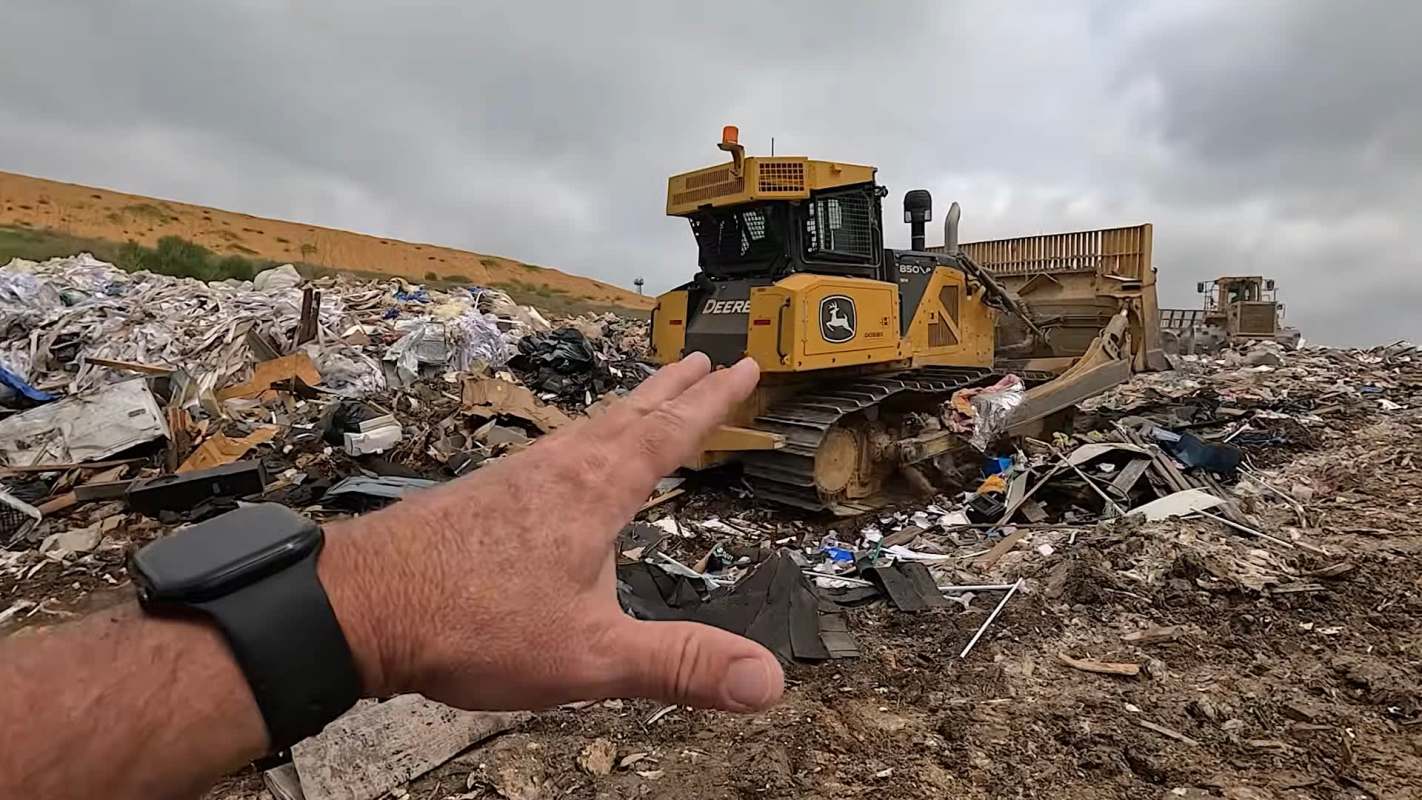
Most people rarely stop to think about where their trash goes once it's picked up, but a recent video offers a first-person look inside a working landfill, revealing the scale of the labor, machinery, and planning required to manage waste long after it leaves the curb.
Here's what to know
A creator behind the @TheRealMrDiGG YouTube channel published a long-form tour of a landfill in South Carolina, documenting day-to-day operations. In Mr. DiGG's video, viewers see a steady stream of waste arriving, along with the processes used to unload, sort, and manage it while preserving as much landfill capacity as possible.
A large landfill compactor is a major focus of the footage. The machine plays a central role on-site by compacting trash into denser layers, allowing the landfill to make better use of its limited space.
In the video description, the creator wrote, "We've got a ton of waste coming through the gates, and this landfill is filling up fast." The line emphasizes how quickly material is piling up and why each incoming load has to be handled carefully.
More background
Most people experience trash through pickup schedules, recycling reminders, or broad national waste statistics, but they rarely see the physical reality of disposal infrastructure.
The video shows why landfill technology matters for public health and local quality of life. Well-managed landfill operations can help reduce odors, pests, blowing litter, and other issues associated with unmanaged waste. Equipment that compacts trash efficiently can also reduce the amount of airspace waste occupies, making operations more controlled and cost-effective.
TCD Picks » Quince Spotlight
💡These best-sellers from Quince deliver affordable, sustainable luxury for all




When landfill space is used more efficiently, operators may be able to delay costly expansion projects. Over time, that can help limit some of the rising costs associated with hauling and disposal, which ultimately affect households and businesses alike.
Waste has to be managed by workers, machines, and land specifically set aside for that purpose.
Reducing the volume of trash sent to landfills eases pressure on these sites. That can mean reusing products longer, recycling properly where programs exist, and cutting back on hard-to-recycle packaging.
Smarter sorting systems, better access to recycling, and waste-reduction programs can keep valuable materials out of the landfill stream. When less material arrives at the gate, on-site crews and equipment can focus more effectively on what truly has no other destination.

Get TCD's free newsletters for easy tips, smart advice, and a chance to earn $5,000 toward home upgrades. To see more stories like this one, change your Google preferences here.






