


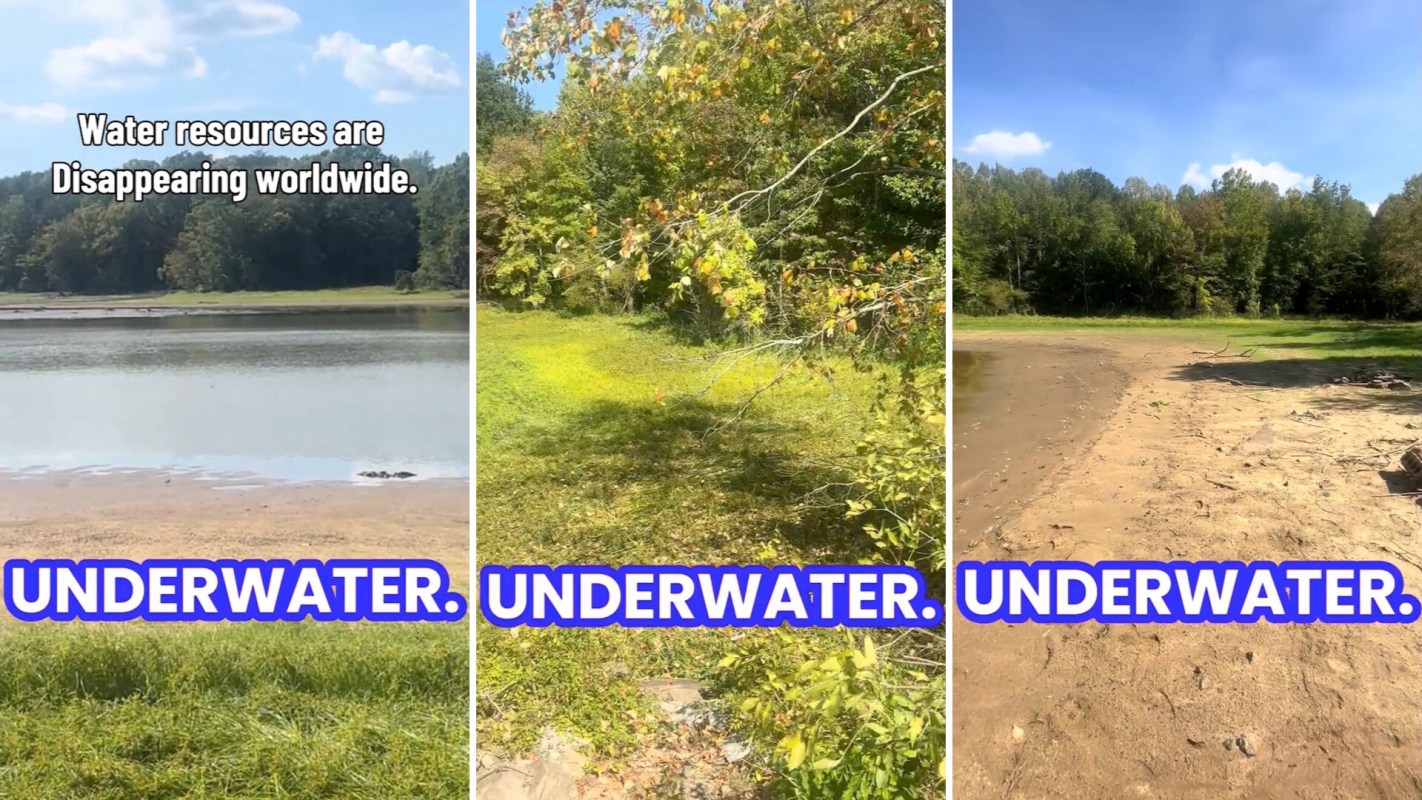
A man in Greensboro, North Carolina, is trying to draw attention to what he says are strikingly low water levels at Lake Townsend.
Using on-the-spot footage as evidence, he highlighted exposed land and vegetation, saying "all this should be underwater."
Here's what to know
A creator identifying himself as Joe from Greensboro posted a video on his TikTok account (@peasywulf), showing Lake Townsend and emphasizing how noticeable the drop in water level was.
@peasywulf Update on #waterlevels at #LakeTownsend in #greensboronc. Sept. 11, 2026. More #citizenjournalism. If the media won't cover things like this, we have to do it ourselves. I encourage you all to speak the truth. In these odd times, some of us have to #becomethemedia. I'm just bringing about awareness about this severe drought in Central NC. @tamihodges278 @Indivisible Guilford County NC @Antifa Goddess @lafem 7 @emily🆘️🇺🇸 @stonedfishwormcompany ♬ original sound - Joe
Gesturing toward a green area beyond the shoreline, he suggested "everything back there in the green, you see, should be underwater," adding that the water "usually comes up almost about right here."
Joe added the post was meant to raise awareness about what he called a severe drought in central North Carolina and referred to the footage as "citizen journalism."
He also said the low water had revealed features he normally would not see, including grassy areas that are usually submerged, a sharply pulled-back shoreline and even "an old engine block."
TCD Picks » Quince Spotlight
💡These best-sellers from Quince deliver affordable, sustainable luxury for all




TikTokers were alarmed by the changes.
One wrote: "It's insane….like what happened, I've lived here six years and never seen this….it was just full last week."
"Drove by today and almost crashed I couldn't believe it," another local said. "Never seen it anywhere near this low and no talk of it all? Is the city even on water restrictions?"
More background
Exposed lake bed, receding shorelines, and newly visible debris can all signal that dry conditions are putting pressure on local water supplies.
"Stuff's coming out of the water that I've never seen in my lifetime," Joe said. "I'm standing down in the lake bed right now."
Declining reservoir levels can affect drinking water security, outdoor recreation, fish and wildlife habitat, and the amount of water available for homes and businesses.
Residents in the comments also linked the lake's condition to broader concerns about growth and whether existing water resources can keep pace.
Dry spells and hotter temperatures can strain water systems, raise utility costs, stress crops and landscaping, increase wildfire risk, and create uncertainty for workers and businesses that depend on reliable water access.
What can be done?
Commenters on TikTok suggested the city hasn't done enough to address a potentially major issue.
"We still do not have the water resources to support the growth of this city!" a commenter exclaimed. "This is no secret, our city leaders have known this for years and years!"
Public updates on reservoir conditions, drought response plans, and water-saving measures can help residents understand what is happening and what steps may be needed.
Communities may also face tougher conversations about development, industrial water demand, and how to build resilience during prolonged dry periods. Both Joe and commenters tied the situation on the ground to data centers.
"You should see the lake out in Pleasant Garden where the data center is by the new Amazon factories," a user claimed. "They are pumping water like crazy."
Joe said he would head there for his next video to chronicle the situation.
Where can I learn more?
Lake Townsend's exposed shoreline has residents wondering what a long dry stretch could mean for Greensboro's water supply. Nationwide, rapidly changing conditions are an ever-present reality. That includes everything from flash flooding in New Jersey to places already confronting steep climate risks and coastal towns debating whether environmental threats could force people out.
• In New Jersey, one backyard turned into a flash flood within minutes of heavy rain.
• Alaska and Maine now face the worst threats soonest from climate-driven disasters, federal officials warn.
• Across coastal towns, increasingly severe risk is pushing more residents toward forced relocation.
Greensboro's receding shoreline doesn't exist in a vacuum. Shifts in water and weather can surface in very different ways, and residents might be the first to sound the alarm and take action.

Get TCD's free newsletters for easy tips, smart advice, and a chance to earn $5,000 toward home upgrades. To see more stories like this one, change your Google preferences here.






