


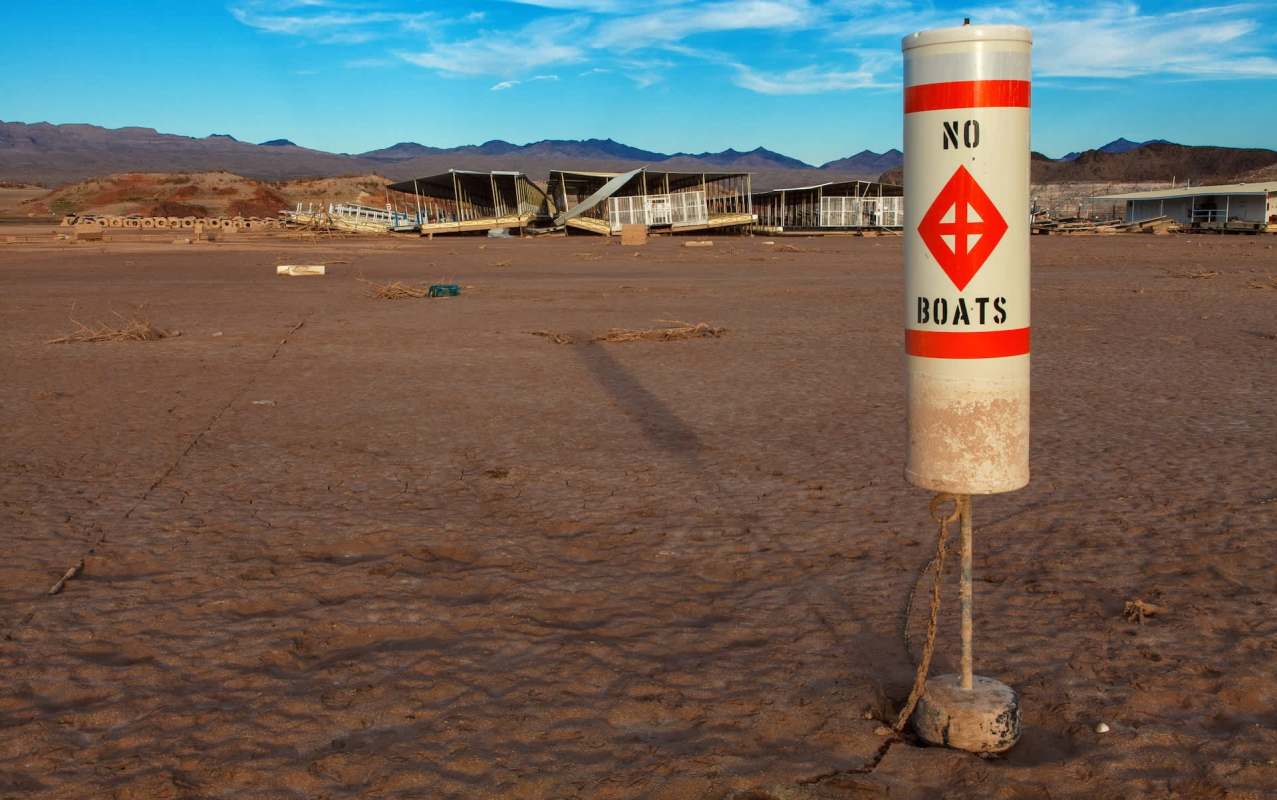
A new low at Lake Mead, the country's largest reservoir, is sharpening fears about the deepening crisis in the Colorado River Basin.
The drop is renewing concerns about drinking water supplies, farm irrigation, and hydropower across the Southwest.
Here's what to know
Recent data from the U.S. Bureau of Reclamation showed Lake Mead at an elevation of 1,040.5 feet, edging below the previous record low of 1,040.58 feet set in July 2022, reported CNN.
That means the reservoir has fallen below every level recorded since Hoover Dam was built in the 1930s.
Lake Mead and Lake Powell are both crucial reservoirs on the Colorado River, and experts have warned that Powell may also reach record lows in the next few weeks.
Mead, which sits on the Arizona-Nevada border, supplies water to more than 20 million people.
TCD Picks » Quince Spotlight
💡These best-sellers from Quince deliver affordable, sustainable luxury for all




"Breaking the record is further evidence of the uncharted territory that the [Colorado River] Basin now finds itself," said Jack Schmidt of Utah State University's Center for Colorado River Studies.
More background
The Colorado River is essential to life and commerce across the Southwest. It provides water for 40 million people, irrigates more than 5 million acres of farmland, and generates enough electricity for about 700,000 homes.
When major reservoirs decline, city water systems, food production, and energy supplies can all be affected.
Worsening extreme weather disasters put lives and livelihoods at risk by straining already fragile water systems. Hotter, drier conditions and weak snowpack can reduce river flows, increase the likelihood of water shortages, and drive up costs for households and businesses.
Those pressures can threaten public health during dangerous heat, undermine community safety as drought worsens wildfire risk, and strain local economies that depend on reliable water and power.
Lake Mead's drop has unfolded over many years. Officials and researchers say persistent drought, heavy demand, and climate change-driven heat have all contributed to the decline.
"There was very little snowpack last winter, and we've had one of the lowest runoff years on record," said Sarah Porter of Arizona State University's Kyl Center for Water Policy.
What's being done?
California, Nevada, and Arizona in the lower basin, along with Utah, Wyoming, New Mexico, and Colorado in the upper basin, have spent years negotiating how to divide a shrinking Colorado River supply.
Still, no long-term agreement has been finalized.
Released in July, the Bureau of Reclamation's 10-year operating framework could require the lower basin states to make combined cuts of up to 3 million acre-feet each year, roughly enough water for 9 million average U.S. families.
Secretary of the Interior Doug Burgum said, "This framework provides the flexibility to respond to changing hydrologic conditions while preserving the opportunity for the Basin States to continue working toward durable, consensus-based solutions."
New two-year operating guidelines are expected soon and could require cuts of about 20% for the lower basin through 2028.
Meanwhile, a Bureau of Reclamation spokesperson said the agency and the Department of the Interior remain "committed to reducing the collective risk of both Lake Powell and Lake Mead falling below critical elevations."
As Kathryn Sorensen of Arizona State University's Kyl Center for Water Policy put it: "Lake Mead and Lake Powell are essentially the region's savings account, and we've been drawing it down for years because the river has been overallocated while enduring 25 years of persistent drought."

Get TCD's free newsletters for easy tips, smart advice, and a chance to earn $5,000 toward home upgrades. To see more stories like this one, change your Google preferences here.






