


Three tiny clusters of lab-grown human brain tissue helped a computer identify Braille letters with 83% accuracy.
Here's what to know
Frontiers in Artificial Intelligence published the research, which was led by University of Bristol doctoral student Tianyi Liu. She worked alongside Hemma Philamore and Benjamin Ward-Cherrier in Bristol's School of Engineering Mathematics and Technology, according to Earth.com.
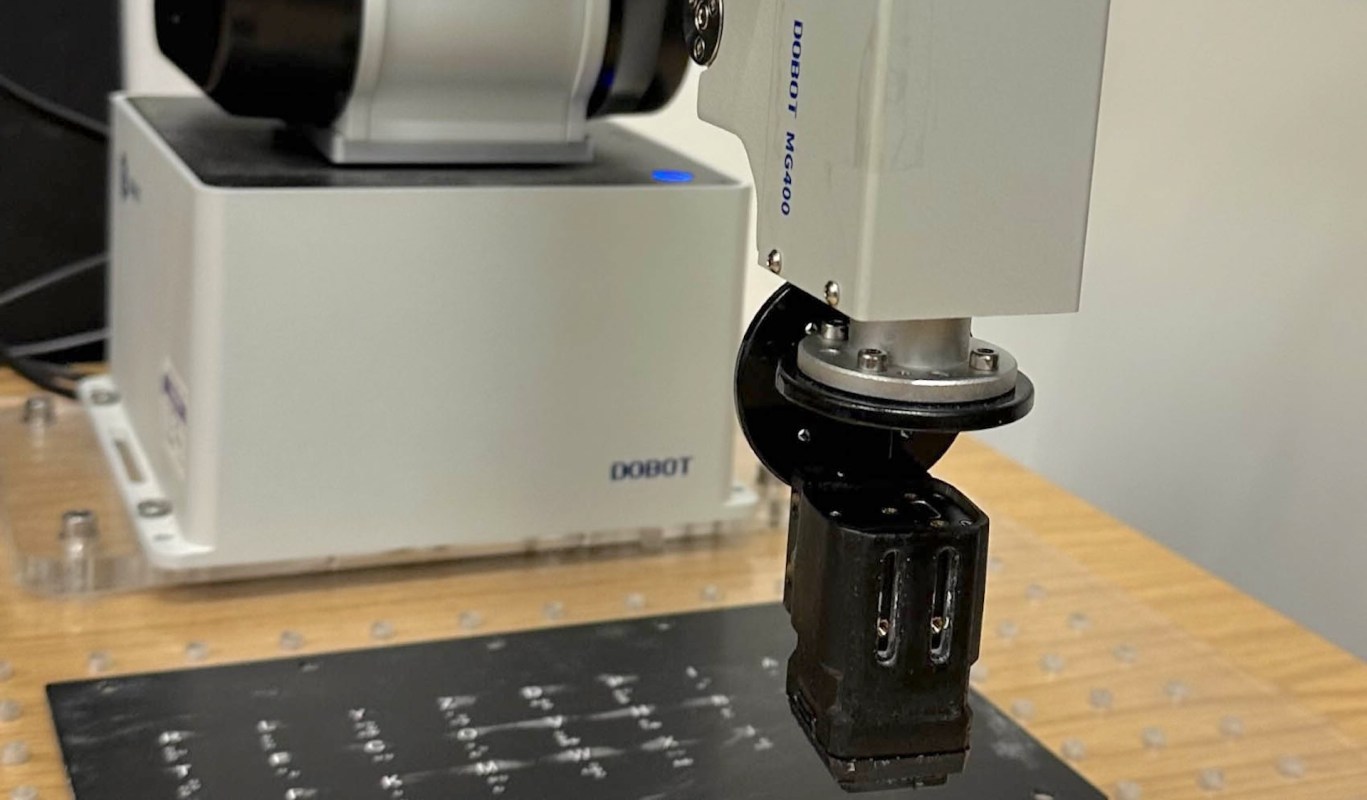
Each brain organoid in the experiment measured roughly half a millimeter across (one-fiftieth of an inch) and consisted of human neurons and support cells grown in a lab. The team collected 1,300 recordings at different pressing depths by having a robot arm move a soft, camera-equipped touch sensor across all 26 letters on a 3D-printed Braille board.
Software identified the letters from the organoids' firing patterns. Researchers elicited those responses by converting the recordings into electrical pulses and delivering them through eight electrodes beneath each organoid. Combining responses from three organoids produced 83% accuracy, versus about 61% with a single organoid. Random guessing would yield less than 4% accuracy.
More background
Researchers also tested how the system handled damaged input data. Software that directly classified clean electrical pulse patterns achieved 82% accuracy, nearly matching the three-organoid system. But when the team introduced damage to half the input channels, the direct-reading software's accuracy fell to between 55% and 67%, according to Earth.com.
The three-organoid system maintained 83% and 82% accuracy under two types of random noise. Accuracy reached 72% when some entries were erased and 68% when some values were tripled, outperforming direct pulse classification in all four tests.
TCD Picks » Quince Spotlight
💡These best-sellers from Quince deliver affordable, sustainable luxury for all




Liu suggested that differences between the organoids could help explain the results.
"Different organoids may have slightly different network connections, developmental states, and ongoing activity, so the same input can produce similar but not identical responses," Liu said.
Those differences could provide complementary information, but understanding the variation remains an important step toward developing a predictable system.
What's being done?
The Bristol team has been exploring living neural networks as a possible way to reduce the electricity needed to process sensor information. The researchers wrote that brain-inspired silicon chips would require kilowatts to megawatts of power if scaled up to cortex size, according to Earth.com. A human brain, by comparison, uses roughly 20 watts.
For this experiment, researchers accessed organoids over the internet through electrode arrays operated by FinalSpark. A continuous supply of nutrient liquid can sustain an organoid's electrical activity for approximately 100 days.
The team's next experiments will introduce textures and edges along with feedback on the organoids' responses. Adding feedback will allow researchers to investigate whether the tissue itself can improve with practice.
"That gives us a practical way to connect artificial sensors with biological neural systems, which are a very interesting possible route towards more energy-efficient computing," Liu added, per Earth.com.
Where can I learn more?
• California scientists integrated millions of human neurons into mouse brains to investigate brain disorders.
• Scientists suggested the human brain may contain two distinct nervous systems within one skull.
• Maryland researchers harnessed snake heat-sensing proteins to develop low-power infrared sensors.
• California scientists trained AI on 40,000 cell movies, potentially speeding screening with digital twins.

Get TCD's free newsletters for easy tips, smart advice, and a chance to earn $5,000 toward home upgrades. To see more stories like this one, change your Google preferences here.






