


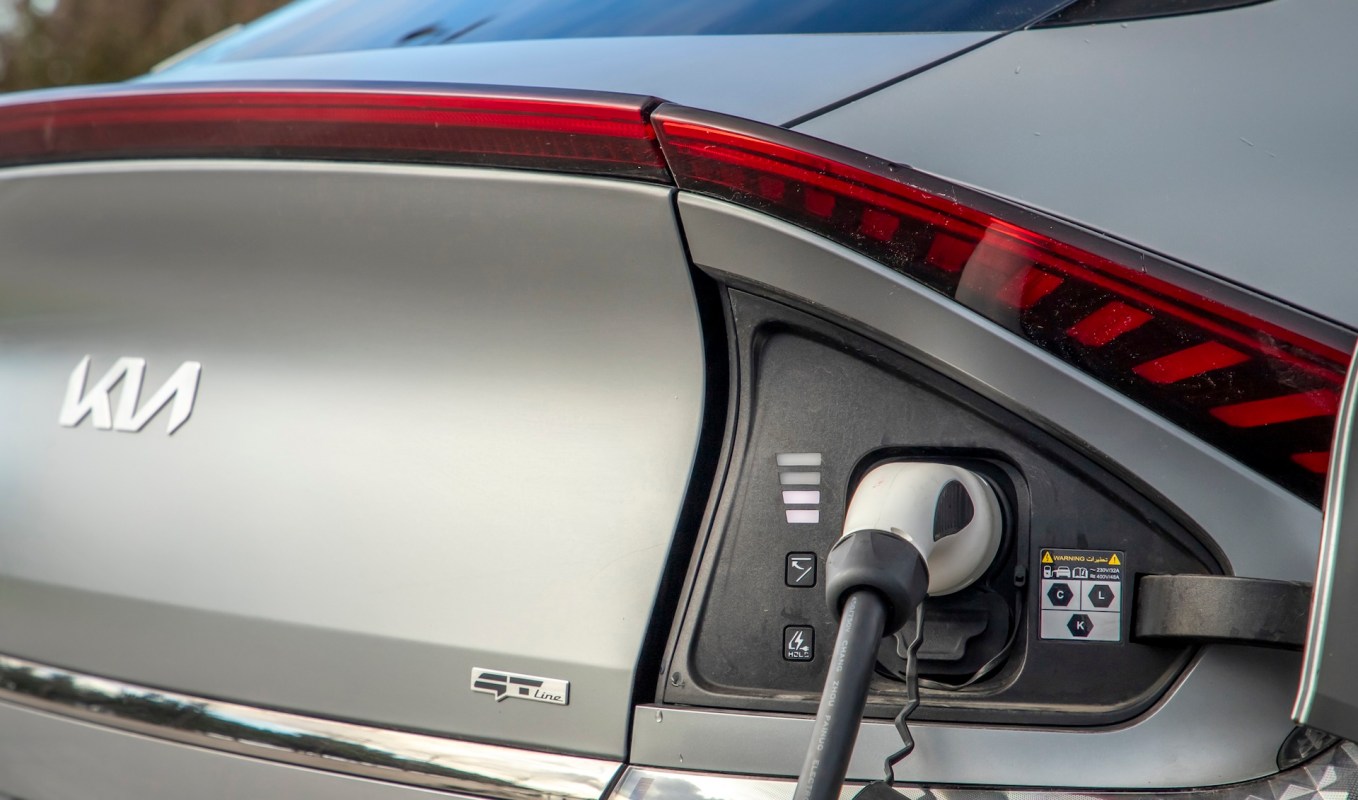
A Kia owner said their EV battery held more than 80 kWh, which they believed could keep a home going for "almost a week" during an outage.
Responses were positive, but some noted the real limit isn't just battery capacity.
Here's what to know
The prepper said in a Reddit thread that they were considering a Kia cable costing about £130 to keep the fridge, freezer, kettle, microwave, and internet on during an outage. The accessory plugs into the car's charging port and provides a standard UK 13-amp, three-pin socket.
Supportive feedback came from an EV6 owner, who wrote, "Yes it works great. Just don't get the official Kia adapter, it's triple the price of what you can get online."
However, other replies showed the deeper issues that come with major electronics. One commenter stated: "You will run kettle... And nothing else as kettle alone is 13A." Another commenter cautioned, "FYI, gas boilers are usually not happy with a floating earth from a vehicle."
Instead of relying on an adapter and guessing whether a kettle can run alongside a freezer, homeowners can use dedicated battery storage for outage backup, lower energy costs, and greater energy independence. Homeowners can compare options on EnergySage for home battery storage choices and competitive installation estimates. EnergySage has teamed up with electrification brand Qmerit to help homeowners get the best price on home battery storage solutions.
More background
The discussion also clarified that charging a phone from the car's USB ports isn't the same as using vehicle-to-load to run household devices. The original poster wrote in a reply, "Usb sockets just to charge phone etc. But for running things in the house, yes I'll need v2l as I now know!"
Just because the car has 80 kWh available doesn't mean it can charge everything at once. As one commenter wrote, "It's the kettle and microwave that will likely push you over the cap for safe simultaneous load from a single extension lead," though they added that lighter-demand appliances should be okay.
Crushed by your bills? See instant solar savings from vetted installers in just a few clicks With energy prices through the roof, there's never been a better time to go solar — and EasyHome can help you find the best prices from the best installers in your area. EasyHome takes the guesswork and headaches out of energy upgrades by showing you estimated savings from a network of vetted local partners. To get started, just enter your ZIP and share a few details about your home — seeing your estimate is really that easy. |

A commenter said that "under the back bench seat there's also a 3pin plug," potentially giving the user another place to split loads, but the original poster said their mid-range EV3 lacks that socket and that it appears "only on the top range model."
Backup power from an EV depends on more than battery size. Outlet placement, model differences, and safe load limits can determine whether a car can realistically support everything a household needs during an outage.
What can be done?
The thread's practical advice was to reserve vehicle-to-load for the essentials that draw less power. One commenter said, "Using it to power the fridge, freezer, internet and other relatively low draw items shouldn't be a problem," while suggesting that a kettle or microwave may be better treated as one-at-a-time loads.
Another commenter suggested a workaround: charge a portable power station and then carry the battery indoors.
For households that want outage protection without relying on a car, battery storage is another backup option. For a smaller-scale option, Pila offers strong battery backup, and its plug-and-play batteries cost a fraction of a whole-home backup system.
One commenter summed up the situation: "Kia has the V2L which is great but just be careful with what you're actually talking about powering."

Get TCD's free newsletters for easy tips, smart advice, and a chance to earn $5,000 toward home upgrades. To see more stories like this one, change your Google preferences here.






