


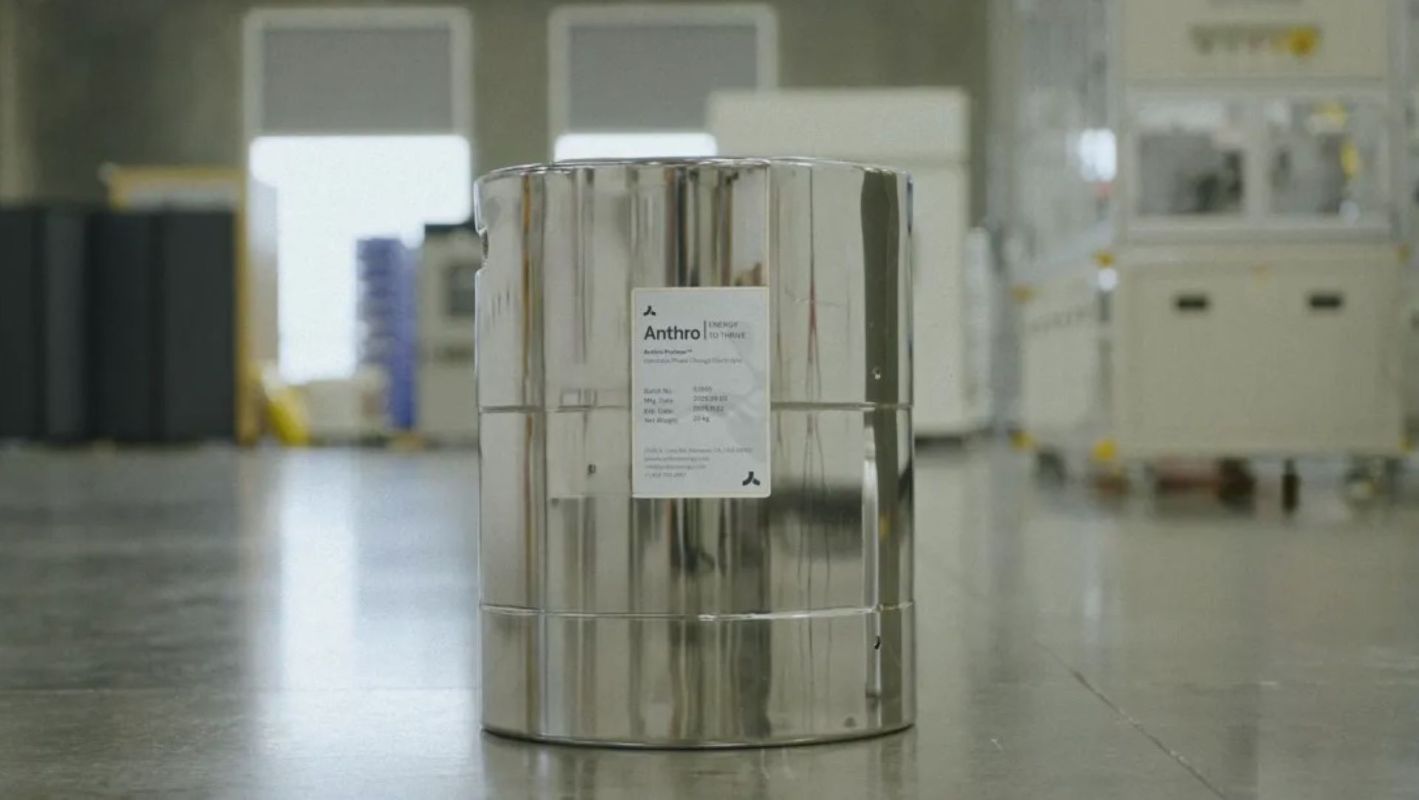
Anthro Energy broke ground on August 18 on a new factory in Louisville, Kentucky, that could help ease one of the biggest bottlenecks in America's electric-vehicle supply chain: sourcing advanced battery materials without relying on China-linked suppliers.
Anthro Energy said the plant's planned electrolyte capacity would be enough to support more than 300,000 EVs, and it could also help push solid-state batteries closer to the mainstream.
Here's what to know
According to TechCrunch, the Louisville site is being built for 25 gigawatt-hours of electrolyte production, with operations expected to start in 2028. Anthro is presenting the factory as a U.S.-based supply option for battery companies that want to avoid materials associated with "foreign entity of concern" restrictions.
David Mackanic, co-founder and CEO of Anthro Energy, said the company wants to supply "this emerging ecosystem for battery production where they frankly just need electrolytes — a domestic source of China-free supply, FEOC-free supply."
For battery and EV companies trying to bring more of their supply networks closer to home, Louisville could offer a logistical advantage. Mackanic said, "Within a 12-hour drive, you can get to 70% of the battery production facilities in the United States that exist today."
The project is also being supported by public incentives. It received a $24.9 million Department of Energy award through the Bipartisan Infrastructure Law, $18.4 million in investment tax credits from the Inflation Reduction Act, and $2.3 million in Kentucky tax incentives linked to 110 permanent jobs.
TCD Picks » Quince Spotlight
💡These best-sellers from Quince deliver affordable, sustainable luxury for all




More background
A big part of Anthro's long-term potential centers on Proteus, its proprietary polymer electrolyte, which the company said can be used on existing battery production lines with only limited modifications. That could be a major advantage in an industry where many promising technologies struggle to make the jump from pilot projects to full-scale manufacturing.
Interest in solid-state and semi-solid-state batteries has lasted for years because they could raise energy density and improve safety. Conventional lithium-ion batteries use flammable liquid electrolytes, while solid-state approaches aim to place a solid barrier between battery components, reducing fire risk and limiting dendrites, the spiky growths that can cause short circuits.
For everyday drivers, that could eventually mean EVs with longer range, better durability, and lower safety risks.
For companies and cities, safer, more compact batteries could also translate into lower maintenance costs and more reliable equipment, from fleet vehicles to machines used in logistics, emergency response, and infrastructure.
Anthro says its material is introduced as a liquid during manufacturing, allowing it to move through the cell before firming up afterward, as TechCrunch described. Mackanic said that can make a battery "10 to 15 times stronger than with a liquid electrolyte," while also allowing flexibility for future uses in drones and robots.
What's being done?
TechCrunch reported that Anthro plans to use the Louisville facility for phased manufacturing. It wants to start by producing several types of electrolytes, then shift more of the plant's output to Proteus once customers have validated the company's own material.
That step-by-step strategy could help the company avoid a common clean-tech hurdle by achieving strong lab results without having a large-scale manufacturing base. In the battery business, automakers and equipment makers need huge volumes before they can redesign supply chains or launch new products.
Federal support is also playing a major role in helping the factory move forward. Those incentives are meant to make it easier for American companies to build advanced energy technology domestically, strengthen local job markets, and reduce dependence on overseas suppliers.
Anthro's bet is that advanced batteries will move from promise to reality only if companies can build at scale.
"To get into big applications, you have to have big production," Mackanic said. "The Department of Energy award solves a lot of the chicken or the egg problem."

Get TCD's free newsletters for easy tips, smart advice, and a chance to earn $5,000 toward home upgrades. To see more stories like this one, change your Google preferences here.






