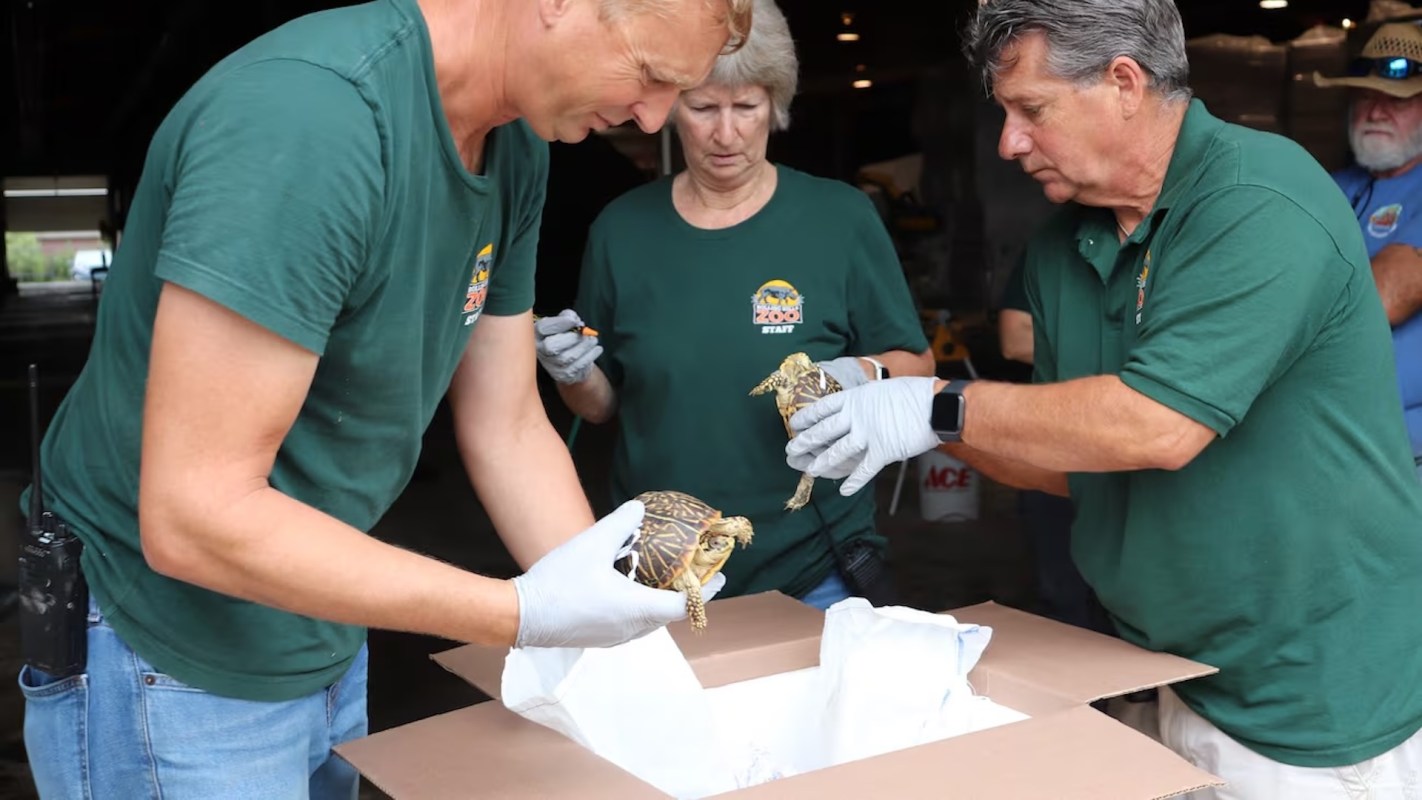
A Kansas zoo has become an unlikely front line in the fight against wildlife trafficking after taking in dozens of ornate box turtles seized from traffickers.
Rolling Hills Zoo in Salina is helping 83 of the reptiles recover after they were intercepted before reaching the exotic pet market, according to WIBW.
Here's what to know
The connection began in August 2025, when the U.S. Fish and Wildlife Service reached Rolling Hills Zoo Executive Director Ryan VanZant through the Association of Zoos & Aquariums' Wildlife Confiscation Coordinator. Rolling Hills Zoo shared the account on its Facebook page (@rollinghillszoo).
Officials asked the zoo to care for 51 ornate box turtles that investigators suspected were headed to buyers in Asia.
Additional groups arrived, including nine in December 2025, one in May 2026, and 22 in July 2026, bringing the overall total to 83.
To manage the rescue, WIBW noted that staff created temporary enclosures, examined each turtle, identified it, and screened it for disease. Zoo officials said the animals all tested negative for ranavirus, although some had other milder illnesses that are still being monitored.
TCD Picks » Quince Spotlight
💡These best-sellers from Quince deliver affordable, sustainable luxury for all




The zoo began moving the turtles into settings that better matched their natural environment.
That process included relocating 49 turtles outdoors in April 2026, where staff said they quickly resumed grazing, burrowing, and exploring native grasses. Sixty turtles occupy a 10,000-square-foot native grass habitat, while 12 others remain in specialized care.
VanZant said that work to help vulnerable species begins locally, not just in faraway places.
"We often think conservation happens somewhere else," VanZant declared in the Facebook post. "But sometimes conservation begins with answering a phone call. These turtles remind us that protecting wildlife isn't just something that happens across the globe. It happens right here in Kansas, and with species native to Kansas."
More background
Population losses are especially difficult for ornate box turtles.
As WIBW noted, the species does not begin reproducing until it is nearly 10 years old, and females lay relatively few eggs, so the loss of even one adult can affect future generations. The ornate box turtle is the state's official reptile.
Returning confiscated turtles to the wild is more complicated than simply releasing them.
Rolling Hills Zoo said ornate box turtles usually spend their lives within a one-mile radius, according to the station. If officials do not know the exact place they were taken from, releasing them elsewhere could reduce their chances of survival or introduce disease into wild populations.
The zoo said several turtles died, which WIBW noted can happen after animals have been removed from the wild, kept in poor conditions, and moved through trafficking channels.
What's being done?
The turtles are being cared for through AZA's Wildlife Confiscations Network. The station said the network supports law enforcement by arranging rapid veterinary treatment and temporary housing for seized animals.
Scientists are examining disease risks and considering genetic testing to help determine their origins. That kind of research is still costly and limited, but it could improve the prospects for safe releases, WIBW said.
Accredited zoos, wildlife agencies, and conservation groups also serve a practical role in stopping the illegal animal trade from turning native species into private collectibles.
"For now, these turtles are safe," the zoo concluded on Facebook. "They are receiving expert care. They are exploring the grass, digging burrows, and rediscovering natural behaviors. And one day, we hope they will find their way home."
Where can I learn more?
Other turtle recoveries offer a look at how much work it takes to get vulnerable reptiles back into safe habitat after years of decline. The stories below span zoo-led releases in the Pacific Northwest, sanctuary work in India, and a rediscovery in the Philippines — each shaped by the same questions of long-term care, careful release, and survival in the wild.
• In the Columbia River Gorge, zoos released 22 endangered turtles they had raised for survival.
• In India, conservationists released over 100 rare turtles into protected ponds inside a sanctuary.
• In the Philippines, a critically endangered turtle returns to the wild after decades out of sight.
Each case is a reminder that every rescued turtle can matter when populations are already thin or scattered. What happens after the rescue matters too, since long-term care and careful release plans often determine whether these animals get a real second chance.

Get TCD's free newsletters for easy tips, smart advice, and a chance to earn $5,000 toward home upgrades. To see more stories like this one, change your Google preferences here.