


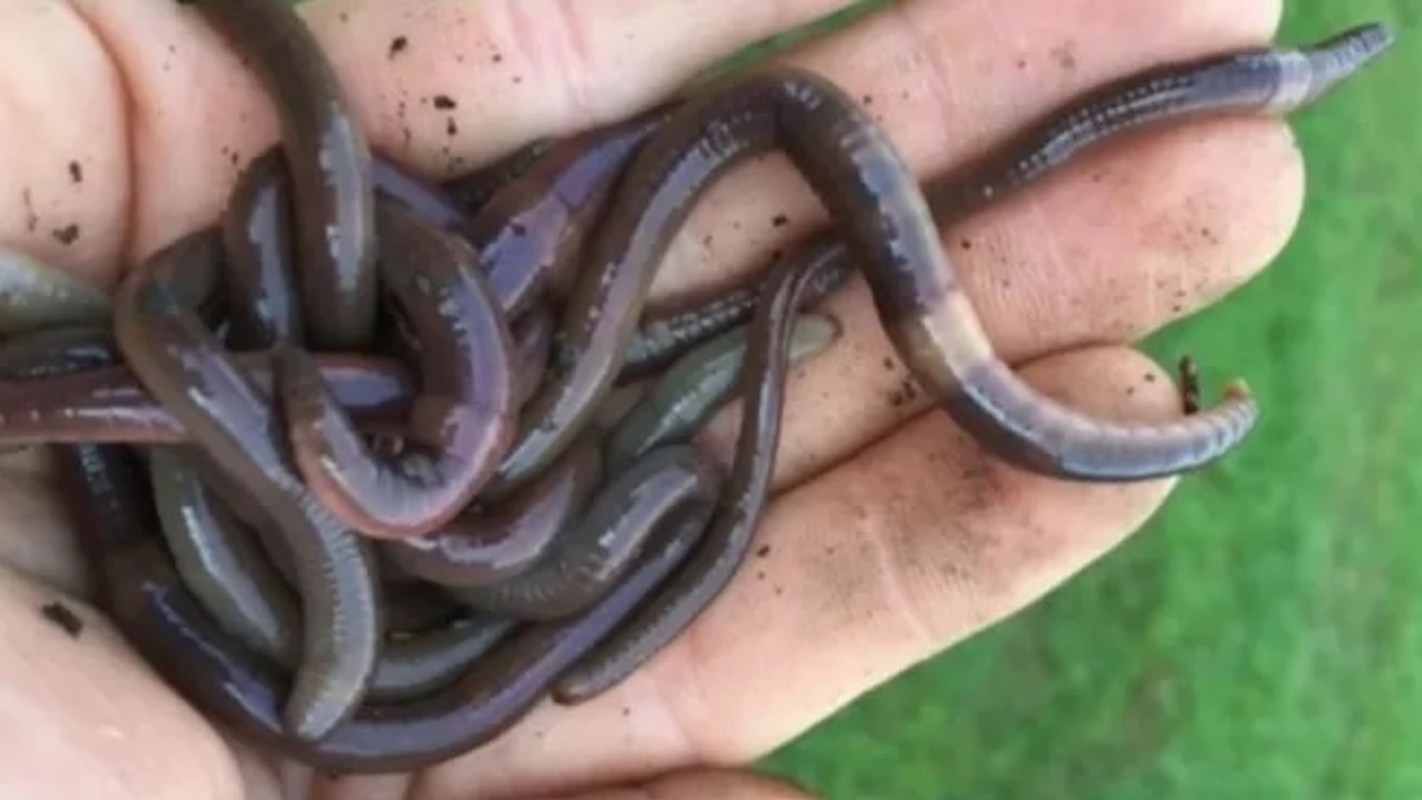
A spring storm in Carthage, Texas, led Rebecca Smith to an unsettling discovery inside her home: two large worms lying in her living room.
The odd encounter would eventually point to a problem affecting gardeners far beyond East Texas.
What happened?
The animals were later identified as invasive jumping worms, a species now found in nearly 40 states, across much of the central United States, and more recently in Colorado, according to the Wisconsin State Farmer.
"They are bizarre," Smith said. "It looks like a worm until you touch it. And then it starts freaking out like a snake would."
While jumping worms can resemble common earthworms, they behave very differently and can be far more destructive. One of the clearest signs is a thick, pale-colored band near the top of the body. Another is the violent thrashing they do when disturbed. The more serious concern, however, is what they do to the soil.
Brad Herrick, who leads UW-Madison's Lakeshore Nature Preserve, said the worms stay close to the surface and leave behind waste that resembles coffee grounds.
TCD Picks » Quince Spotlight
💡These best-sellers from Quince deliver affordable, sustainable luxury for all




"The first indication of jumping worms is this change in what the soil looks like," Herrick told the publication. "If you see that, where you can just sort of wipe away the soil with your hand, that's a red flag."
Brent Crain, who works in horticulture education for Michigan State University Extension, said the worms have likely been in the United States for a long time but largely went unnoticed.
"No one knew that they were a threat," Crain said, per the Wisconsin State Farmer.
Because they reproduce rapidly, the worms can be especially hard to manage; their tiny cocoons disappear into the soil and may remain dormant for years.
Why does it matter?
Jumping worms consume the top layer of organic matter that forests and gardens depend on, making it harder for plants to establish strong roots and access the water they need.
Herrick said the soil they leave behind can become so porous that some plants struggle to survive. Ulric Chung, a master gardener with Michigan State University Extension, said affected plants may turn yellow and can be pulled up too easily.
"It's very crumbly, but it's not like regular garden soil, which kind of sticks together a little bit," Chung told the State Farmer.
The damage can also extend well beyond a single yard. Crain said the worms destroy habitat for other invertebrates and ground-nesting birds by devouring leaf litter.
"When that leaf litter is destroyed, then a lot of these smaller plants disappear too," he added. "The biodiversity is destroyed, and the entire forest floor ecosystem is altered."
What can I do?
Prevention is still the best defense. Crain recommended cleaning gardening tools and tire treads, since cocoons can easily travel anywhere soil gets trapped. He also warned anglers not to dump unused bait into wooded areas or waterways.
If you share or trade plants, Mary Spies, who teaches gardeners in St. Louis and belongs to the city's Native Plants Society chapter, said all soil should first be removed from the roots.
"You have to wash the roots off and get rid of all of the dirt," Spies told the publication. "These cocoons are smaller than a pinhead."
For active infestations, researchers are also exploring heat-based methods. One study from the University of Wisconsin reported that cocoons did not survive after three days at 100 degrees Fahrenheit, suggesting that steam, direct fire, or covering soil with clear plastic early in the season may help.
Adult worms can also be removed by hand, and some experts recommend a mustard-water mixture to draw them to the surface.
Still, Herrick cautioned that one quiet season should not be taken as proof the worms are gone.
"We can't control everything obviously, but things that we can control a little bit can really help to prevent a spread," Herrick said.

Get TCD's free newsletters for easy tips, smart advice, and a chance to earn $5,000 toward home upgrades. To see more stories like this one, change your Google preferences here.






