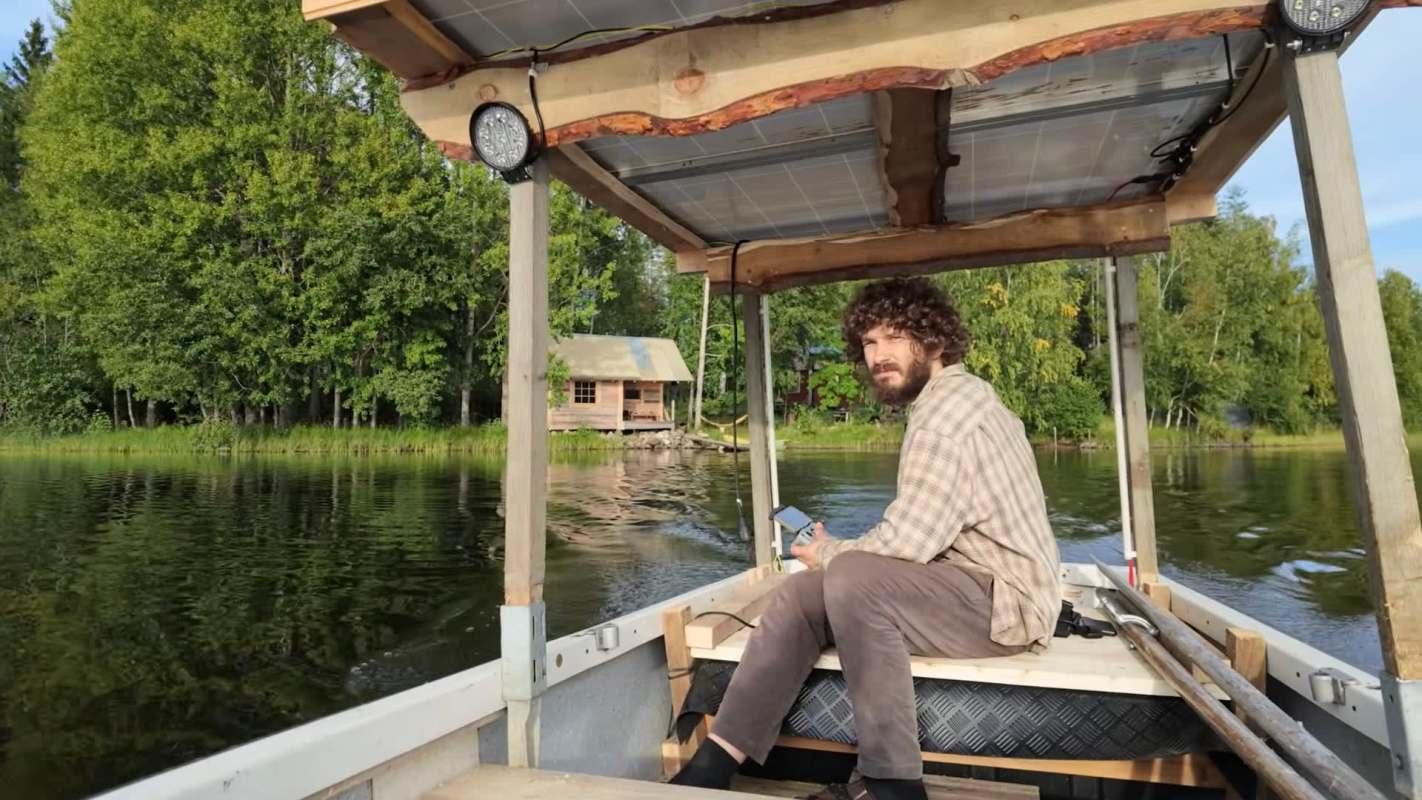
Imagine a boat that runs on the sun, doesn't need an oil change, and can run for over seven hours. One island homesteader's DIY solar-boat build did exactly that. For the creator, the boat can serve as transportation, haul equipment, and even provide backup power.
After replacing the boat's conventional setup with solar panels, batteries, and an electric outboard, the creator crafted a testament to modern energy technology. He even said during testing, "We are getting some free nautical miles."
Here's what to know
A video posted on YouTube follows the conversion of a basic boat for use at the creator's island homestead. He summed up the concept: "We're building a simple solar-powered boat using the power of the sun — with no fuel and no complicated systems."
At the center of the build is a 24-volt battery bank made from two 12-volt, 300-amp-hour lithium batteries, giving the boat more than 7.5 kilowatt-hours of storage. The rest of the system includes a 2-kilowatt inverter, a solar charge controller, an 86-pound-thrust electric outboard, and two 275-watt solar panels mounted overhead to form a small roof.
He said the boat was meant to serve several roles around the property, including bringing electricity to the mainland side, providing backup power for the house, and helping "transport the goods across the lake without gasoline."
One commenter wrote, "Wow, what a great project. You should be so proud of that boat. And, it can make a coffee too, fantastic!!!"
TCD Picks » Quince Spotlight
💡These best-sellers from Quince deliver affordable, sustainable luxury for all




More background
Electric cars often dominate conversations about cleaner technology, but smaller electric machines can make a difference too, especially in places where daily life depends on reliable motorized equipment. In this case, the boat was built to be part of the homestead's core infrastructure.
Replacing a gas outboard can reduce fuel costs, cut engine maintenance, and eliminate routine exposure to exhaust fumes. The creator emphasized that tradeoff directly: "No more gasoline, no more oil changes, no more breaking combustion engines."
On the water, he said GPS readings showed about 8 kilometers per hour, or roughly 5 miles per hour, which he said was enough to cross the lake and handle some wind.
A quieter electric motor reduces noise on the water, while avoiding gasoline lowers the risk of spills and cuts planet-warming pollution. For people who spend long stretches near the motor, less noise and the absence of fumes can also make daily boating much more comfortable.
What can be done?
Most people are unlikely to build a full solar boat from scratch, but the project still offers an example of what electrification can look like on a smaller scale. A compact electric outboard, a battery box, or a modest solar charging setup could already make a lightweight fishing boat, dinghy, or utility craft cheaper and easier to operate.
For off-grid properties, the appeal goes beyond transportation. A battery-backed boat can also provide power for lights, tools, small appliances, or emergency systems when needed. In the video, the creator even tested the inverter by making coffee onboard.
Anyone considering a similar setup would still need to account for weight, waterproofing, wiring safety, and local boating regulations.
Small-scale solar-powered setups can be a great way to increase self-reliance, add utility, and reduce your environmental impact.
Where can I learn more?
This boat project can be viewed as part of the larger move toward solar-powered travel and off-grid energy. The articles here show how boats, docks, and even entire islands are using renewable power to handle everyday needs.
• Through the Alex Honnold Foundation, solar-powered boats are emerging as fuel-free tools for daily travel.
• Faro's floating dock offers off-grid charging for electric boats without relying on shoreline power.
• On El Hierro, wind and solar power alone powered the island continuously for 28 days.
Each example points to the same idea: Small clean energy projects can make a real difference. In the right setting, they can simplify transportation and backup power while also reducing pollution.

Get TCD's free newsletters for easy tips, smart advice, and a chance to earn $5,000 toward home upgrades. To see more stories like this one, change your Google preferences here.