


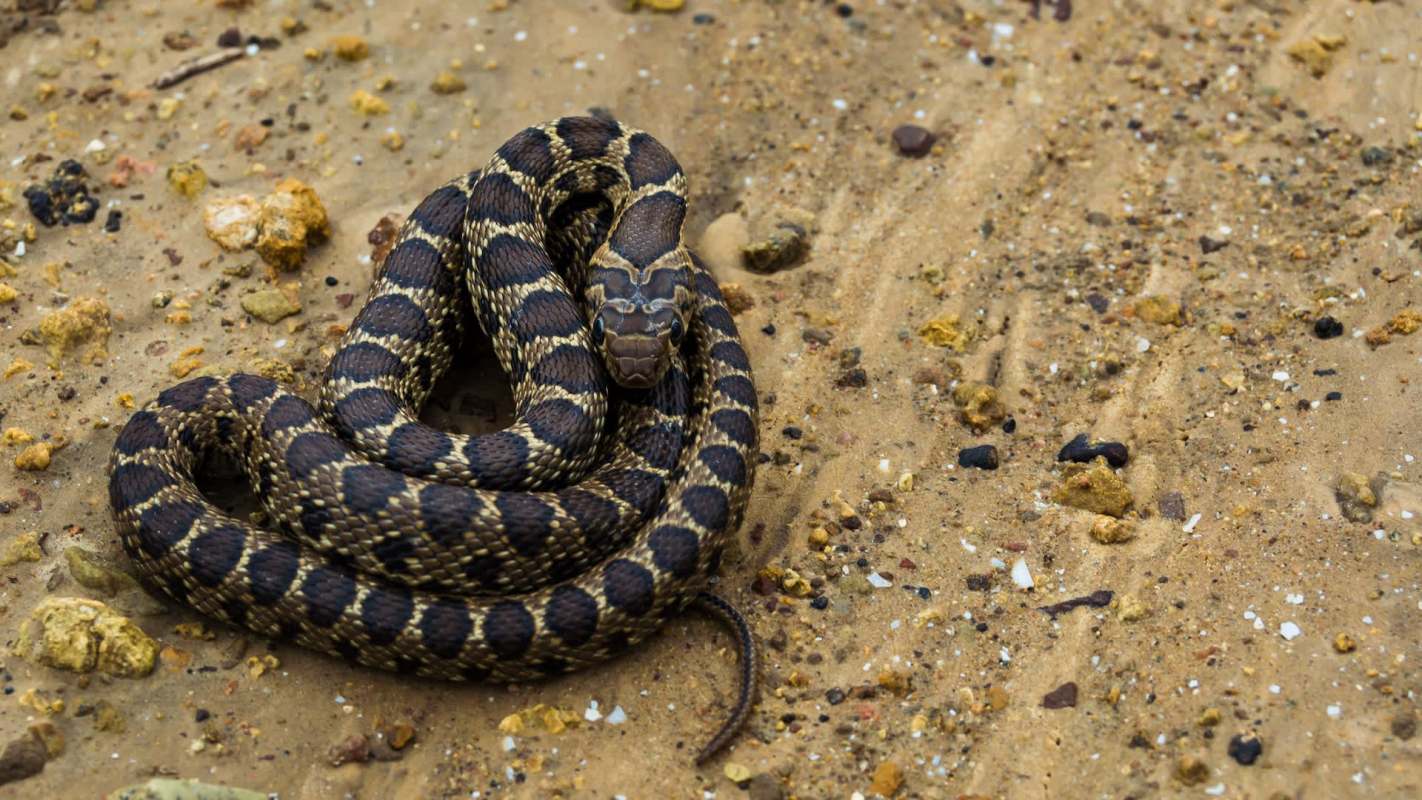
The Mediterranean's vacation islands are facing an invasion of snakes.
In Spain's Balearic archipelago, which includes Ibiza and Mallorca, one rapidly invading snake species has even been seen moving through the water toward smaller nearby islands to feed on native wildlife.
What's happening?
On the islands of Ibiza and Formentera especially, the horseshoe whip snake has become a serious threat to biodiversity, as reported by Euronews.
Researchers believe the snake species reached the islands from mainland Spain through landscaping imports of large ornamental olive trees. About 90% of Ibiza is now colonized by these snakes, which have no natural predators there, but luckily pose no threat to people, per Euronews.
The snake was first recorded in Ibiza in 2003, later appeared in Mallorca in 2006, and reached Formentera by 2010. Just two years ago, it was spotted for the first time navigating the Balearic Sea in search of more prey, per Euronews.
And while people are not considered at risk from the species, experts say it now functions as the dominant predator in an ecosystem with almost no natural competition.
TCD Picks » Quince Spotlight
💡These best-sellers from Quince deliver affordable, sustainable luxury for all




One of its main prey animals is the Pityusan wall lizard, an endangered species which is found only on Ibiza, Formentera, and the surrounding small islets. Unfortunately, scientists at the Centre for Ecological Research and Forestry Applications say the lizard has now disappeared locally from around 10 islets, including Santa Eulària.
Why does it matter?
These Pityusan wall lizards play several roles in island ecosystems. They help control some insect populations, disperse seeds, and can even pollinate plants.
And as their numbers drop, the effects could spread through vegetation, food webs, and the broader resilience of island ecosystems. Reversing those losses may be particularly difficult because each small islet is home to its own lizard subspecies, many with distinctive colors.
Biodiversity loss can erode the landscapes and ecological balance that support both daily life and tourism. The Balearics are already under pressure from development and heavy visitor traffic. The spread of an invasive predator through fragile island habitats is adding to those strains.

Get TCD's free newsletters for easy tips, smart advice, and a chance to earn $5,000 toward home upgrades. To see more stories like this one, change your Google preferences here.






