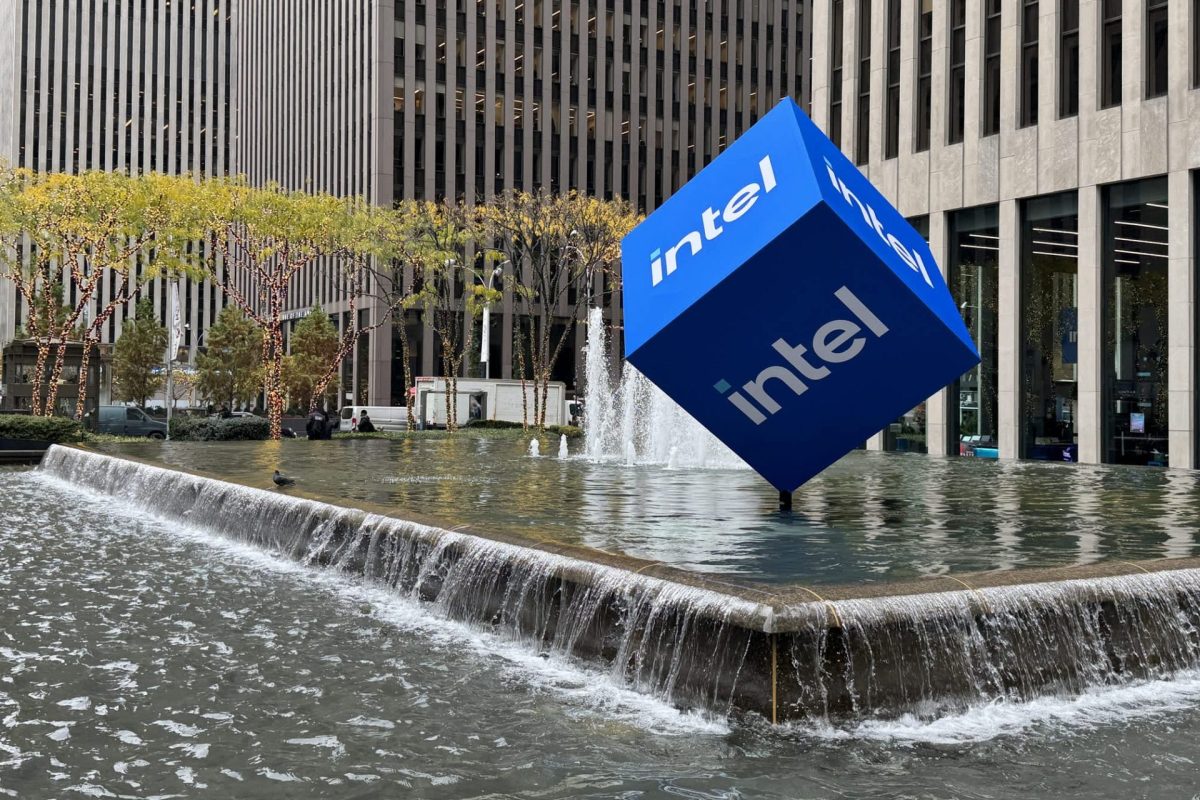
At Intel's Oregon chip plant, contamination rules extend to everyday products: deodorant, makeup, hairspray, Velcro, and Bluetooth devices can all be prohibited because even a microscopic particle can interfere with chips made at an extraordinarily tiny scale.
When the margin for error is so small, a speck drifting off a person or a piece of paper can become an expensive mistake.
What's happening?
According to Olivia Nemec for Business Insider, before anyone reaches Intel's chip factory floor, nearly every possible source of contamination has to be managed.
Workers and visitors must leave behind items that release aerosols or shed particles, then move through cleaning and gowning rooms before entering the plant.
Nemec noted while moving through the facility how small the machines and chips were.
"I felt like a giant moving through a world built for things far smaller and more delicate than me," Nemec wrote.
TCD Picks » EDF Spotlight
💡EDF's Vital Signs newsletter delivers stories about game-changing solutions close to home and around the world




Those precautions reflect the price of a mistake. Chris Auth, Intel's vice president of manufacturing development, told Nemec that a single damaged silicon wafer, an extremely thin material used during microchip production, could cost up to $500,000.
"Each little tiny speck can cause a defect, which would destroy the chip," Auth said.
Much of the work is handled by machines. Conveyor systems and robotic arms dominate the floor, while heavy air filtration continuously refreshes the environment. Even ordinary paper can shed enough particles to create a problem.
Why does it matter?
Demand for advanced chips has surged as tech companies race to build more AI data centers.
These chips are also embedded into many everyday tech products, meaning disruptions in manufacturing can ripple through daily life.
What's being done?
Inside the factory, contamination control is relentless. As Futurism noted, workers wear protective white overalls, and floor-level air filtration can cycle the facility's air in about a minute.
Automation is another major line of defense. By relying heavily on robots instead of people for delicate tasks, manufacturers can reduce the risk that a stray fiber, skin particle, or aerosolized product will ruin a wafer and create costly waste.
As Nemec wrote, "We live in a world that runs on chips. To make them, however, we have to create an entire environment designed to protect them from us."

Get TCD's free newsletters for easy tips, smart advice, and a chance to earn $5,000 toward home upgrades. To see more stories like this one, change your Google preferences here.
Cool Picks