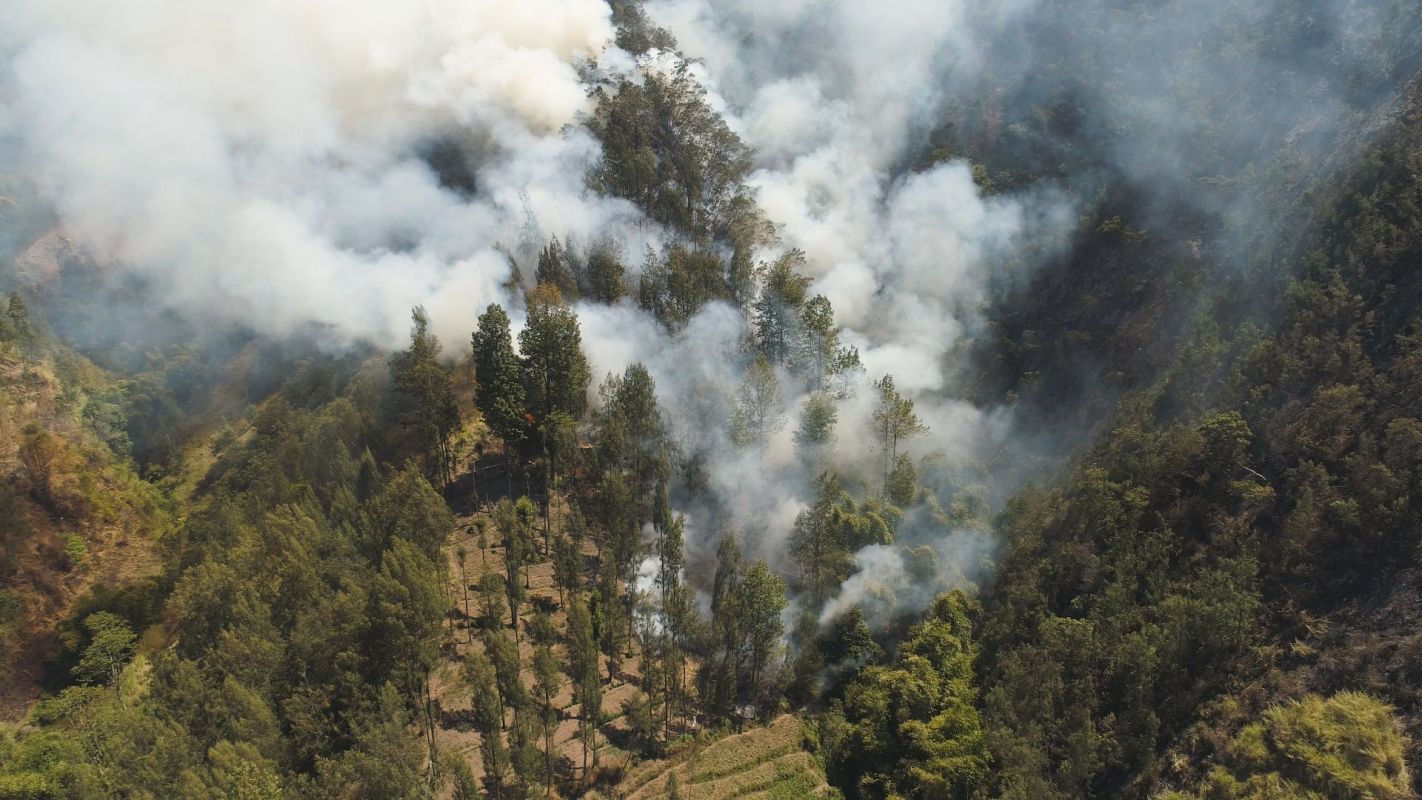
In Indonesia's South Kalimantan province, an Aug. 18 peat fire raced to within 330 feet of Siti Sarah's house in Pengayuan village, and the close call has left her afraid to sleep.
As haze spreads over Borneo and Sumatra, families are growing more afraid of respiratory illness, and some of that smoke is crossing into nearby countries.
Here's what to know
In Pengayuan village, Siti Sarah said the Aug. 18 blaze initially looked far enough away not to threaten her house, but then advanced rapidly toward it.
"The fire seemed to leap up," she told Mongabay Indonesia. "All of a sudden it was right there — it grew so fast."
Fires across Indonesia have drawn in both community crews and government firefighters, with many of the blazes burning through carbon-rich peatlands in Borneo and Sumatra, Mongabay reported.
Forecasters expect a strong El Niño to keep Indonesia drier for longer, raising the risk of additional fires and more smoke exposure.
TCD Picks » Quince Spotlight
💡These best-sellers from Quince deliver affordable, sustainable luxury for all




Data from the South Kalimantan provincial health department recorded 36,196 cases of acute respiratory infection in the province between July 12 and Aug. 15.
Syamsul Arifin, dean of Lambung Mangkurat University's medical faculty, warned that wildfire pollution is especially dangerous because the particles are so fine: "They can't be trapped by nasal hairs, so they're inhaled down to the alveoli [in the lungs] and into the bloodstream."
Southeasterly winds have also carried wildfire haze into Malaysia and Singapore, and officials there have issued health advisories.
More background
Much of the danger comes from peatlands that have been drained and can turn highly flammable during El Niño-driven drought.
Some peat areas in Borneo were drained for oil palm plantations, and burning remains a cheap land-clearing method that can easily get out of control.
UNICEF has flagged wildfire smoke as a form of air pollution that can threaten children's health. Syamsul said the pollution "causes systemic inflammation and disorders of various organs" and added that "[Acute respiratory infection] is the most frequently reported morbidity during forest and land fires."
Raina, a 29-year-old mother from Pemurus Dalam village, saw that risk firsthand after her 5-year-old son Muhammad Raihan started coughing in July and was taken to a hospital in the provincial capital on Sept. 2, where doctors diagnosed his pneumonia in time.
She said she spent millions of rupiah out of pocket while trying to get him treated.
The region has seen the toll before. During Indonesia's 2015 wildfire disaster, the fires were linked to more than 100,000 premature deaths across Indonesia, Malaysia, and Singapore.
Elsewhere on the island, rescuers in western Borneo are trying to save orangutans stranded by flames and smoke.
Pneumonia is the leading infectious cause of death for children under five worldwide, and doctors point to air pollution, including wildfire smoke, as a key risk factor when a child's cough turns serious. Local health departments are already tracking a jump in respiratory infections, and Raihan's case shows how fast a routine illness can escalate when smoke lingers for weeks. Parents in smoke-affected areas may want to seek care early if a child's cough doesn't improve.
What's being done?
New blazes are still drawing responses from firefighters and residents on the ground.
In Pengayuan, villagers helped battle flames as they moved toward homes, and another fire that broke out on Aug. 20 was extinguished before any houses were hit.
Health workers are also stepping in as respiratory illnesses climb. Siti said medical workers came to treat her household after her husband, father, and three children became sick.
Diauddin, head of the South Kalimantan provincial health department, said a link between respiratory tract infections and fires had not yet been established.
Diauddin said vulnerable groups, including children, older adults, pregnant women, and people with lung and heart disease, need more attention.
"How can we prevent this from happening again?" Siti asked. "The government should be more serious about handling this."
Where can I learn more?
Indonesia's peat fires are part of a wider wildfire crisis, and the danger doesn't end when the flames die down. These articles look at what smoke can leave behind in homes and what longer-term exposure can do to lungs, immune systems, and overall health.
• In fire-hit communities, whether it's safe to return home can remain unclear as toxic residue settles indoors.
• After flames ease, wildfire smoke can still sicken people because dangerous air pollution lingers.
• At Harvard, scientists found wildfires alter human cells in ways that may weaken immunity.
• Across regions far from the flames, wildfire smoke pollution raises risks of premature death.
• As heat intensifies, scientists warn forest carbon storage is weakening, worsening fire-prone conditions.
For families like Siti's, the risk can continue even after a fire line is pushed back. Smoke and heat can keep harming people long after the immediate danger to homes has passed.

Get TCD's free newsletters for easy tips, smart advice, and a chance to earn $5,000 toward home upgrades. To see more stories like this one, change your Google preferences here.