


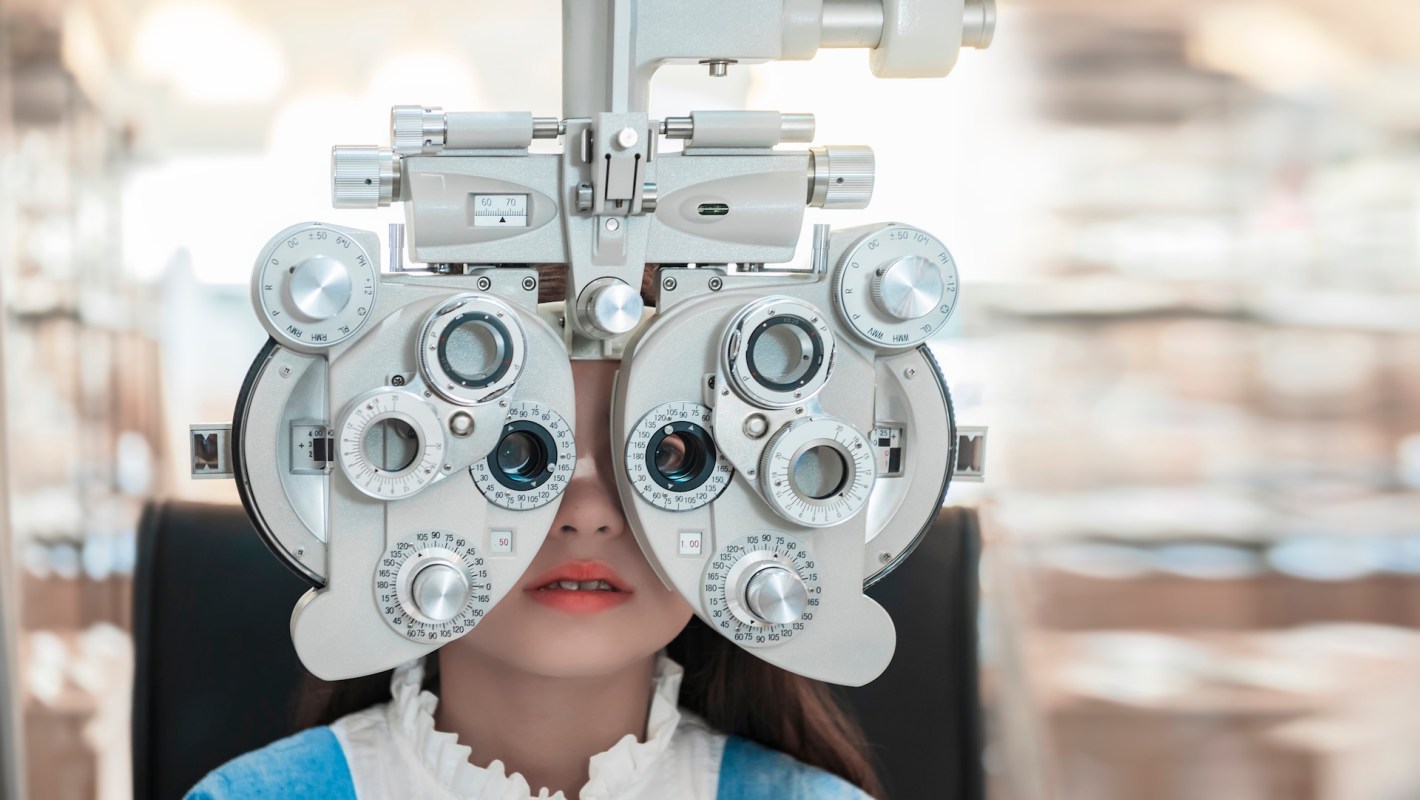
A visible band of light may hold an unexpected clue in the fight against nearsightedness after an animal study found that indigo-wavelength light prevented tree shrews from developing myopia, pointing to a possible future path for protecting vision early in life.
Here's what to know
According to Popular Mechanics, research in Cell Reports Medicine showed that tree shrews' eye development makes them a useful model for human myopia.
At Cincinnati Children's Hospital, scientists tracked how various wavelengths moved through the animals' lenses. To trigger myopia experimentally, they placed a myopia-inducing lens over one eye and used the untreated eye for comparison.
The benefit showed up around 435 to 440 nanometers, an indigo portion of the spectrum between violet and blue.
Adding those indigo wavelengths to white light produced striking results.
"Indigo wavelength supplementation completely suppressed refractive change in response to the [myopia-inducing] lens and produced eyes … almost identical to that of controls. Indigo wavelength supplementation also eliminated the exaggerated axial elongation of induced myopia," the authors stated.
TCD Picks » Quince Spotlight
💡These best-sellers from Quince deliver affordable, sustainable luxury for all




In the paper, the researchers said myopia affects 2.8 billion people and could reach 4.8 billion by 2050.
More background
Despite their name, tree shrews are considered near primates, which can make them more informative than mice for some kinds of human vision research.
Like human eyes, their eyes can change shape during development in response to visual cues.
Because myopia commonly starts in childhood, early eye growth matters. The researchers noted that humans are "typically born hyperopic," or farsighted, and that the way the eye develops in youth shapes later focusing ability at different distances.
As more people become myopic, the demand for exams, corrective lenses, and follow-up care can rise — and affordable care is not equally available to everyone.
That does not mean a special bulb can treat vision problems. It does, however, suggest that ordinary indoor lighting may influence the biology of eye development.
In the declaration of interests section of the paper, the researchers disclose that two of them "are inventors on pending patents for lighting devices related to this work" and that one, Rafael Grytz, "is founder and CSO of Electric Indigo, a UAB startup in which UAB holds an ownership interest. Electric Indigo will pursue myopia prevention technologies based on the current analysis."
What's being done?
Human prevention experiments face an obvious ethical limit: Researchers cannot intentionally cause myopia in children. That is one reason evidence from near primates carries extra weight.
If this line of research pans out, the intervention might come from the built environment. Schools, day care centers, and other public buildings where children spend hours indoors could be candidates for improved lighting design.
Indigo wavelengths are part of visible light and may simply be too weakly represented in many artificial lighting systems.
Should future research confirm the effect in people, the next step might be revising lighting standards, a public health measure that could reach large numbers of people.
"The indigo light that provides 100% efficacy in myopia suppression is poorly represented in the spectral power distribution of the fluorescent lights and warm white LEDs that are mainstays of the lighting industry," the researchers explained.
Where can I learn more?
While the researchers did not indicate that the shrews were exposed to indigo light by human activity in or near their natural habitats, here are some articles about factors such as light and sound affecting animals in the wild:
• Constant nighttime glow can disrupt honeybee sleep patterns and add stress to struggling colonies.
• Across neighborhoods, outdoor fixtures can drive deadly insect losses by overwhelming nocturnal behavior.
• In a Norwegian fjord, vessel noise can leave whales effectively blinded as they navigate.
This puts the myopia research in context by showing that the spectrum and intensity of modern environments can have biological effects. That is one reason indoor lighting design merits a close look before childhood vision problems become more widespread.

Get TCD's free newsletters for easy tips, smart advice, and a chance to earn $5,000 toward home upgrades. To see more stories like this one, change your Google preferences here.






