


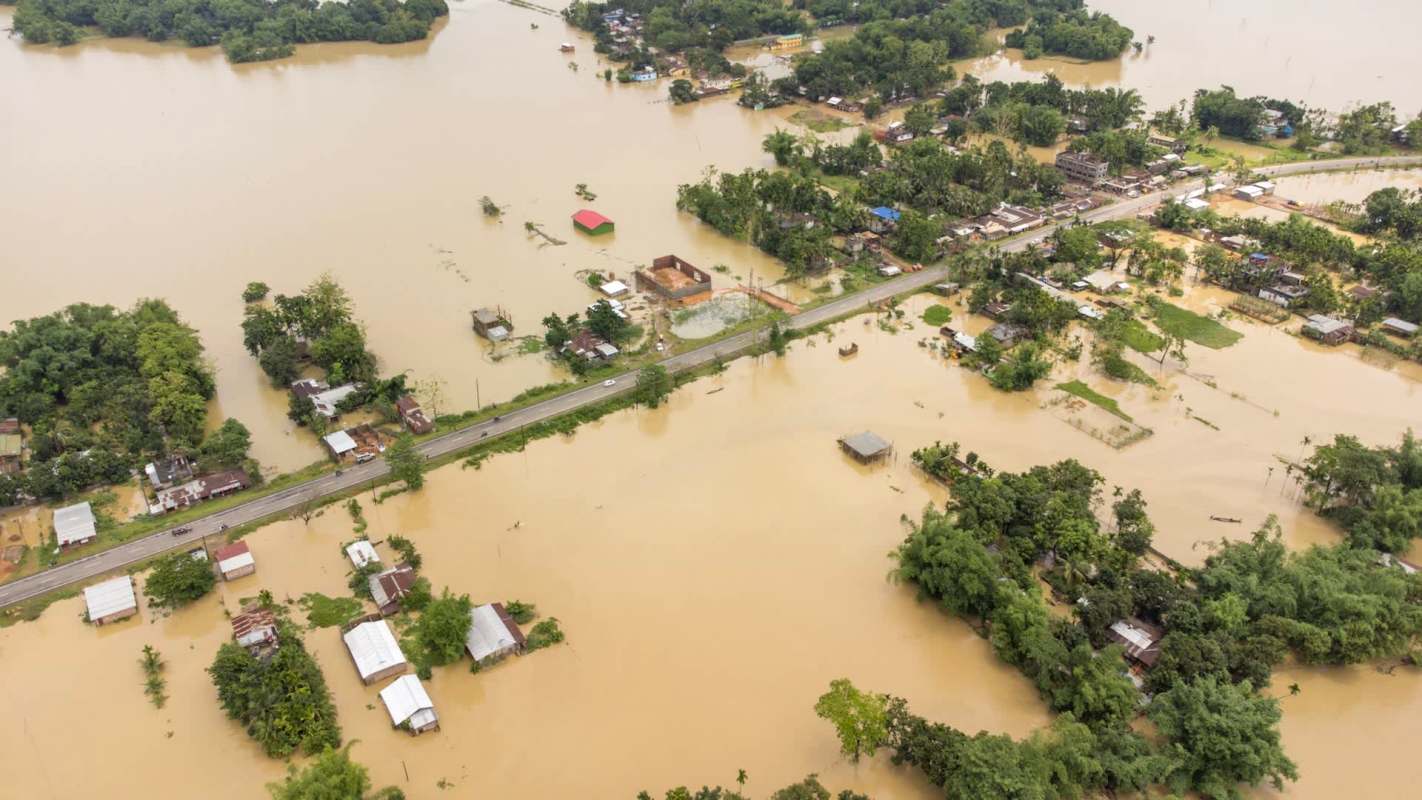
Deadly flooding has once again battered South Asia. Heavy rain triggered landslides, destroyed homes, and pushed major rivers past danger levels across parts of India and Nepal.
The death toll is at least 56 in Uttar Pradesh, with another 12 fatalities reported in Nepal.
Here's what to know
Officials in Uttar Pradesh said flooding and landslides caused by heavy rain killed 56 people, injured 46, and damaged more than 1,000 houses in the northern Indian state, Al Jazeera reported.
Far more rain than usual fell in Uttar Pradesh between September 25 and September 27. 2.6 inches (66.5 millimeters) fell instead of the normal quarter of an inch (7.6 millimeters). Relief commissioner Hrishikesh Bhaskar Yashod said, "Exceptionally heavy rain that has affected much of Uttar Pradesh," adding, "a depression over the Bay of Bengal moved inland and intensified rainfall across the region."
Heavy downpours in Odisha swelled rivers enough that authorities evacuated more than 70,000 people from low-lying, flood-prone areas, NDTV reported. Officials also shut Devkund, a popular tourist destination, after the rain damaged bridges and culverts.
Nepal, meanwhile, was hit by another round of floods and landslides that left at least 12 people dead and several others missing. With rivers and tributaries still rising, officials warned that flash flooding was possible in 49 of the country's 77 districts.
TCD Picks » Quince Spotlight
💡These best-sellers from Quince deliver affordable, sustainable luxury for all




More background
With more than 240 million residents, the downpour in Uttar Pradesh could have serious consequences. However, the region routinely faces rain and thunderstorms during the June-to-September monsoon season.
India's Central Water Commission also put 30 river-gauge stations in seven states in a "severe situation." The Ganga, Gandak, Kosi, Bagmati, and Narmada were among the rivers above danger marks, increasing the threat to nearby communities, farms, and transportation routes.
Power outages hit Manang, Mustang, Myagdi, and Baglung, and crews were working to restore electricity. Officials at Nepal's Ministry of Energy and Energy Minister Biraj Bhakta Shrestha said that flooding in the Rahuganga River damaged both the structure and transmission towers of a 40-megawatt hydropower project. Nepal's flooding follows a late-August disaster that left more than 1,400 people dead and thousands missing.
What's being done?
Advanced notice and preparation are some of the best defenses in situations like this, because once the floodwaters come, there is not much that can be done to stop the damage.
Officials in Odisha moved over 70,000 residents out of flood-prone areas before conditions worsened and closed tourist access, where damaged infrastructure made sites unsafe.
Authorities in Nepal put 49 districts on alert for possible flash flooding, while ministry officials said crews were trying to restore electricity in affected areas.
Where can I learn more?
The flooding in India and Nepal comes amid a broader stretch of monsoon disasters and rising water risks. These stories look at growing flood threats globally.
• Across the Himalayas, a growing threat in the Himalayas could send catastrophic floodwaters downstream.
• Globally, deadly floods are becoming more destructive as warming intensifies extreme rainfall.

Get TCD's free newsletters for easy tips, smart advice, and a chance to earn $5,000 toward home upgrades. To see more stories like this one, change your Google preferences here.






