


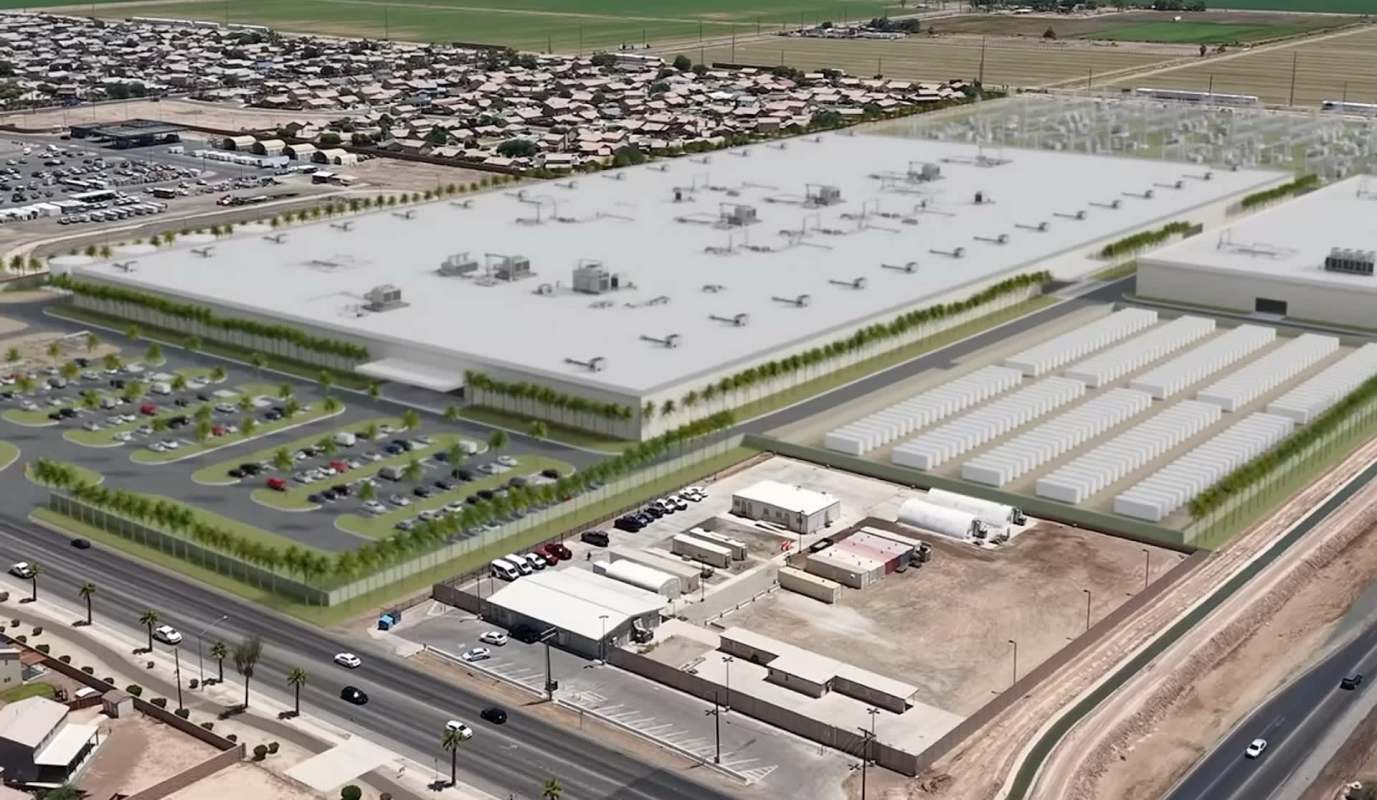
California officials have put the brakes on what could become the state's largest data center, turning what had been a fast-moving local development dispute into a broader fight over water, air quality, and energy demand.
The controversy has taken on another dimension as the proposed project now faces both a new county moratorium and a separate legal battle over access to Colorado River water, according to The Business Journal.
What happened?
The proposed Imperial Data Center — an almost 1 million-square-foot hyperscale complex in rural Imperial County designed to support AI and machine learning operations — cleared a key hurdle in April when county supervisors approved the merger of parcels for the site.
But that momentum quickly faded.
After months of pushback from community members, county supervisors last week adopted a 45-day halt on data centers and also set up a public commission to weigh zoning issues, according to The Business Journal. This decision came after a public hearing that lasted over an hour, during which residents sharply criticized both the project and the speed of its approval process.
Rucci has said he will fight that decision in court, maintaining that the county did not have a sound legal basis for the moratorium.
TCD Picks » Quince Spotlight
💡These best-sellers from Quince deliver affordable, sustainable luxury for all




"It's defective," he said, per The Business Journal. "The county wrote a moratorium after one year of the approvals. Moratoriums are not there as a planning tool. They're there for very specific emergencies."
The Business Journal reports that the project's backers, Imperial Valley Computer Manufacturing, LLC, have promoted the proposal as an economic boost, with an estimated 2,500 construction jobs, 100 permanent jobs, and around $28 million in yearly tax revenue.
Critics, however, say a project of this scale moved through the approval process too quickly and without enough public scrutiny.
"They can't just come in and claim that they're exempt and have a right to build the biggest data center in the state without any oversight," said State Sen. Steve Padilla, a San Diego Democrat, at a town hall in El Centro, per The Business Journal.
Why does it matter?
Imperial County is already under pressure from pollution, limited water supplies, and intense agricultural demand, so this proposed data center carries some detrimental risks.
Plans to supply the facility with recycled water initially appeared central to the proposal, but that approach fell apart. The company then sued the Imperial Irrigation District for 260 million gallons of Colorado River water each year, arguing it could redirect water linked to nearby farmland it had purchased and then fallowed.
The project is also facing challenges over environmental review. The City of Imperial says the development is very close to homes and should not move forward without a fuller analysis of air quality, water use, and energy demand.
AI has been promoted as a tool that can help optimize clean energy systems, improve grid forecasting, and make industries more efficient. At the same time, the data centers that support AI can require enormous amounts of electricity and water, potentially straining local infrastructure, worsening pollution if fossil fuels are used to meet demand, and raising energy costs for other customers.
The rapid expansion of AI infrastructure has also fueled broader concerns about security, misuse, and unintended social consequences. Some argue that large-scale data centers could drive economic and technical innovations. However, the environmental harm, massive use of resources, and effect on local communities overshadow this.
As more of these facilities are proposed, communities are increasingly asking who stands to benefit — and who will bear the costs.
What are people saying?
Rucci has argued that much of the opposition is driven more by emotion than by law, The Business Journal reported.
"People can't just emotionally say that I dislike data centers. It's just a building, but with a lot less intensive use than other uses," he said.
Lawrence Cox, owner of Coastline Family Farms, warned, "We're losing our ability to compete because of California-specific rules and regulations."
Michelle Hollinger, a vice president for Victoria Homes, pushed back from a different angle: "Let me tell you what is actually expensive. It is expensive when Imperial Valley has some of the highest pediatric asthma rates in California."

Get TCD's free newsletters for easy tips, smart advice, and a chance to earn $5,000 toward home upgrades. To see more stories like this one, change your Google preferences here.






