


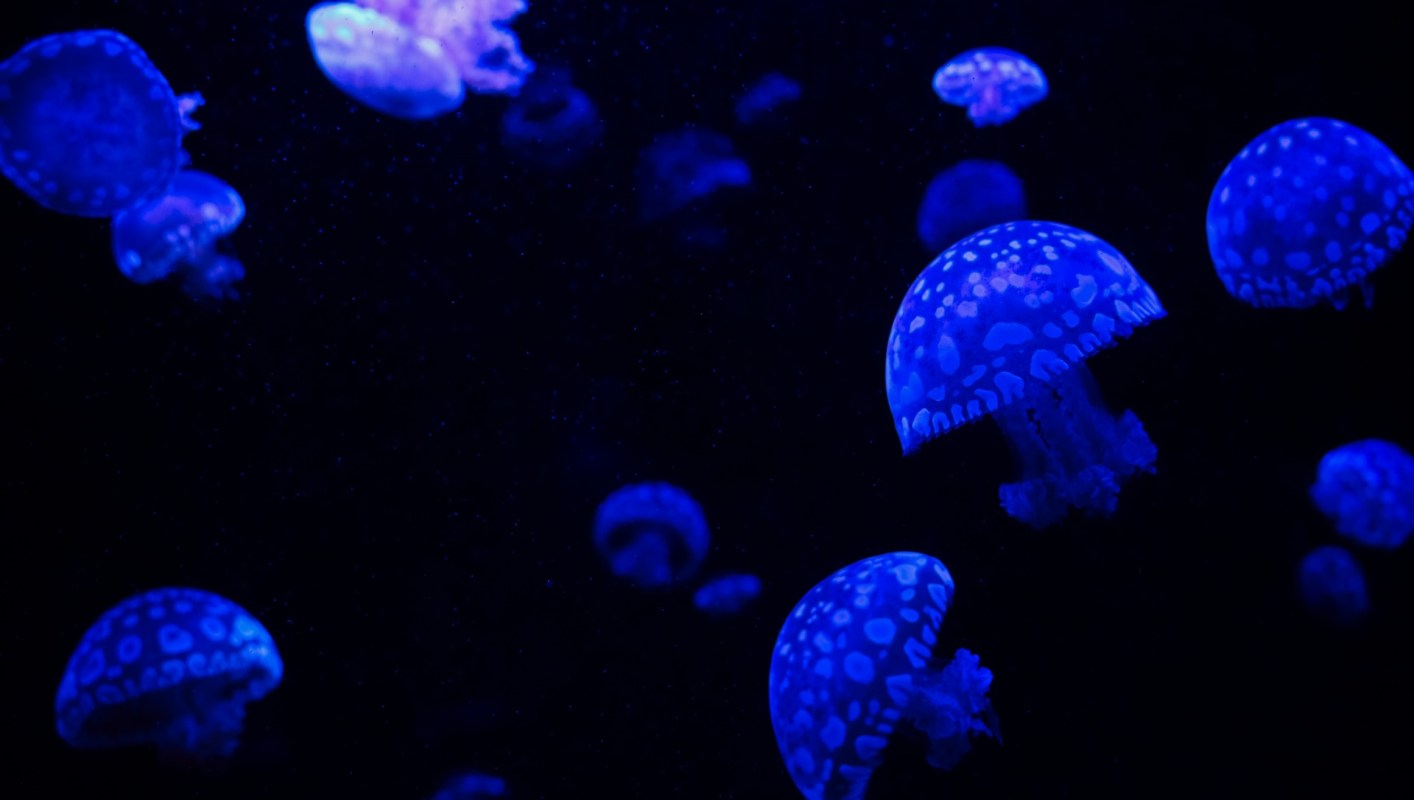
A jellyfish small enough to sit on a pinky fingernail that can reverse its own aging may have been hitching rides on cargo ships across the world's oceans for centuries.
Here's what to know
According to ScienceBlog, Turritopsis dohrnii — the animal known as the "immortal jellyfish" that can restart its own life cycle — is now regarded as globally distributed due to commercial shipping.
Although the species was first documented in the Mediterranean in the 1880s, it became a major scientific curiosity only in the 1990s. A student in Italy saw an adult medusa contract into a mass of tissue, return to the polyp stage of its life cycle, and then give rise to new medusae genetically identical to the original animal — a process known as transdifferentiation, in which specialized adult cells switch directly into other types of cells. The American Museum of Natural History has described it as "the animal hitting a reset button."
Support for a shipping-driven spread came in 2009, when marine biologist Maria Pia Miglietta of Texas A&M University at Galveston and colleague Harilaos Lessios published "A silent invasion." Samples from Panama, Spain, Italy, Japan, and Florida all carried the same mitochondrial DNA marker even though populations were thought to have been separated across oceans for long periods.
More background
That does not mean every immortal jellyfish on Earth came from a single original animal. Matching sequences at one gene fit better with a small number of founder animals moved by ships, followed by clonal reproduction that kept their descendants highly similar.
The expansion matters because ballast water has long been recognized as a pathway for marine invasions. Ships take in seawater for stability and later release it at other ports, often along with tiny organisms that have taken a free ride. A species as small and resilient as Turritopsis dohrnii is especially suited to surviving that kind of transport.
TCD Picks » Quince Spotlight
💡These best-sellers from Quince deliver affordable, sustainable luxury for all




The problem is that when invasive or fast-spreading marine species establish themselves in new ecosystems, they can disrupt food webs and impact fisheries, biodiversity, and ocean health. The jellyfish's near-global reach shows how difficult it can be to reverse ecological damage once a species has been widely introduced.
What's being done?
Researchers are continuing to study the species not only because of its spread, but also because its biology may reveal something fundamental about aging and cell repair. Miglietta has spent much of her career examining the jellyfish and how it reverses its life cycle.
A 2022 genome study led by researchers in Spain found that Turritopsis dohrnii has additional copies of genes linked to DNA repair, telomere maintenance, and defense against oxidative stress compared with a close relative that cannot rejuvenate.
That does not mean a human anti-aging breakthrough is right around the corner, but the research could still help scientists better understand regeneration, cellular damage, and the ways living systems respond to stress.
It is both a warning about human-driven ocean change and a living mystery. Stronger monitoring, treatment systems, and enforcement can help reduce the chances that ships unintentionally move species from one ecosystem to another.

Get TCD's free newsletters for easy tips, smart advice, and a chance to earn $5,000 toward home upgrades. To see more stories like this one, change your Google preferences here.






