


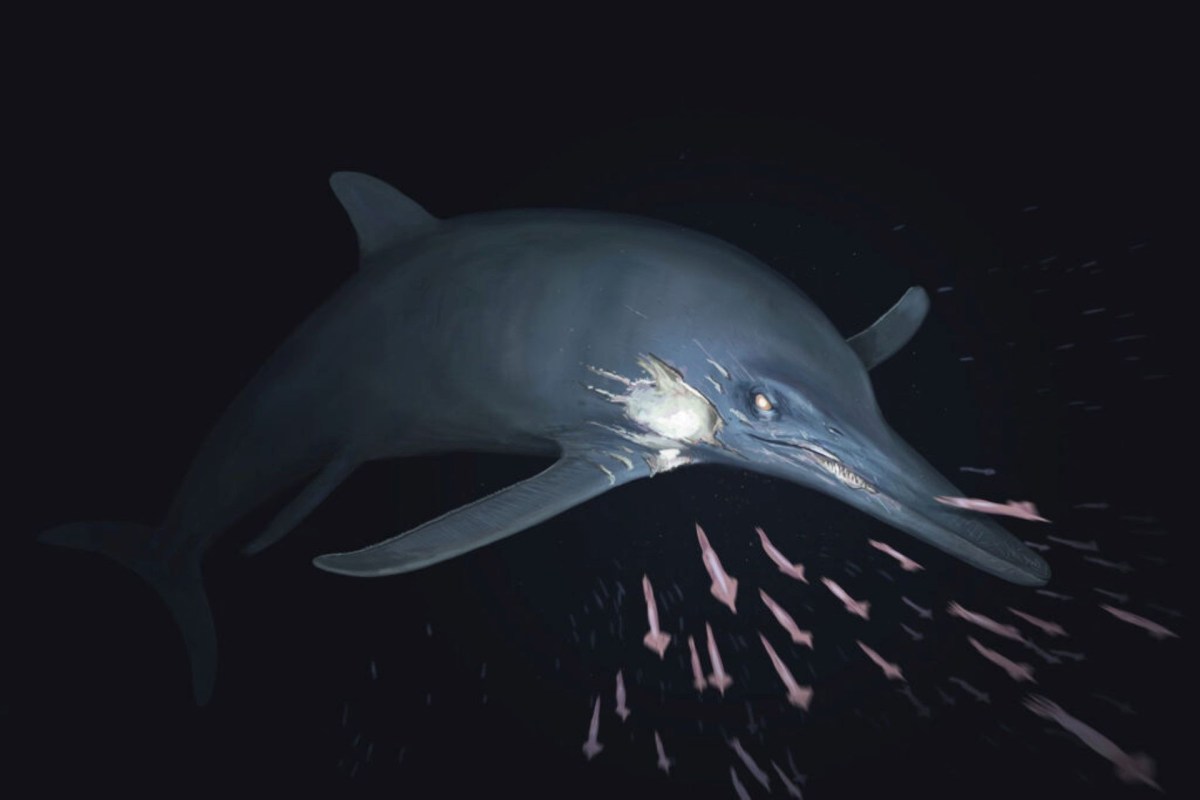
A newly discovered fossil may provide researchers with fresh insight into the ecology of the Jurassic Sea.
According to The Independent, the ichthyosaur fossil, from the genus Temnodontosaurus, was once a dolphin-shaped marine reptile that lived more than 180 million years ago and could grow to more than 20 feet long.
Its remains came from the Mistelgau clay pit near Bayreuth, Germany, an area known for preserved marine fossils, and the discovery is now generating buzz in science and paleontology circles.
What stands out most is the survival story preserved in its bones. Researchers, whose study was published in the journal Zitteliana, said the reptile appears to have lived with multiple injuries, including damage around the shoulder region and jaw joint that likely would have made hunting challenging.
Study author Ulrike Albert described the fossil as "one of the youngest finds of this ichthyosaur genus to date," suggesting these giant marine reptiles may have persisted in the Southwest German Basin longer than previously believed.
The Independent noted that, though the skeleton was incomplete, the team recovered enough pieces of the skull and jaws, parts of the shoulder girdle, forefins, stretches of the spine, and upwards of 100 teeth to reconstruct a notably detailed picture of the animal's life.
TCD Picks » Quince Spotlight
💡These best-sellers from Quince deliver affordable, sustainable luxury for all




That reconstruction points to adaptation. The researchers wrote that injuries to the pectoral girdle and jaw seem to have changed the reptile's hunting and feeding behavior, possibly explaining the heavy wear on its teeth and the gastroliths found in its abdominal region.
Gastroliths are stones swallowed to help grind up food, and they are seldom seen in other examples of these prehistoric beasts.
Another study author, Stefan Eggmaier, said the injuries "likely significantly limited the animal's ability to catch prey." Even so, the reptile survived long enough to leave behind evidence that it had adjusted.
In that sense, the fossil records more than a formidable predator — it also preserves an ancient example of resilience.
Discoveries like this help researchers reconstruct the ecology of ancient oceans and better understand how top predators responded to injury, stress, and shifting feeding strategies.
New technology similarly allowed researchers to analyze ocean organisms that became extinct about 445 million years ago.
That broader work can sharpen scientists' view of how marine ecosystems changed over time while also highlighting the value of protecting and studying fossil-rich sites, such as Mistelgau.

Get TCD's free newsletters for easy tips, smart advice, and a chance to earn $5,000 toward home upgrades. To see more stories like this one, change your Google preferences here.






