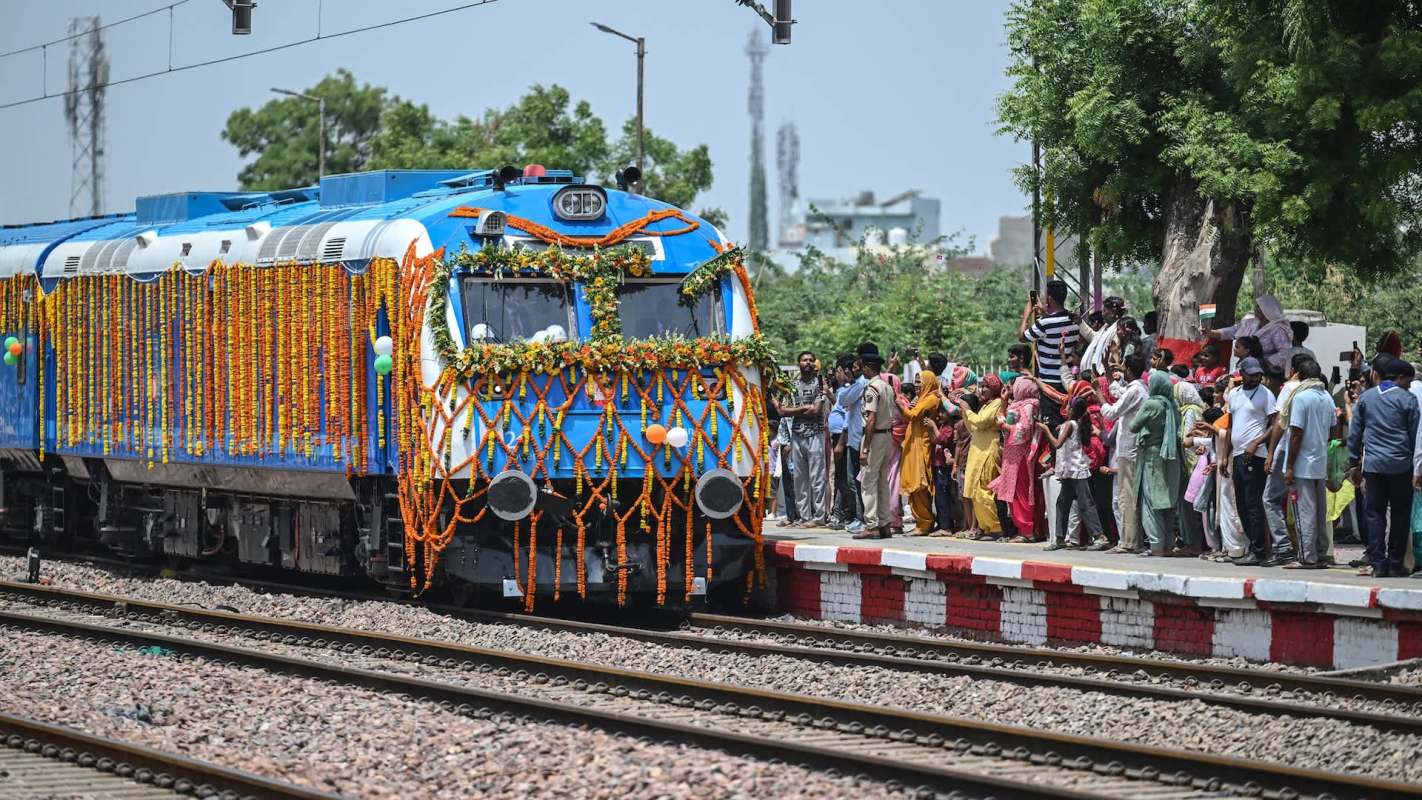
India has put its first homebuilt hydrogen train on the tracks, offering a cleaner option for one of the world's busiest rail systems.
The pilot, launched in Haryana, offers an early look at how future rail travel could move thousands of people with less diesel pollution and more homegrown energy technology.
What's happening?
As India looks for lower-emission ways to run its railways, last Friday brought the first hydrogen-powered train built in the country, according to the Associated Press.
The new train can carry about 2,600 passengers and reach 75 kilometers per hour, or 47 mph. Its configuration includes eight passenger coaches and two hydrogen-powered driving cars.
The inaugural event was held at Haryana's Jind railway station, where Prime Minister Narendra Modi launched the "NaMo Green Rail" on Friday.
Hydrogen fuel cells make electricity by combining hydrogen with oxygen, leaving water vapor as the only direct emission. To test how this could work beyond the train itself, the pilot also includes hydrogen storage and refueling systems that would be necessary for wider use.
TCD Picks » Good Store Spotlight
Get 10% off your next purchase with code TCD10




Why does it matter?
India's rail system is enormous, and even modest changes in how trains are powered can have an outsized effect. On routes that are not fully electrified, hydrogen trains could offer an alternative to diesel without requiring overhead electric lines across every corridor.
That could mean cleaner air for communities near rail corridors and stations. Reducing diesel use can help curb harmful pollution that affects the lungs and heart, especially in densely populated areas where transit demand remains high.
If hydrogen technology becomes more common, rail operators may be able to reduce their exposure to fluctuating diesel costs while expanding service in places where full electrification is expensive or slow to build.
For passengers, that could translate into cleaner, more modern travel without sacrificing capacity.
India's hydrogen pilot fits into a broader global effort to move more people with less climate impact.
What's being done?
With India targeting net-zero emissions by 2070, lowering pollution from transportation is a major part of the challenge. This launch is part of the country's wider push to build a green hydrogen economy.
Indian Railways is now using this Haryana route as a real-world test case. By pairing the train with hydrogen storage and refueling systems, officials can evaluate how well the equipment performs, how reliably the train runs, and whether the model makes sense for broader deployment.
Other countries already operate hydrogen trains on lines that are not fully electrified, so India is entering an area with some existing international experience. Because this version was built domestically, a successful pilot could also strengthen local manufacturing and technical expertise.
On X, Prime Minister Narendra Modi called it "a very significant day in the direction of self-reliant India and sustainable development," per AP.

Get TCD's free newsletters for easy tips, smart advice, and a chance to earn $5,000 toward home upgrades. To see more stories like this one, change your Google preferences here.