


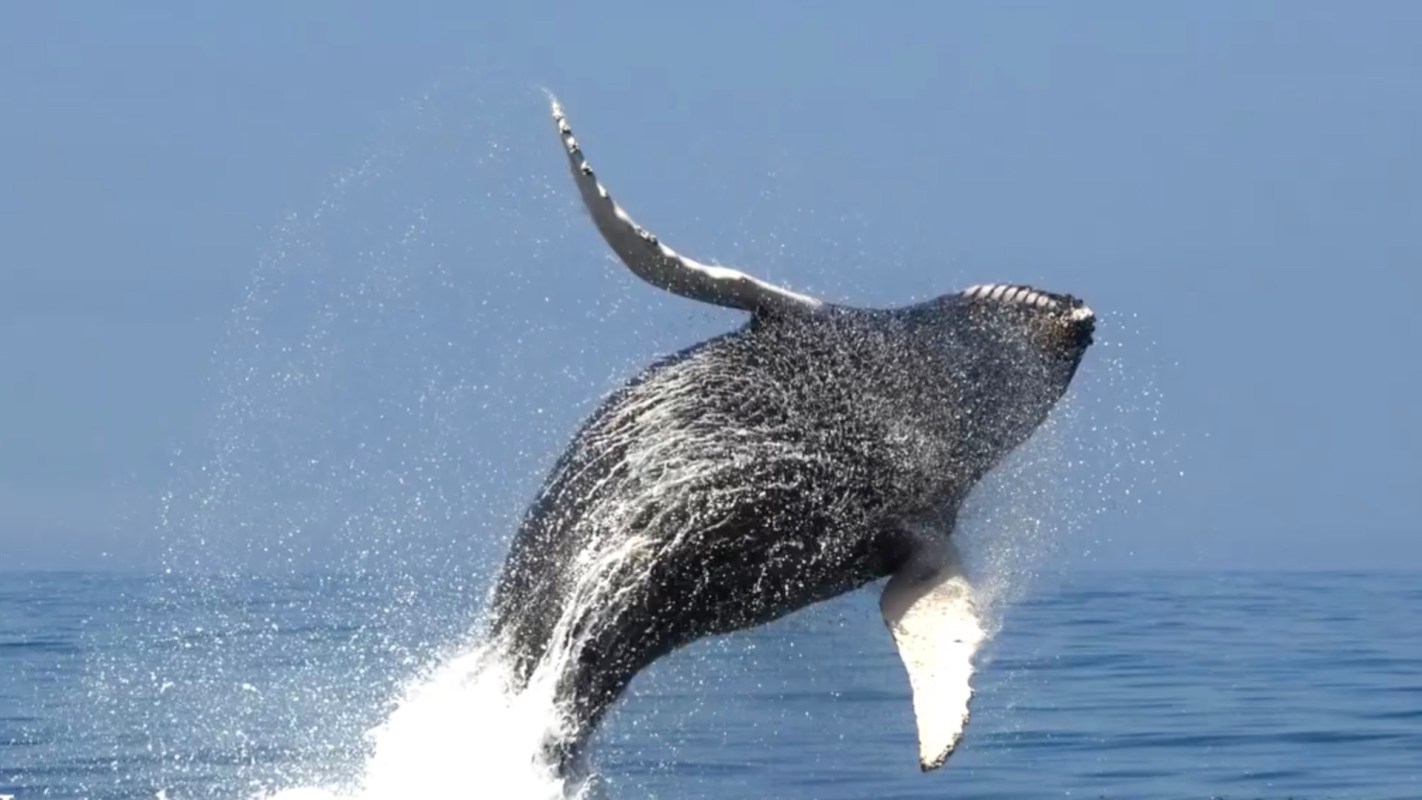
Researchers monitoring the coasts of New York and New Jersey are surprised to see a lot of rather rare marine wildlife behavior unfolding this summer.
While it's not completely uncommon for certain marine species to interact with each other in certain areas, it's often not witnessed or monitored by humans in real time.
What happened?
According to NewsNation, the Wildlife Conservation Society's New York Bight Program captured photos and video in the New York Bight, one of North America's busiest marine ecosystems, about 25 to 35 miles south of Long Island between Montauk, New York, and Cape May, New Jersey.
During the outing, the Ocean Giants research team saw common dolphins riding the bow of the vessel and humpback calves practicing behaviors like breaching, along with humpbacks bubble-feeding, fin whales pushing through schools of fish, and minke whales that were likely feeding just below the surface.
Dr. Howard Rosenbaum, executive director of the Wildlife Conservation Society's New York Bight Program, said the animals "were feeding, taking advantage of an incredibly productive foraging hotspot."
Taken together, the observations further support the New York Bight's status as a hot spot for marine wildlife.
TCD Picks » Quince Spotlight
💡These best-sellers from Quince deliver affordable, sustainable luxury for all




Why does it matter?
Because pollution and ocean dumping once badly harmed the New York Bight, the presence of several whale species thriving there suggests a real environmental recovery in one of North America's busiest marine ecosystems, NewsNation reported.
The New York Bight began to improve after the Marine Protection, Research, and Sanctuaries Act of 1972 was instituted and helped reduce dumping and protect marine habitats. The return of large marine animals is a major sign that the food web is functioning more effectively, according to the National Oceanic and Atmospheric Administration.
"When we began our research more than a decade ago, these waters weren't widely recognized as important whale habitat," Rosenbaum told NewsNation. "But days like this help bring our long-term science to life, and remind us why protecting these waters has never been more important."

Get TCD's free newsletters for easy tips, smart advice, and a chance to earn $5,000 toward home upgrades. To see more stories like this one, change your Google preferences here.






