


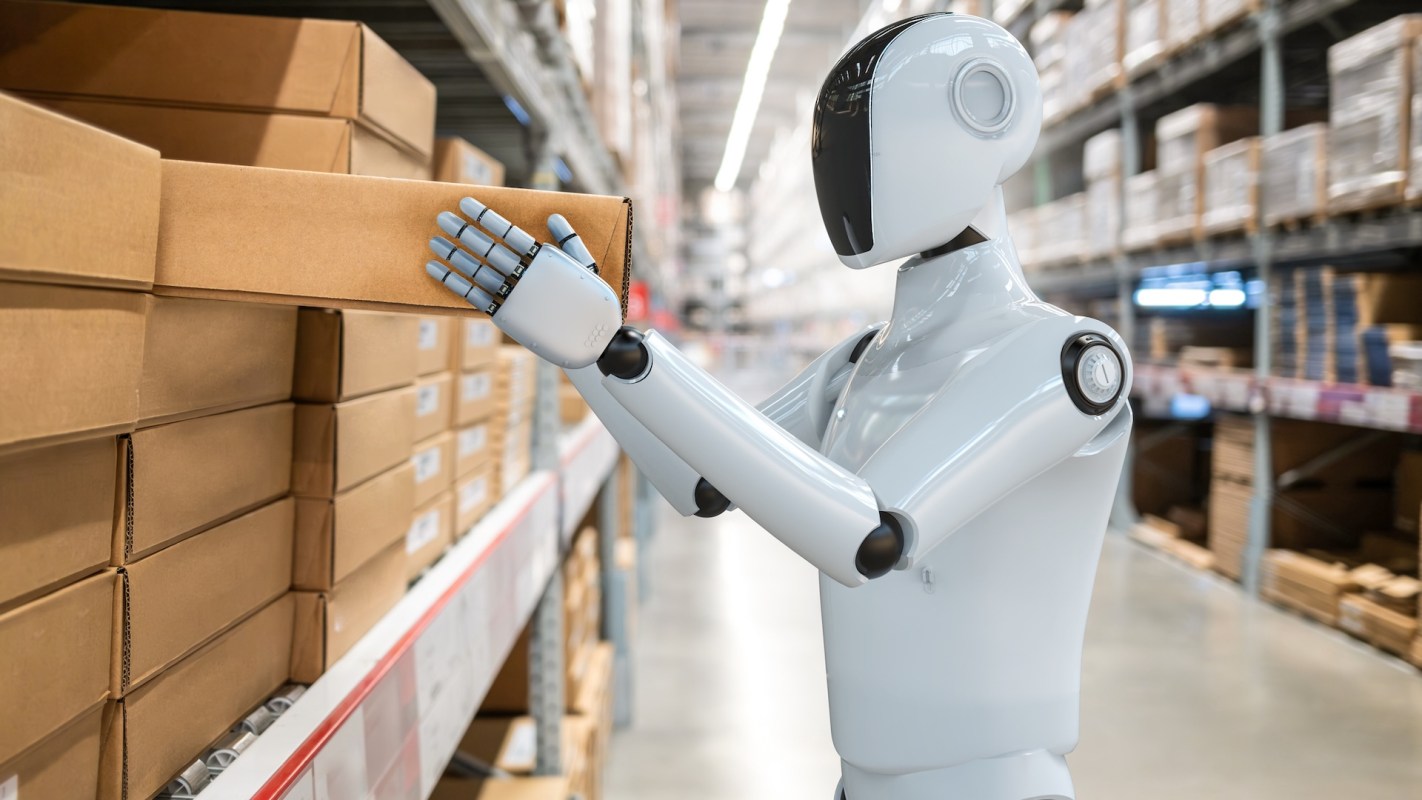
At a Føtex store outside Copenhagen, an after-hours retail experiment is underway: humanoid robots are being taught to collect products, bring them to the correct aisle, and stock shelves once the store is empty.
If that effort works, machines could begin taking over one of retail's routine overnight chores, giving human employees more time for customer-facing work.
Here's what to know
Hive Robots began training Unitree-made humanoids in a Copenhagen-area supermarket in June. Human operators still guide the robots through each step while the system learns to handle different items, and Euronews reports that the aim is autonomous shelf restocking by early 2027.
This single-store trial is also part of a wider Salling Group test. As Denmark's largest retailer operates more than 2,000 stores in six European countries, the outcome could have implications far beyond one location.
According to Føtex, shelf replenishment takes up about 40% to 50% of employee time. The retailer is testing whether automation can take over that repetitive physical work and free staff to spend more time helping shoppers.
That would leave employees more available on the floor instead of keeping them tied up with constant restocking in aisles or back rooms.
TCD Picks » Quince Spotlight
💡These best-sellers from Quince deliver affordable, sustainable luxury for all




More background
The robots are not suited to working around daytime customers. They still move more slowly than people and require close supervision, so testing focuses on nighttime tasks after the supermarket closes.
There is also a regulatory obstacle. Danish law would need to change before autonomous robots could operate among shoppers, so the goal remains overnight work away from busy customer traffic.
Even with that constraint, the machines could eventually expand into other store jobs. Future tasks could include flagging out-of-date items, spotting empty shelves, and identifying products placed in the wrong location.
That could translate into fewer gaps on shelves, fewer misplaced goods, and more employee time spent answering questions or helping shoppers find what they need.
What's being done?
Instead of moving the robots quickly into customer-facing hours, the companies are using a tightly controlled training process. Human operators are guiding the humanoids step by step so the AI can learn to handle different products, shelf positions, and recurring stocking movements.
Supermarket inventory is highly varied. A machine must learn to handle products of different shapes, sizes, and placements, rather than simply repeat a single factory-style action.
Each company has a distinct role in the project: Hive Robots is building the retail application, Unitree supplied the humanoid platform, and Salling Group is using a real supermarket to test whether the system can ease staff workload.
The humanoids are still in training at the Føtex store near Copenhagen, with autonomous overnight shelf restocking still targeted for early 2027.
Where can I learn more?
Denmark's supermarket test is part of a broader push to use robots for repetitive work across commerce and industry. These articles look at humanoids in factories, smart sorting machines, Amazon logistics tools, and autonomous delivery systems.
• At a Chinese automaker, humanoids are working as interns in the factory for assembly tasks.
• At a recycling plant, incredibly intelligent sorting robots are separating waste with dependable precision.
• At Amazon's Italy innovation lab, engineers are developing ways to make packages smaller and lighter.
• Researchers are testing a hybrid last-mile system that pairs electric vans with delivery robots.

Get TCD's free newsletters for easy tips, smart advice, and a chance to earn $5,000 toward home upgrades. To see more stories like this one, change your Google preferences here.






