


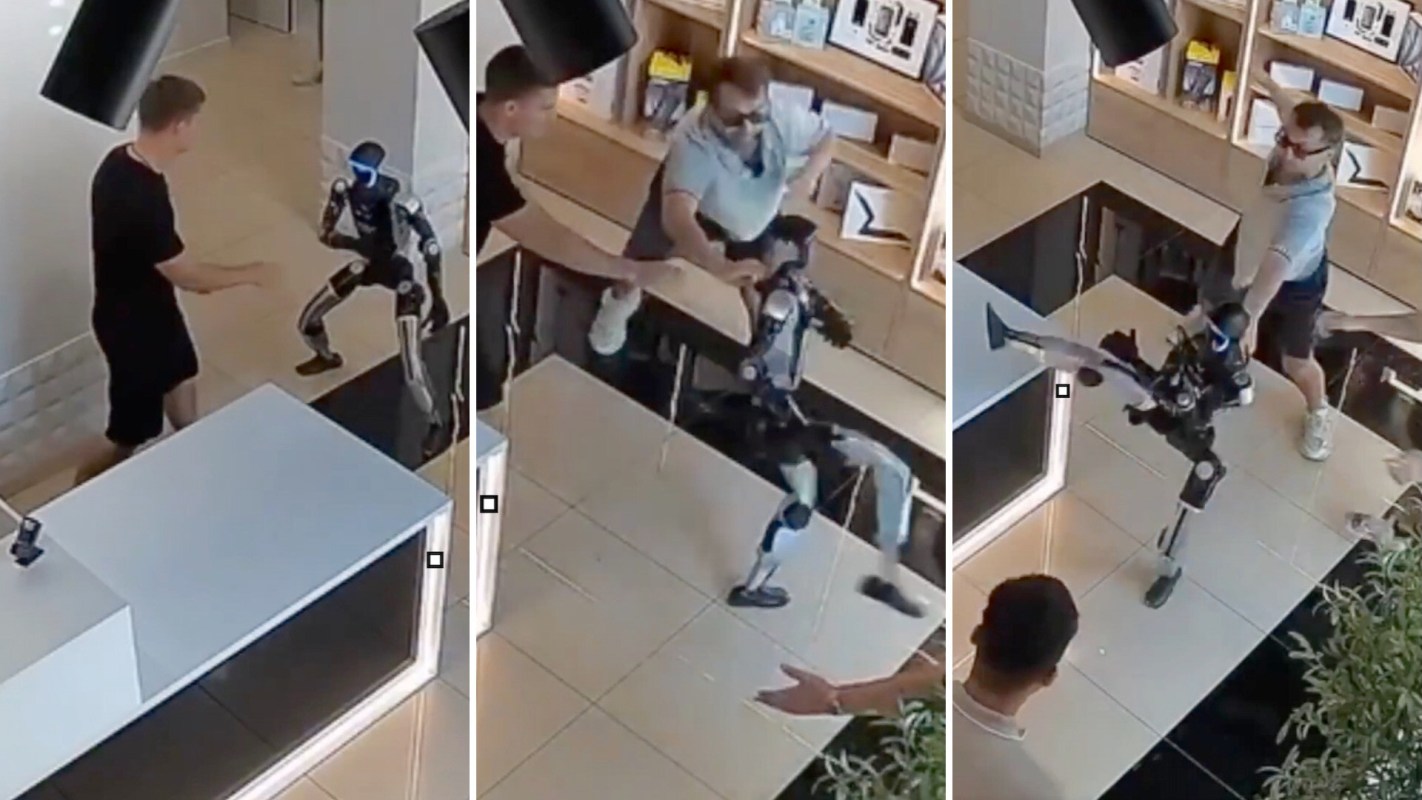
A viral store video from Russia is stirring both laughter and unease about the future of robotics after a man shoved a humanoid robot and the machine appeared to switch into a fighting routine, prompting store clerks to rush in and restrain it.
The scene looked more like a sci-fi gag than a real robot uprising, but it still raised real questions about safety and how these machines behave around people.
Here's what to know
Futurism said CCTV footage from a store in Russia appears to show a man lightly pushing what it identified as a Chinese Unitree G1 humanoid robot. The robot flinches, music starts playing, and it spreads into a wide stance before launching high kicks as two clerks move in to hold it back.
Robot consultant glitches and ATTACKS customer in Russia's Saratov The customer escaped with a fright, while robot Syoma was sent for a reboot https://t.co/tGYUhj4KPV
— RT (@RT_com) September 2, 2026
One of those kicks seemed to connect with a clerk, although the video did not indicate any serious injuries. The robot then halted suddenly and lifted its arms outward.
The biggest unknown is what viewers were actually seeing.
From the footage alone, it was impossible to tell whether the robot was under remote control, running through a scripted demonstration, or taking part in a scene staged for social media.
TCD Picks » Quince Spotlight
💡These best-sellers from Quince deliver affordable, sustainable luxury for all




More background
Basic home chores remain a challenge for humanoid robots, but their physical abilities have advanced quickly.
Futurism said demonstrations have featured robots with faster-than-human running, elaborate dance sequences, and punching or kickboxing moves — feats that may impress in controlled environments but could be hazardous around people.
This is not the first time a robot video has raised safety concerns.
Futurism also cited clips, including one showing a clown-wigged humanoid hitting a child and another showing a robot making a man's nose bleed, highlighting how even a relatively limited malfunction or aggressive movement can hurt someone.
Robot videos are not just internet curiosities. They offer a glimpse of how humanoid machines may begin appearing in stores, warehouses, hospitals, and homes — places where reliability and safety matter far more than spectacle.
What can be done?
For companies building humanoid robots, the most immediate need is better guardrails.
That includes clearer public testing standards, stronger emergency shutoff systems, and more transparency about whether a robot is autonomous, teleoperated, or simply running a scripted routine.
Businesses that showcase these machines in customer-facing settings also have a responsibility to create physical buffers and provide trained supervision so a demonstration cannot turn into an injury risk.
Even entertaining features, such as combat motions or athletic tricks, need common-sense limits when humans are standing nearby.

Get TCD's free newsletters for easy tips, smart advice, and a chance to earn $5,000 toward home upgrades. To see more stories like this one, change your Google preferences here.






