


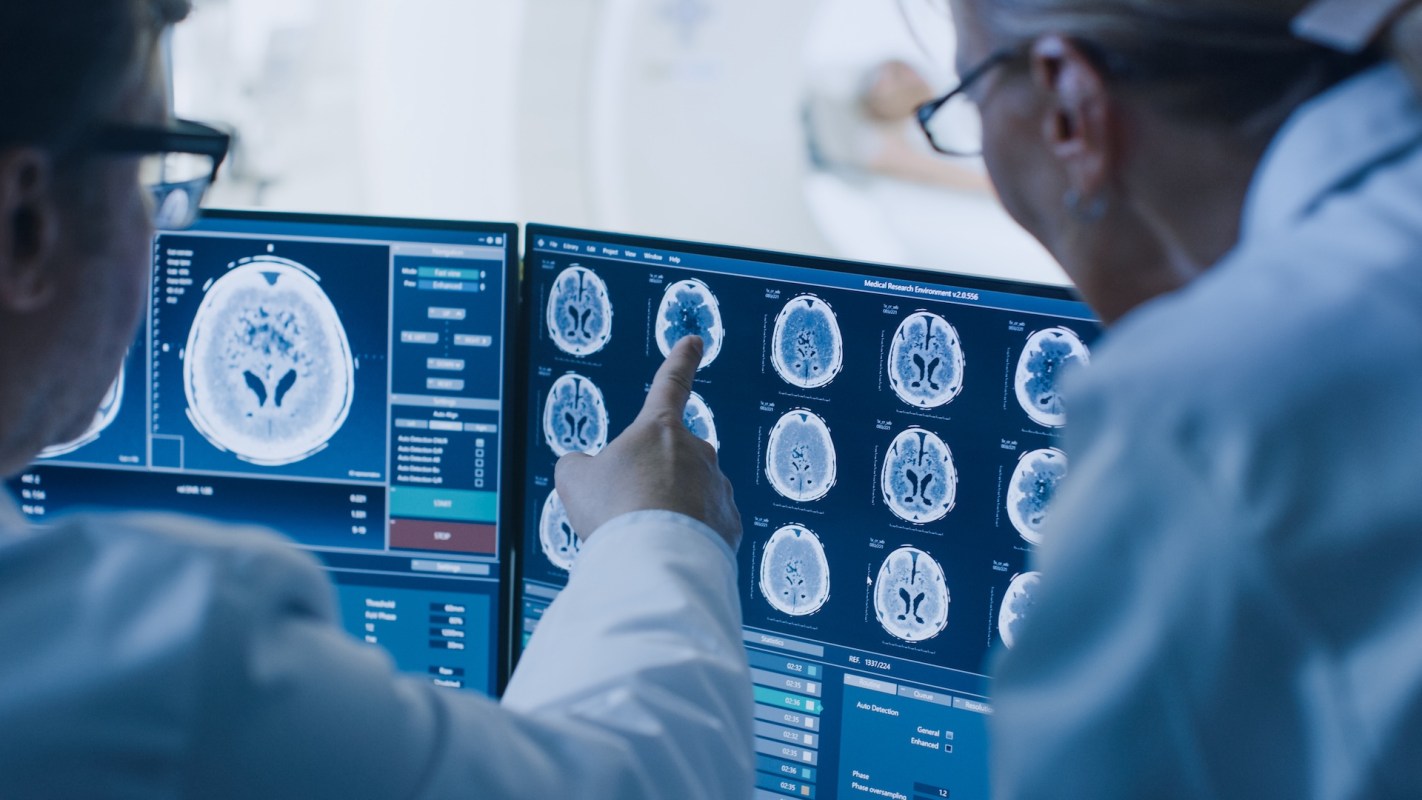
Rather than beginning as one unified control system, the human brain may actually be the product of two old neural systems that ended up sharing the same skull.
Here's what to know
A study published in Nature Neuroscience showed that the front and back portions of the brain formed along separate developmental paths in the embryo, as Smithsonian Magazine detailed.
In mouse embryos roughly a week after conception, the researchers found two categories of brain progenitor cells. Cells marked by the gene Otx2 later formed the forebrain and midbrain, while cells marked by Gbx2 developed into the hindbrain, or brainstem.
As those regions matured, they took on sharply different roles. The forebrain is responsible for higher-order functions including language and abstract thinking, while the hindbrain helps control heartbeat, sleep, hunger signals, and the muscles of the face, tongue, and throat.
"Our research suggests that evolution took two existing neural systems and pushed them together spatially," study co-author Kyle Loh, a developmental biologist at Stanford University, told New Scientist, per Smithsonian Magazine. "Having the brain as one organ would probably be more efficient, but we rely on this primordial way to make the brain as two separate pieces."
More background
The brainstem is crucial for survival and is involved in serious disorders such as spinal muscular atrophy and amyotrophic lateral sclerosis, or ALS. Researchers have also spent years struggling to direct human pluripotent stem cells to become hindbrain neurons, which has limited work on those diseases.
TCD Picks » Quince Spotlight
💡These best-sellers from Quince deliver affordable, sustainable luxury for all




The researchers found similarly distinct progenitor cells in chickens, zebrafish, and acorn worms, pointing to an evolutionarily conserved trait. In that view, what now appears to be one brain may descend from two neural systems that were compressed together over time.
Some scientists are not entirely convinced, however. Alex Pollen, a neurobiologist at the University of California, San Francisco, told Nature that it is difficult to prove the two cell populations did not arise from a single, short-lived progenitor, as Smithsonian Magazine relayed.
What's being done?
Using that developmental insight, Loh, Rayyan Jokhai, a developmental biologist at Stanford, and their colleagues say they became the first group to turn human pluripotent stem cells into functional hindbrain motor neurons.
That could make it easier to study brainstem-related diseases with greater accuracy. If researchers can reliably grow the right neurons in a dish, they may be able to test ideas about disease earlier and with more precision before moving into animal or clinical research.
Where can I learn more?
Scientists continue to study complex questions about the human brain and other lifeforms.
• Brainless jellyfish show sleep protects against DNA damage, hinting at ancient neural rules.
• Nanoplastic pollution may trigger mitochondrial dysfunction in the brain.
• Autopsied brains suggest inhaled plastics can reach through the olfactory bulb into neural tissue.
• In lab mice, microplastics caused perplexing effects in brain function that alarmed scientists.

Get TCD's free newsletters for easy tips, smart advice, and a chance to earn $5,000 toward home upgrades. To see more stories like this one, change your Google preferences here.






