


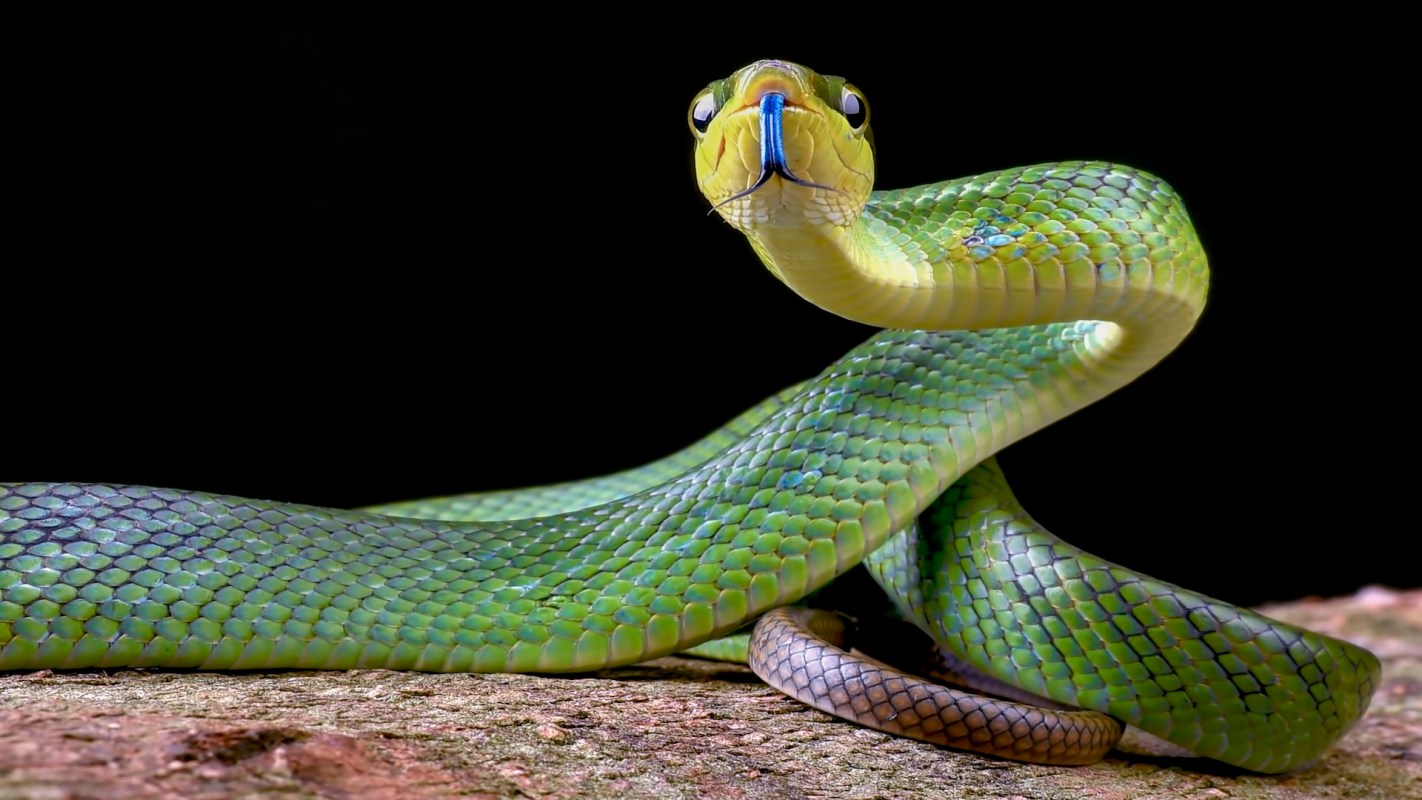
The origin of snakes' limbless, elongated bodies has long been disputed, with scientists weighing whether those traits first arose in animals adapting to life underground or in water.
Fossil evidence suggests the story is more complicated than either explanation alone.
Here's what to know
ScienceDaily reported that researchers studying a complete fossil snake skeleton say early snakes were already diverging into very different lifestyles by the Late Cretaceous, around 80 million years ago.
The fossil, from Late Cretaceous deposits in southeastern Brazil and named Tametara mirim, was examined using computed tomography and cinematic 3D rendering. Those tools let scientists study details of the skull, vertebrae, and even the brain endocast that otherwise would've been difficult to examine from exposed bone alone.
"Our findings show that early snakes had already achieved remarkable ecological and morphological diversity by the Late Cretaceous, around 80 million years ago," Tiago Simões, lead author of the study and an assistant professor at Princeton University, said.
When researchers compared Tametara with another fossil snake, Dinilysia patagonica from Argentina, they found major differences in brain anatomy. Those differences pointed to distinct ways of life rather than a single evolutionary route.
TCD Picks » Quince Spotlight
💡These best-sellers from Quince deliver affordable, sustainable luxury for all




More background
More than 4,000 snake species are alive, all descended from lizard ancestors whose bodies changed extensively. Despite that living diversity, researchers still haven't fully explained how the basic snake body plan first appeared.
That question has been hard to answer largely because fossils from the earliest snakes are scarce. Scientists have therefore remained split between ideas that emphasize burrowing as the driver of limb loss and body elongation and others that point instead to aquatic habitats.
The study suggests each of those explanations may describe only part of what happened.
"The two had strikingly different brain shapes, both from each other and from most other snakes studied," Nicolas Di-Poï, research director at the University of Helsinki's HiLIFE Helsinki Institute of Life Science, said. "Brain shape and bone microstructure pointed to the same conclusion: Tametara was adapted to burrowing, Dinilysia to life on the ground."
"Together with evidence from marine sediments, the findings reveal several shifts between burrowing, terrestrial and marine lifestyles in early snake evolution," Di-Poï added. "Different lineages explored different habitats much earlier than previously thought."
What's being done?
Scientists are increasingly turning to newer imaging tools to answer questions that traditional fossil analysis couldn't fully settle. In this case, computed tomography and cinematic 3D rendering helped researchers build a far more detailed picture of how an ancient snake may have sensed its surroundings and moved through them.
"The brain tells a much richer story than the skeleton alone," researcher Simone Macrì said. "By combining computed tomography-based brain reconstructions with data from living snakes, we could show that early snakes were not simply progressing toward one modern condition but experimenting with different sensory and ecological strategies. This means that early snakes did not follow a single evolutionary pathway."
Where can I learn more?
For more on how snakes have changed over time, these stories look at everything from ancient fossils to unusual modern lineages.
• In a Philippine lake, a venomous sea snake evolved in just a few hundred years.
• In Gujarat, India, an ancient 50-foot snake may rank among the largest ever found.
• From king cobras to Burmese pythons, snakes keep evolving a taste for their own kind.
• Under a forest log in India, researchers found a bizarre snake species with pointed teeth.
• In Sichuan, China, scientists rediscovered a rare snake decades after it vanished.

Get TCD's free newsletters for easy tips, smart advice, and a chance to earn $5,000 toward home upgrades. To see more stories like this one, change your Google preferences here.






