


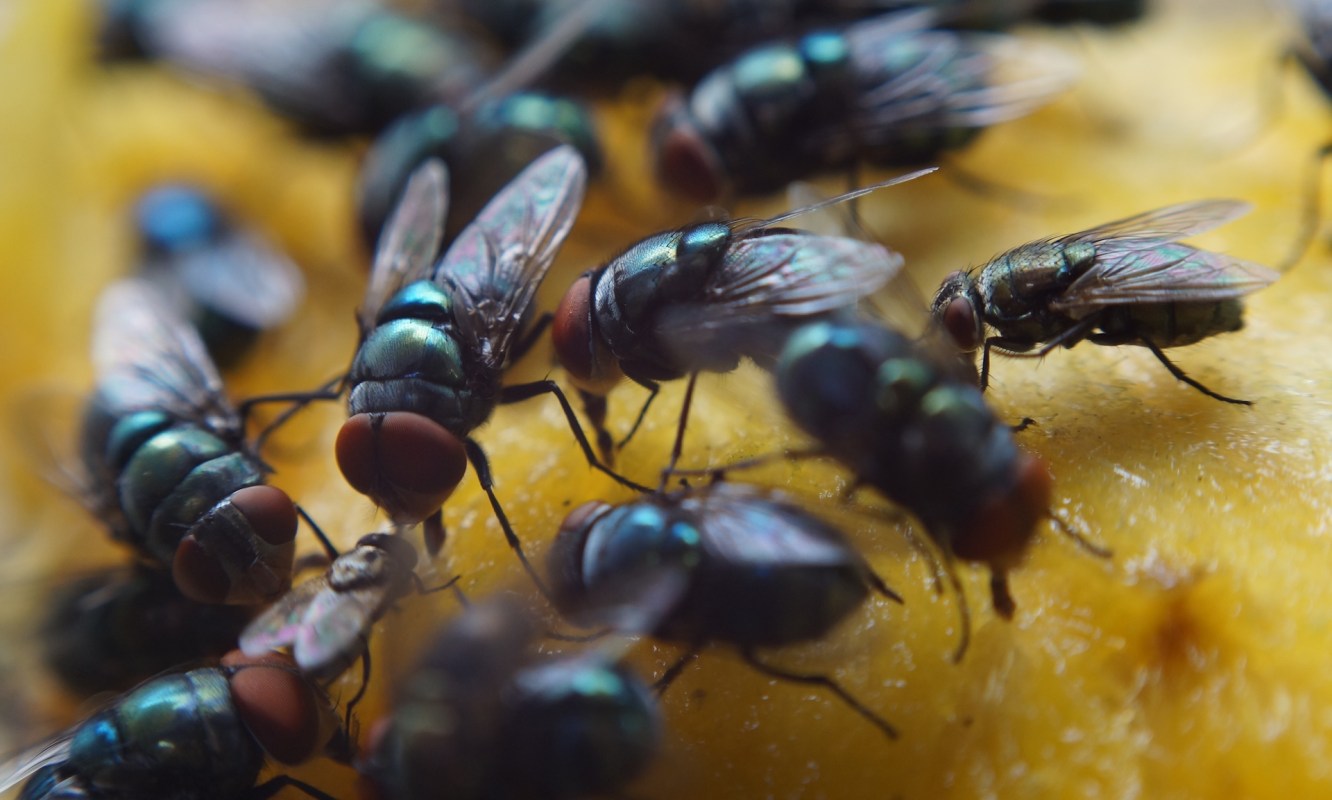
For some people in the U.K., summer now means shut windows, gardens draped in mesh, and electric fly traps running daily as residents say heavy housefly swarms are disrupting ordinary life. Experts say the outbreaks could be a sign of a broader environmental issue.
What's happening?
According to the Guardian, some U.K. residents say repeated waves of houseflies are making parts of their homes difficult to use.
One resident, Francesca Davies, told the outlet she spends evenings clearing flies from her daughters' bedroom. Her family uses netting and a commercial fly killer to make day-to-day life more manageable.
The problem is showing up in more than one place. As the Guardian reported, residents across the country are also dealing with severe fly infestations this summer.
A petition calling on local authorities to investigate the situation in the region near Birmingham has attracted more than 1,000 signatures.
Locals say the disruption is constant. One commenter wrote on the petition, as reported by the Guardian: "I'm shooing 40-plus flies out of my kitchen regularly throughout the day. It's a constant battle."
TCD Picks » Quince Spotlight
💡These best-sellers from Quince deliver affordable, sustainable luxury for all




Bryan Stahl, a nearby resident and higher-level teaching assistant, said to the outlet he has spent significantly on screens and nets. "It makes you feel like you've got a really dirty house," he told the outlet.
Some residents believe the swarms may be connected to a nearby recycling plant operated by Tandom.
In a statement to the Guardian, the company said it had introduced "additional precautionary measures" but added that there is "currently no evidence that flies are breeding on our site."
The Environment Agency said, as reported by the outlet, that it had been in contact with Tandom and told it "to take immediate steps to tackle the issue."
Why does it matter?
For households dealing with the swarms, the effects are stressful, expensive, and hard to avoid.
Residents say they have changed daily habits to cope, including avoiding cooking, staying indoors during heatwaves, and putting babies or children behind nets.
Experts, however, say flies should not be seen only as a nuisance.
Andrew Whitehouse, Buglife's head of operations, told the Guardian that flies are "essential to a healthy planet." Some plants even rely solely on them for pollination, he said, adding: "if you didn't have flies, you wouldn't have chocolate."
They also help decompose waste and are an important food source for animals including birds and bats. That is why unusually large swarms can suggest that something in the local environment is out of balance.
Erica McAlister, a curator at the Natural History Museum, said to the Guardian that infestations are often linked to "some sort of waste event or some sort of environmental perturbation."
What's being done?
Local officials are facing pressure to find the cause of the swarms, not just reduce the number of flies people see.
McAlister said to the Guardian that pest control is not necessarily negative, but said the bigger priority is to "find out why that's happened. Because the flies are an indicator that maybe something else is going on."
For now, residents are relying on practical defenses such as fly screens, nets, traps, and keeping windows closed.
Those steps may help inside the home, but they do not explain why some neighborhoods are being affected much more than others.

Get TCD's free newsletters for easy tips, smart advice, and a chance to earn $5,000 toward home upgrades. To see more stories like this one, change your Google preferences here.






