


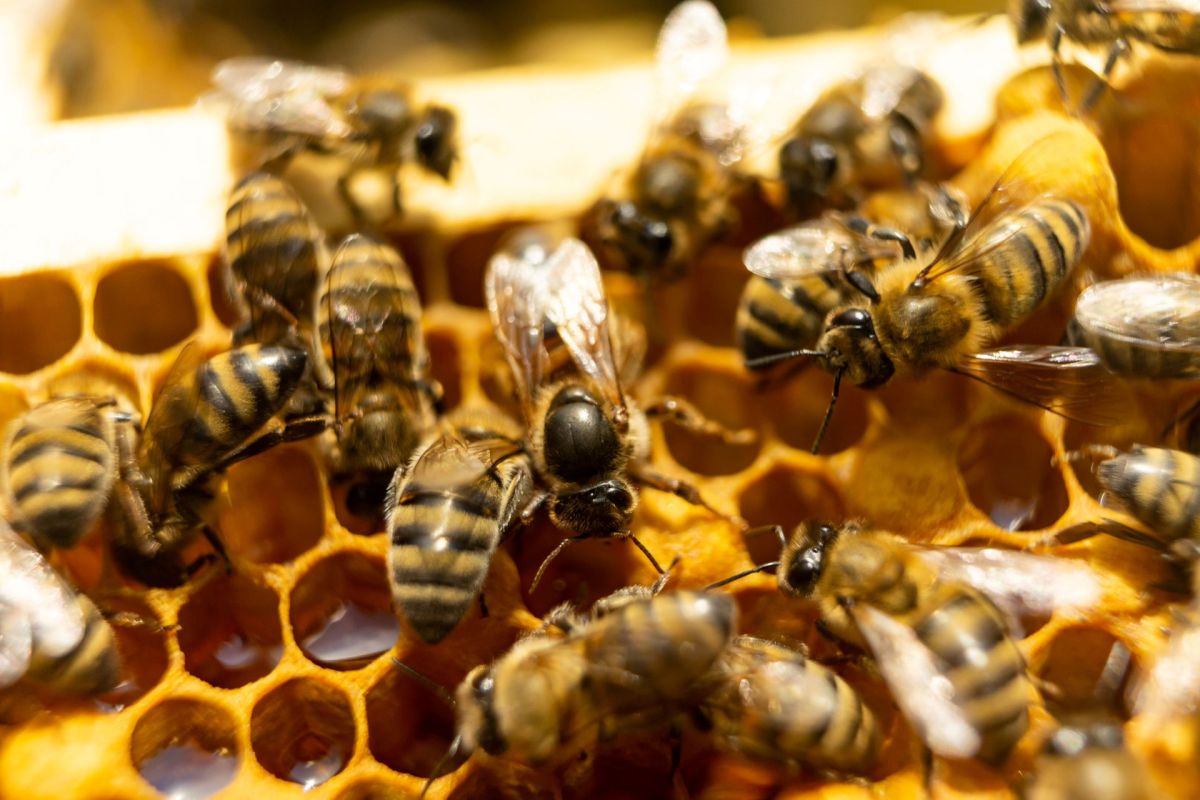
America's managed honey bee colonies are disappearing at a staggering rate, and the fallout could reach far beyond apiaries.
A new national survey found that U.S. beekeepers lost more than half their colonies over the past year, the worst die-off recorded since tracking began in 2010.
What happened?
From April 2024 to April 2025, managed honey bee colonies in the U.S. declined by 55.6%, according to Auburn University's summary of the 2024-2025 U.S. Beekeeping Survey. That rate was slightly above the previous year's record, marking a second straight year of historically high losses.
The survey was carried out with the Apiary Inspectors of America, Oregon State University, and other partners. In all, 2,453 beekeepers responded, representing 219,097 colonies, about 8.4% of the country's honey-producing colonies.
Across the country, annual losses ranged from 34.3% to 90.5% at the state level. Winter was especially hard on colonies, with losses hitting 40.2%, higher than any historical average previously recorded by the survey.
Why does it matter?
The survey underscores how important honey bees are to the nation's food supply: about 75% of crop production depends on pollinators.
TCD Picks » Quince Spotlight
💡These best-sellers from Quince deliver affordable, sustainable luxury for all




When colonies collapse on this scale, the effects can ripple across farms, grocery stores, and local economies. Fewer healthy bees can mean higher pollination costs, increased pressure on growers, and more strain on beekeepers already operating on thin margins.
The USDA suspects the parasitic mite Varroa destructor, along with some other viruses, is associated with losses.
Rebuilding colonies is possible, but it takes money, labor, and time. As those burdens grow, communities that rely on beekeeping and crop pollination face greater uncertainty.
What are people saying?
Auburn University Bee Center director Geoff Williams, an associate professor at Auburn University, said, "These high losses were unfortunately anticipated given reports that came from commercial beekeepers earlier this year."
He added, "Losses this year appear to be driven by higher-than-usual losses by commercial beekeepers during winter."
Project Apis m. Executive Director Danielle Downey said, "Remarkably, many beekeepers have shown exceptional resilience by working to rebuild their colonies and sustain pollination services; efforts that come at significant cost in time, labor, and resources. Consecutive annual losses at these levels jeopardize beekeeping businesses."
Agostina Giacobino, a postdoctoral fellow at the Auburn University Bee Center, said, "Monitoring parasitic mites and being aware of available management strategies and tools can help beekeepers preserve colonies."

Get TCD's free newsletters for easy tips, smart advice, and a chance to earn $5,000 toward home upgrades. To see more stories like this one, change your Google preferences here.






