


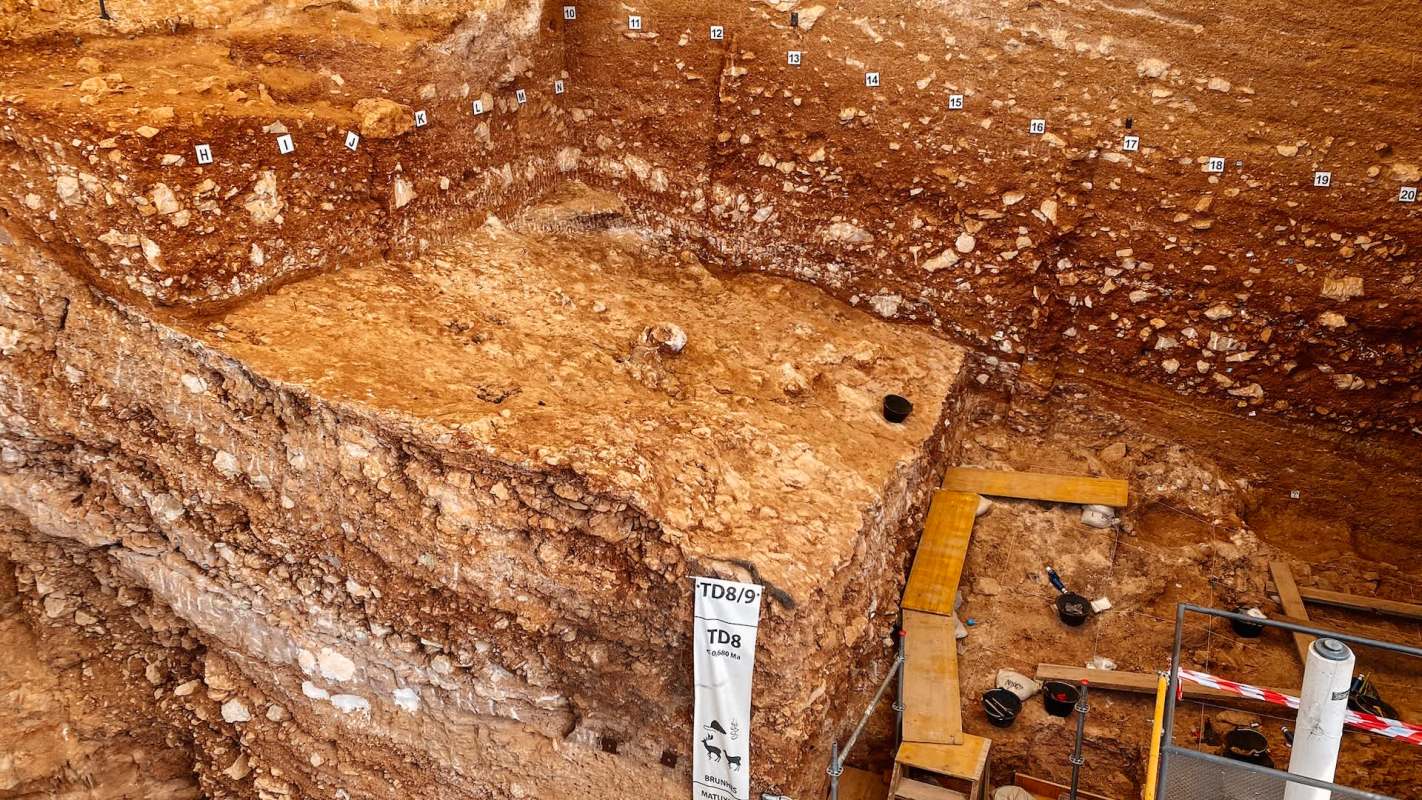
For years, archaeologists believed Homo antecessor, an ancient human relative in Europe, may have singled out children for cannibalism. New fossil evidence from Gran Dolina cave in Spain suggests the reality was even grimmer — and more complicated — than that.
What happened?
Researchers studying Homo antecessor uncovered 24 new fossils at the Spanish cave, with the remains dating back roughly 850,000 years.
In the report covered by Vice, the Catalan Institute of Human Paleoecology and Social Evolution described bones from at least six adults with stone-tool cut marks, the same kind of traces seen when animals are butchered.
Because earlier finds from the cave were weighted more toward butchered juveniles, researchers had proposed that children were more frequent targets, perhaps because clashes between groups would have made them easier to catch.
That picture changed once the new remains were counted. Gran Dolina now preserves evidence for at least 13 individuals, roughly half of them adults, which suggests Homo antecessor did not confine cannibalism to children even though younger victims were more common in the older sample.
Why does it matter?
Rather than indicating a narrow pattern, the expanded fossil record points to cannibalism involving a wider age range. The new evidence gives researchers a chance to understand our past better and how these behaviors and routines may have shaped our lineage.
TCD Picks » Quince Spotlight
💡These best-sellers from Quince deliver affordable, sustainable luxury for all




The case for cannibalism is also stronger than a simple explanation based on damaged bones. Researchers identified tool cuts on human remains and even human bite marks on some bones, making this one of the clearest prehistoric examples ever documented.
The cave evidence also shows these ancient humans were not living on human flesh alone. Archaeologists found animal remains, including horses, deer, rhinos, and hyenas, treated in similar ways, suggesting humans were part of a broader diet rather than the only food source.
What's being done?
Archaeologists are continuing to excavate and analyze material from Gran Dolina. Each new layer of evidence helps researchers test whether earlier interpretations still hold up.
These fossils matter in part because they increase the sample size. Small collections can make patterns look more definitive than they are, and the added adult remains helped show that the earlier "children only" idea did not capture the full picture.
That is one reason preserving and funding archaeological work matters: sites like Gran Dolina can inform debates about ancient migration, diet, conflict, and survival, and they sometimes force researchers to trade tidy explanations for more complex ones.

Get TCD's free newsletters for easy tips, smart advice, and a chance to earn $5,000 toward home upgrades. To see more stories like this one, change your Google preferences here.






