


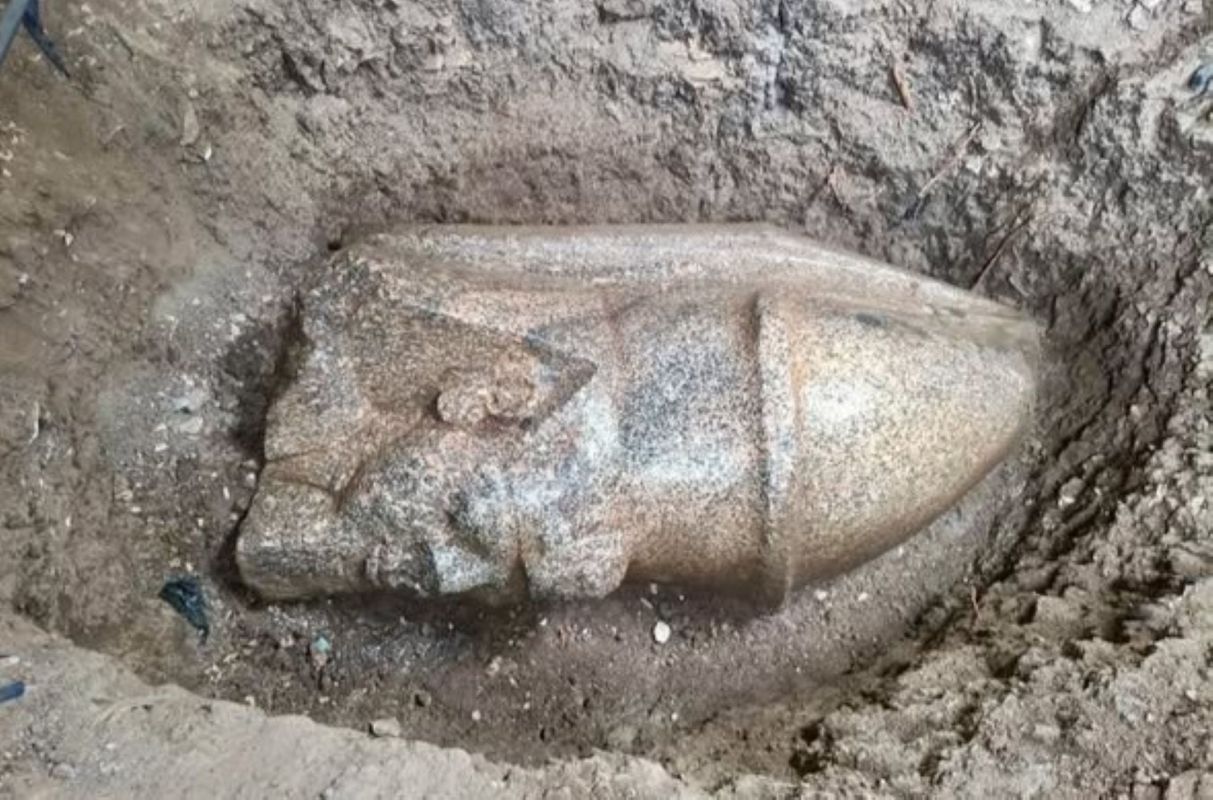
A homeowner in Egypt found an inscribed stone on land outside his residence, and after he contacted local archaeological authorities, the stone opened a window into the area's past.
That report ultimately led to an excavation that uncovered the remains of two colossal royal statues.
Here's what to know
According to People, citing a Facebook announcement from Egypt's Ministry of Tourism and Antiquities, the find began in Behebat al-Hijara, a village in Egypt's Gharbia Governorate, when the homeowner noticed a stone bearing inscriptions and alerted officials. A ministry inspection team determined the object was an ancient artifact, leading the Supreme Council of Antiquities to begin a wider excavation.
That work uncovered two giant royal statues and a pink granite block inscribed with hieroglyphs. Archaeologists said one statue depicts King Ramses II, who ruled more than 3,000 years ago, and they believe the second could represent him too, People reported.
Hisham El-Lithi, secretary-general of the Supreme Council of Antiquities, said the first major fragment recovered was a stone head standing about 5 feet, 3 inches tall, per People. The head shows Ramses II wearing the double crown, which symbolizes the union of Upper and Lower Egypt.
Archaeologists also recovered part of the statue's back pillar, where one of the king's royal names appears. El-Lithi said the head's size suggests the complete statue may have stood around 28 feet tall, including its base.
TCD Picks » Quince Spotlight
💡These best-sellers from Quince deliver affordable, sustainable luxury for all




More background
Behebat al-Hijara is an archaeological site in Egypt's Nile Delta linked to the remains of a large temple devoted to the goddess Isis. The newly found pieces may help researchers better understand the site's importance in the ancient world.
A surviving portion of the second statue measured about 7 feet, 10 inches long. Its legs and base were gone, but the figure was depicted wearing a nemes, the royal headdress traditionally associated with Egyptian rulers.
Archaeologists also found its head, and they said the facial features are still clear and well preserved, according to People. Because the face resembles that of the first statue, researchers think this one may also portray Ramses II.
Around 3 feet north of the second statue, the team uncovered a pink granite block about 4 feet, 3 inches long. According to the ministry, the hieroglyphic text includes two of Ramses II's royal titles: "King of Upper and Lower Egypt" and "Son of Ra."
What's being done?
Excavation at the site is still underway as archaeologists work to understand how the statues, the inscribed granite block, and the nearby remains are connected. The next stage may show where the statues originally stood and what role they played in the area's ancient setting.
Sherif Fathy, Egypt's minister of tourism and antiquities, said the find adds to the country's growing number of archaeological discoveries and could expand scholars' understanding of the area's historical importance, People reported.
Rather than move or keep the inscribed stone, the homeowner notified authorities, giving specialists a chance to investigate before the artifact lost its context.
Fathy specifically commended that choice, saying residents can help protect cultural heritage for future generations by reporting unusual finds on their property.
Where can I learn more?
Artifacts and ruins can reveal new details about ancient sites.
• In Egypt's Bahariya Oasis, archaeologists uncovered a 16-column temple hall tied to the oasis's past.
• In Egypt's Dakhla Oasis, 200 inscribed shards from a Byzantine city illuminate daily life.
• In western Turkey, a Mother Goddess stele beside an ancient road may mark a sanctuary.

Get TCD's free newsletters for easy tips, smart advice, and a chance to earn $5,000 toward home upgrades. To see more stories like this one, change your Google preferences here.






