


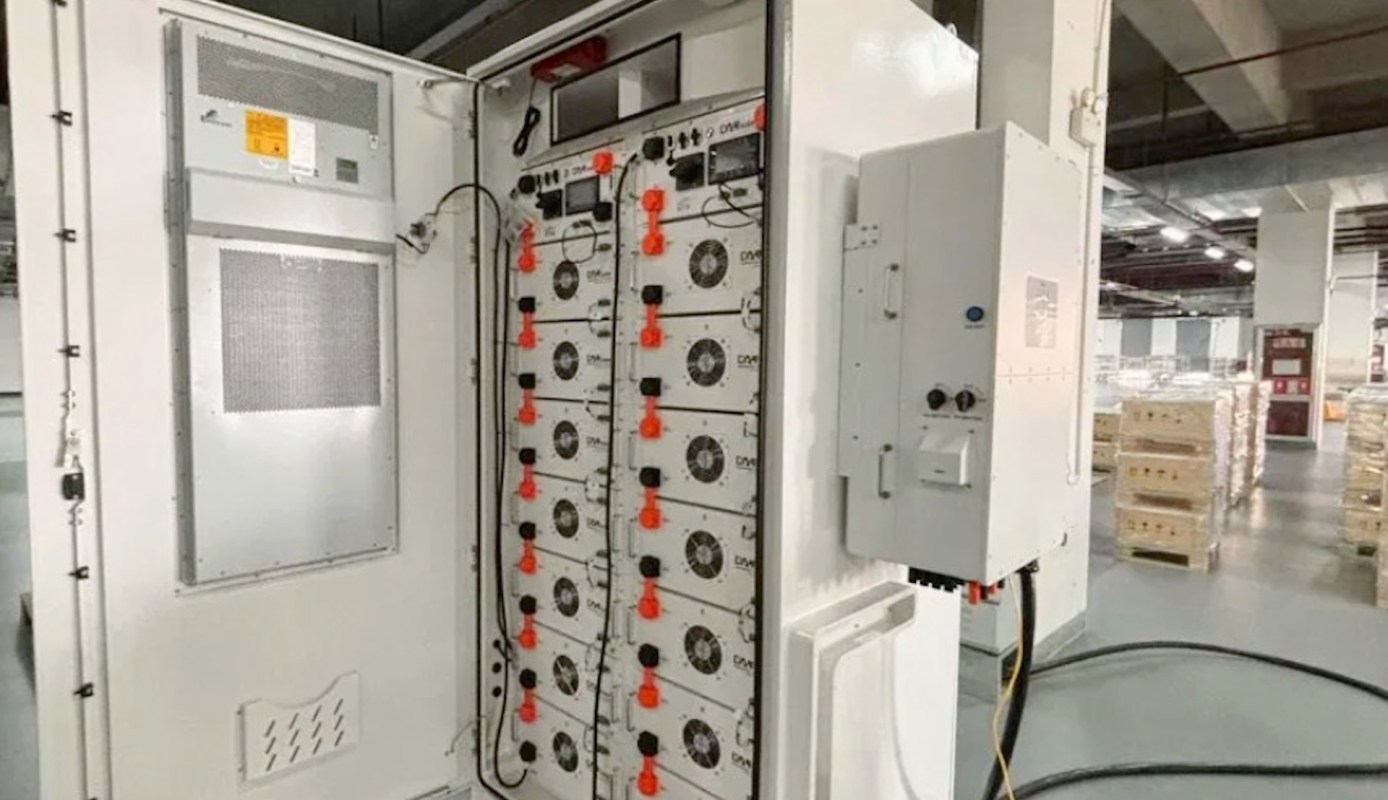
A homeowner who purchased an imported $18,000 battery bank realized they may have gone overboard. That left them with an enviable dilemma: What else could they power?
Here's what to know
After buying the system, the battery owner realized that their household might not need an incredible 216 kilowatt-hours of storage, even though they had two electric cars and a 12-kilowatt pizza oven.
In Reddit's r/solarenergy, they explained that they had a 24-kilowatt solar array that sells power back to the grid whenever they aren't filling their battery bank.
"I would appreciate ideas on what doors a 216kWh battery bank opens," they said.
Before jumping to the comments, it's worth acknowledging that $18,000 price is close to what it costs to buy and install a Tesla Powerwall 3 that stores just 13.5 kWh, by comparison, which is a total that is more designed to work through a partial-day outage or complement solar panels to continuously survive an outage.
The $18,000 cost this Redditor paid does not include the price of installation, and their model is from DAH, considered a Tier-1 Chinese brand, but it still appears to lack UL 9540 and UL 1973 certifications, meaning it cannot legally be tied to the grid directly. Most mainline U.S. home battery backup systems like the Powerwall 3 and Franklin aPower 2 have things like inverter costs baked into their installation, too, and this $18,000 price the Redditor cited most likely does not include the cost of buying an expensive separate inverter setup to connect to the panels.
There are a number of other potential tradeoffs to a system like this, such as safety, but for those looking for pure kWh storage ability per dollar and who don't need elite waterproofing or thermal management abilities, the price certainly makes it interesting. The OP said "it is outside in its own concrete bunker a distance from the house," so they appear to understand the risks and bought this unit as part of an off-grid prepping strategy.
Going solar, with or without a battery, is one of the best ways to save money on home energy, and solar leases, in particular, can deliver hundreds of dollars in monthly savings with no upfront costs. Homeowners can use EasyHome's free explorer tool to see potential savings from local vetted installers.
Crushed by your bills? See instant solar savings from vetted installers in just a few clicks With energy prices through the roof, there's never been a better time to go solar — and EasyHome can help you find the best prices from the best installers in your area. EasyHome takes the guesswork and headaches out of energy upgrades by showing you estimated savings from a network of vetted local partners. To get started, just enter your ZIP and share a few details about your home — seeing your estimate is really that easy. |

What people are saying
Commenters were impressed by the battery's size, with one saying, "That'd run my house for three weeks," and the original poster replying, "Mine too…"
Houses with energy-efficient upgrades that enhance comfort, such as heat pumps, double-paned windows, and heat pump water heaters might see backup storage stretch even longer, depending on usage.
"Go all electric: heat pump for the house, heat pump water heater, induction oven. Electric sauna. Mini split for the garage gym," one recommended.
"You could open up a small charging station?" another joked.
What can be done?
To maximize their solar and battery savings, one commenter said the OP should use the batteries to charge their EVs at night.
That would put stored electricity to work after solar production stops, rather than requiring every energy-intensive activity to take place during daylight hours. Then, OP could seek out an export agreement for a higher rate, with one caveat: "This only works if a) you have time of use energy rates and b) energy companies which want your energy exported to the grid at peak times."
"Check with your utility to see if they have any grid support programs that you can participate in (eg. on high demand days they take control of a portion of your battery)," another advised.
For homeowners considering their own setup, EasyHome's explorer tool can help compare solar options and potential savings from vetted local installers. It can also help you explore backup battery storage to maximize your long-term savings and power your home with solar when the grid goes down, provided the system is configured for backup operation.
Where can I learn more?
Choosing the size of a home battery bank is only part of the energy-independence equation.
• In Germany, a homeowner chose sodium-ion batteries for off-grid living after rejecting indoor lithium.
• A DIY solar owner tested a 48-volt battery bank before seeking permanent-installation safety advice.
• A homeowner's $50,000 off-grid budget prompted suggestions for 100 kilowatt-hours of storage through DIY installation.
• An off-grid builder reached 65.5 kilowatt-hours of storage with 30 panels still awaiting installation.
• A homeowner's outdoor battery installation plans raised questions about code compliance, spacing, and heat.

Get TCD's free newsletters for easy tips, smart advice, and a chance to earn $5,000 toward home upgrades. To see more stories like this one, change your Google preferences here.






