


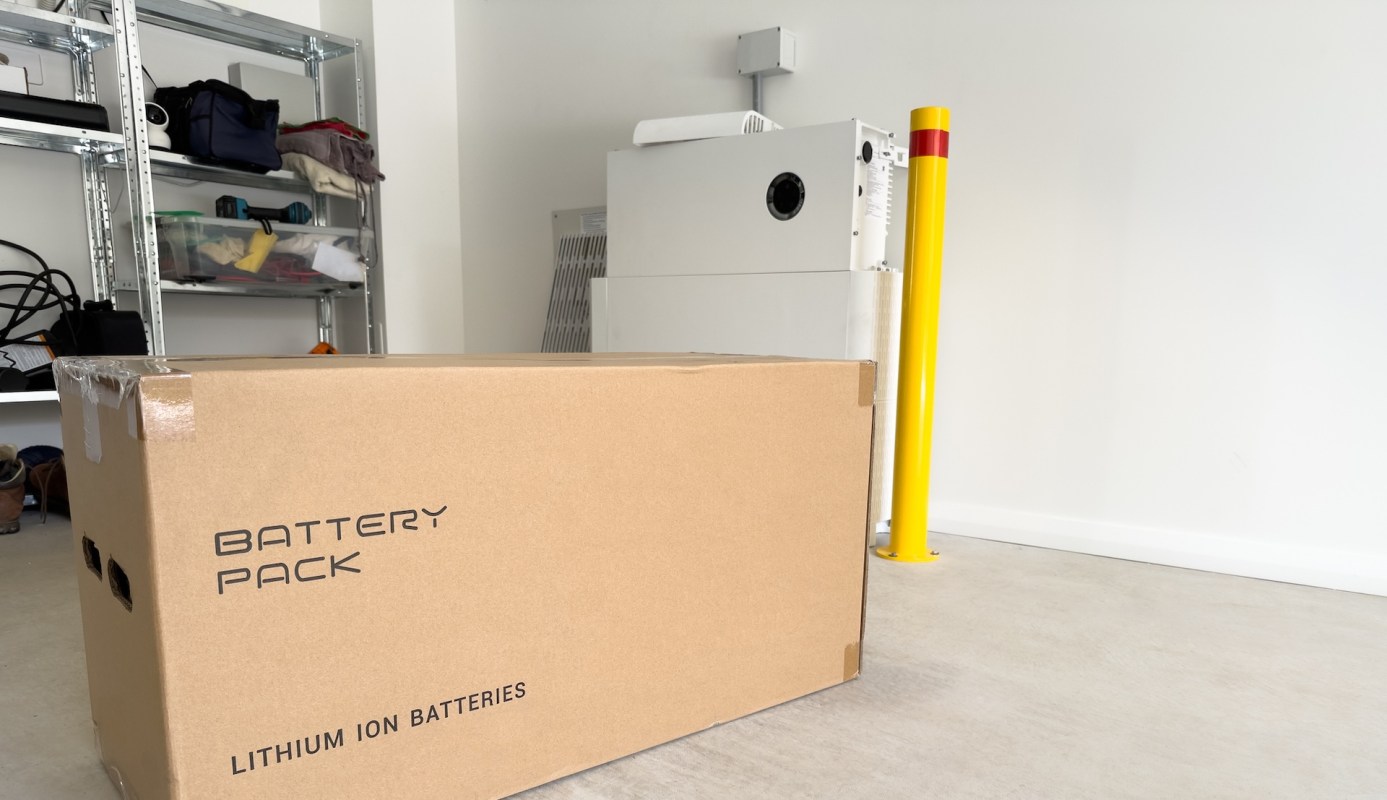
A homeowner considering a home storage battery was filled with worries about a fiery doom after hearing stories of batteries combusting and harming those around them.
Those worries led the homeowner to the r/SolarDIY subreddit, where they asked whether storing a backup battery system in the garage is a major hazard.
Here's what to know
In a Reddit thread, the poster wondered whether added safeguards, or even a separate conditioned structure for battery storage, might make sense. They worried that a multi-day system could sit "underneath our bedrooms in the garage," and they wanted real-world statistics on how often thermal runaway is a problem in home storage.
The top reply argued that "Home batteries usually use LFP now and are really safe. BMS hardware improvements manage thermal load really well now and fire risk is exceedingly rare."
Another commenter warned that the bigger danger is poor-quality equipment or bad assembly: "Don't cobble together batteries that you assembled in milk crates, stick with reputable brands that have a proven track record."
Adding battery storage is one of the best ways to protect your home during outages, save money on energy, and gain more energy independence. Homeowners comparing systems can explore EnergySage, which has teamed up with electrification brand Qmerit to help homeowners get the best price on home battery storage solutions.
More background
The poster made it clear they weren't claiming batteries are inherently dangerous, writing, "I know modern batteries, if made and used correctly are safe," but they still wanted to know whether stories of spontaneous combustion justify extra precautions.
For many households, a battery is both one of the priciest parts of a home energy system and one of the hardest to feel fully comfortable about. During a blackout, though, it can keep lights, refrigeration, and other essentials running when the grid is down.
Save $10,000 on solar panels without even sharing your phone number Want to go solar but not sure who to trust? EnergySage has your back with free and transparent quotes from fully vetted providers in your area. To get started, just answer a few questions about your home — no phone number required. Within a day or two, EnergySage will email you the best options for your needs, and their expert advisers can help you compare quotes and pick a winner. Solar panels can save you more than $50k over their 25-year lifespan, and EnergySage can help you save as much as $10k on installation. Which begs the question — isn't that worth an email or two? |

What can be done?
The thread centered on build quality and installation: choose reputable brands, get the setup right, and avoid bargain parts or improvised DIY packs. One commenter also recommended keeping batteries out of living spaces and installing a networked smoke alarm nearby, arguing that the risk calls for planning but not panic.
One user said they keep "smoke detectors and a H2 monitor" near their system, not because they expect failure, but because an early alert could provide time to respond.
For homeowners who want backup power without committing to a full-house setup, Pila offers strong battery backup options. Pila's plug-and-play batteries cost a fraction of a whole-home backup system.
One commenter put the risk into perspective: "When correctly installed they are risky enough that you should put networked smoke alarm near them and keep them out of living spaces, not so risky you should be loosing sleep over it."
Where can I learn more?
These stories look at new residential systems, financing options, alternative chemistries, and fire-prevention ideas.
• Jackery built automatic fire suppression into its SolarVault 3 series alongside 100 safeguards.
• SunPower and Palmetto started offering home backup batteries without forcing homeowners to pay upfront.
• Engineers are advancing water-based battery chemistry pitched as a safer fit for garages.
• Scientists warned that common flame-retardant strategies may create health risks without solving battery fires.

Get TCD's free newsletters for easy tips, smart advice, and a chance to earn $5,000 toward home upgrades. To see more stories like this one, change your Google preferences here.






