


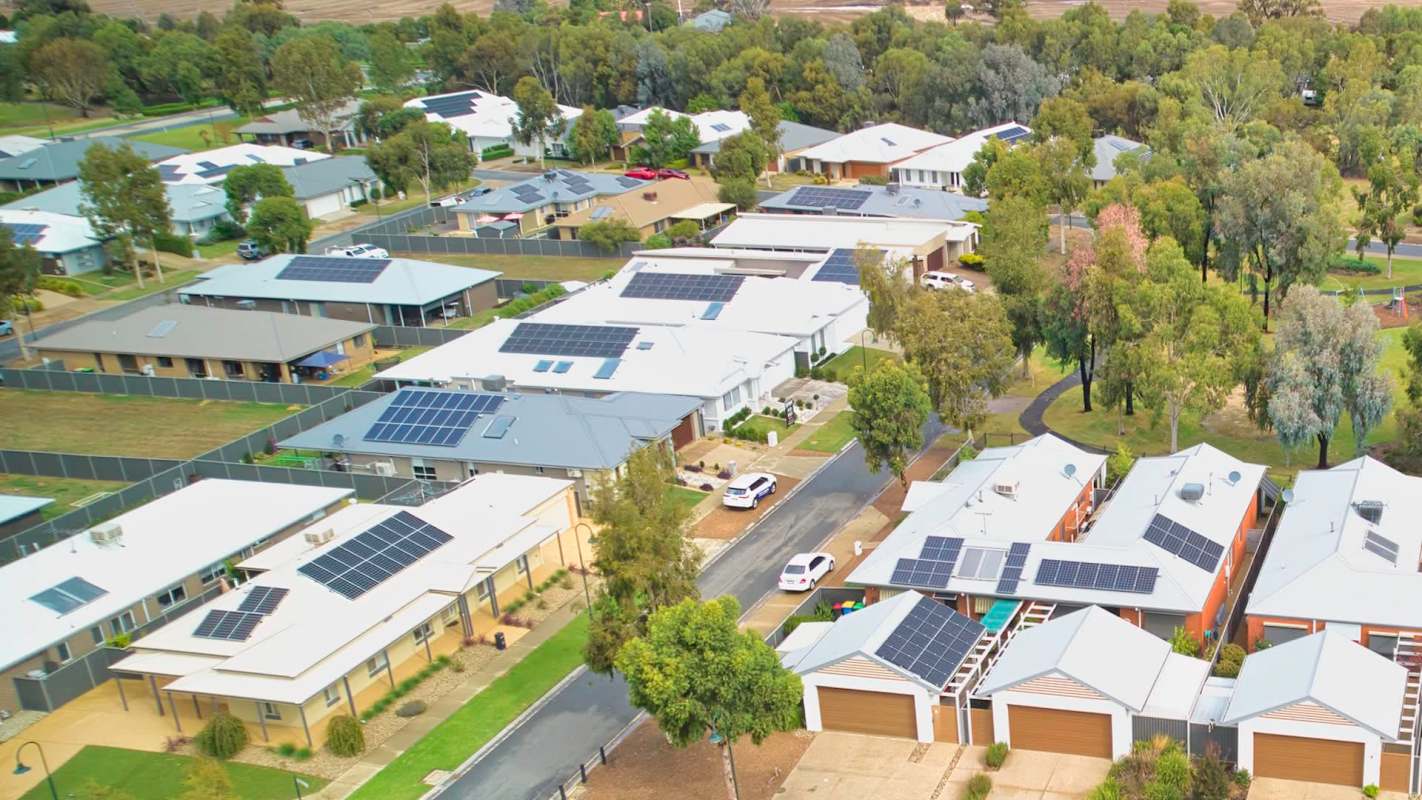
Australia's shift to cleaner power is accelerating in a major way.
Home batteries are now arriving at a rate of roughly one for every 25 households, while gas-fired electricity is already losing ground.
That means a transition once discussed mostly in long-term policy terms is starting to show up in something more immediate for families: lower power bills.
What's happening?
The pace now puts Australia near the front of the global home-battery market, The Guardian reported. Since July, about 415,000 household batteries have been connected, and Australia is expected to account for close to 60% of the household-scale battery capacity installed this financial year across nearly 200 other countries.
More than one in three Australian homes already had rooftop solar, giving the country a broad base for this next step. With batteries added to the mix, households can hold onto that electricity and use it later, especially during the expensive evening peak.
Tristan Edis, a director at consultancy Green Energy Markets and author of the analysis, summed up the speed of the shift simply: "It's amazing."
The extra storage is also changing what powers the grid after dark. Gas-fired generation over the three summer months ran 24% below the level of a year earlier, while batteries have expanded into the evening market as coal plants retire and renewables supply nearly half of the grid's electricity.
Why does it matter?
The shift suggests batteries can make renewable energy not only cleaner, but also more reliable and more affordable. Tennant Reed of the Australian Industry Group, the group's climate change and energy director, said the shift has "completely changed how electricity prices are formed."
Save $10,000 on solar panels without even sharing your phone number Want to go solar but not sure who to trust? EnergySage has your back with free and transparent quotes from fully vetted providers in your area. To get started, just answer a few questions about your home — no phone number required. Within a day or two, EnergySage will email you the best options for your needs, and their expert advisers can help you compare quotes and pick a winner. Solar panels can save you more than $50k over their 25-year lifespan, and EnergySage can help you save as much as $10k on installation. Which begs the question — isn't that worth an email or two? |

For households, battery storage can be one of the most effective ways to protect a home during outages, reduce energy costs, and even move closer to going off-grid. By saving solar power for use after sunset or during blackouts, batteries can keep essential devices running while helping families avoid the grid's most expensive hours.
EnergySage's free tools offer information about battery storage options, including competitive installation estimates. EnergySage has also teamed up with Qmerit, an electrification company, to get the best price on home battery storage solutions.
Pila is another company offering backup battery options. The company's plug-and-play batteries are priced at a fraction of what a whole-home system costs.
What's being done?
Policy support has been a major driver of Australia's battery boom. Prime Minister Anthony Albanese's Labor government launched a taxpayer-funded rebate program last July, initially backed by 2.3 billion Australian dollars ($1.6 billion) over four years and designed to cut household battery costs by 30%.
Installations rose so quickly that the government later lifted total funding to 7.2 billion Australian dollars (approximately $5.1 billion) and doubled its goal to 2 million batteries by 2030. Climate Change and Energy Minister Chris Bowen has argued that even people who do not own batteries can still benefit when others use less gas at night, since that can bring prices down across the wider system.
There are still challenges. Renters have largely been left out of direct battery access, and some experts say the rollout should be targeted better beyond wealthier areas in major cities.
Australia is also pursuing broader solutions, including a "solar sharer" program that would require electricity retailers to provide three free hours of power each day to all customers. Utility-scale batteries are expanding too, including a 500-megawatt system at the former Liddell coal plant site.

Get TCD's free newsletters for easy tips, smart advice, and a chance to earn $5,000 toward home upgrades. To see more stories like this one, change your Google preferences here.






