


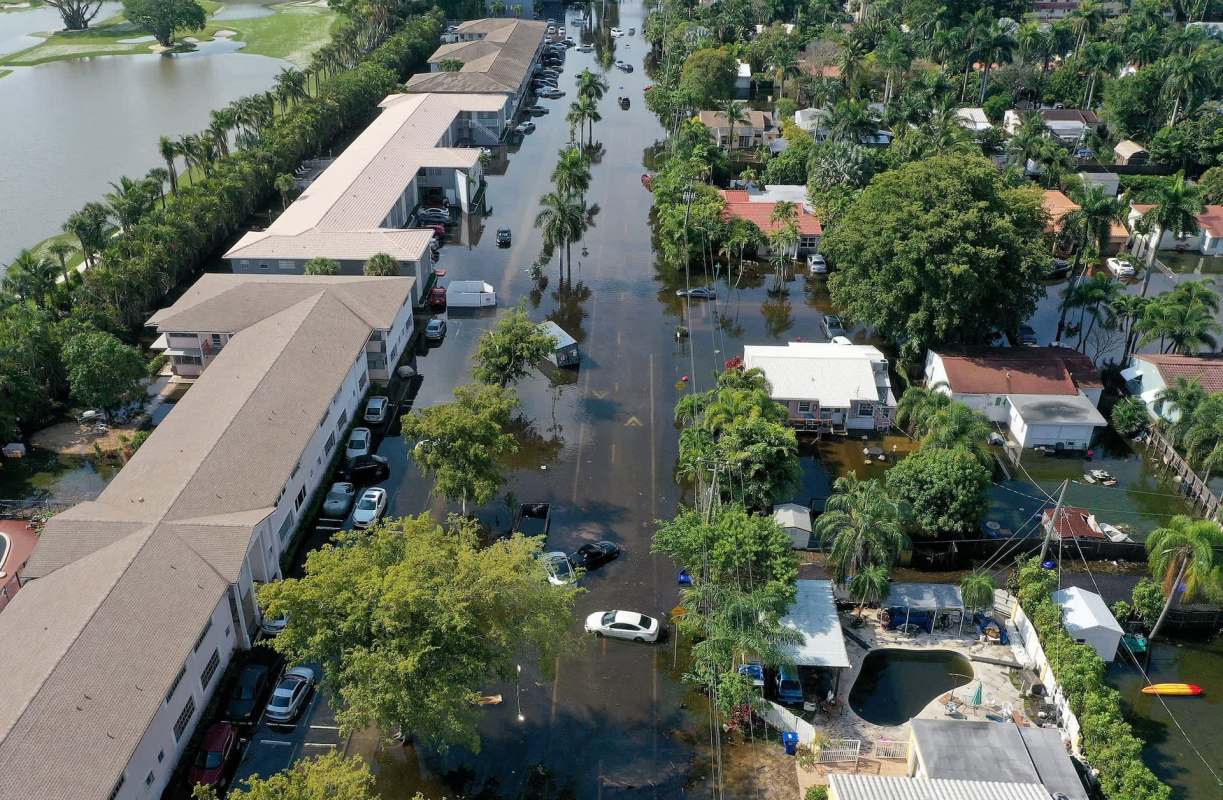
In Hollywood, Florida, a new seawall appears to have passed an important early test. For the first time, all 20 openings along North and South Lake Drives were covered, keeping floodwater from the Intracoastal Waterway out.
Here's what to know
According to CBS News Miami, an earlier high tide sent water through the open sections and onto North Lake Drive. But once the removable panels were installed, that surface flooding no longer reached land during the annual king tides.
For residents, that saltwater intrusion can leave the road effectively unusable. Resident Luke Furr said, "I mean, you can't drive down this road. I have a jet ski. I could probably use the jet ski. It's got to be at least a foot and a half."
With all 20 openings in the new seawall covered, Intracoastal Waterway floodwaters stayed off the streets Wednesday, though seawater can still push up through storm drains. Read more at the link in our bio. https://t.co/WXDWfLybge
— CBS Miami (@CBSMiami) October 1, 2026
Officials say the barrier is meant to handle more than water at the shoreline alone. Hollywood Chief Resiliency Officer Chris Roschek said the seawall can keep tidal water back while still allowing rain runoff to drain from city streets.
"The way that this works is that when the water builds up on this side, it would be held back by the gate," Roschek said. "And if we have a lot of rainwater built up on this side, we can open up the panels and let the water flow out to the lake."
It is part of a drainage strategy for a low-lying coastal area that regularly deals with tidal flooding.
TCD Picks » Quince Spotlight
💡These best-sellers from Quince deliver affordable, sustainable luxury for all




More background
King tide flooding can disrupt daily life even without a major storm. When roads flood, residents can face interrupted commutes, harder-to-run errands, and reduced access throughout the neighborhood.
The seawall does not cut off every route seawater can take to reach the streets. As CBS News Miami noted, saltwater can still push up through storm drains and onto roads even when surface flooding is blocked at the water's edge.
To reduce that risk, the city is adding Wapro valves, which act as one-way flow devices. They are intended to let stormwater drain into the Intracoastal without allowing seawater to travel back through the pipes into the neighborhood.
Hollywood spokeswoman Joanne Hussey said those upgrades should make a difference in some of the most vulnerable locations.
"The Wapro valves right now are going to help," Hussey said. "Some of them that are really low in the wall are going to be raised up, so they won't be backing water up into the neighborhood."
What's being done?
Hollywood's long-range flood protection strategy hinges on larger pump stations that officials say are at least five years away.
Once those upgraded stations are operating, officials expect them to pump 300 cubic feet of water each second — about 18,000 water bottles per second, or six times what the city can currently handle. That kind of increase could make a major difference during high tides that arrive alongside heavy rain.
As Hussey put it, "It will be like a self-contained closed vacuum system, for lack of a better word. Stormwater will go into the system; it will be sucked up through the pump and then spread out into the Intracoastal, thereby keeping the neighborhoods dry."
Where can I learn more?
Other coastal communities are wrestling with many of the same flooding challenges. These stories look at flood barriers, construction choices, and adaptation plans from Florida to Maine and New York.
• In Florida, builders are revisiting flood prevention methods as hurricane season continues.
• Scientists say coastal construction choices can worsen nuisance flooding in vulnerable estuary cities.
• Along New York City's East River, a flood-resistant park is opening in stages.
• In Stonington, Maine, officials are confronting a wall of water as seas rise.
• In Hampton, leaders are testing an adaptive flood strategy that lets water in.

Get TCD's free newsletters for easy tips, smart advice, and a chance to earn $5,000 toward home upgrades. To see more stories like this one, change your Google preferences here.






