


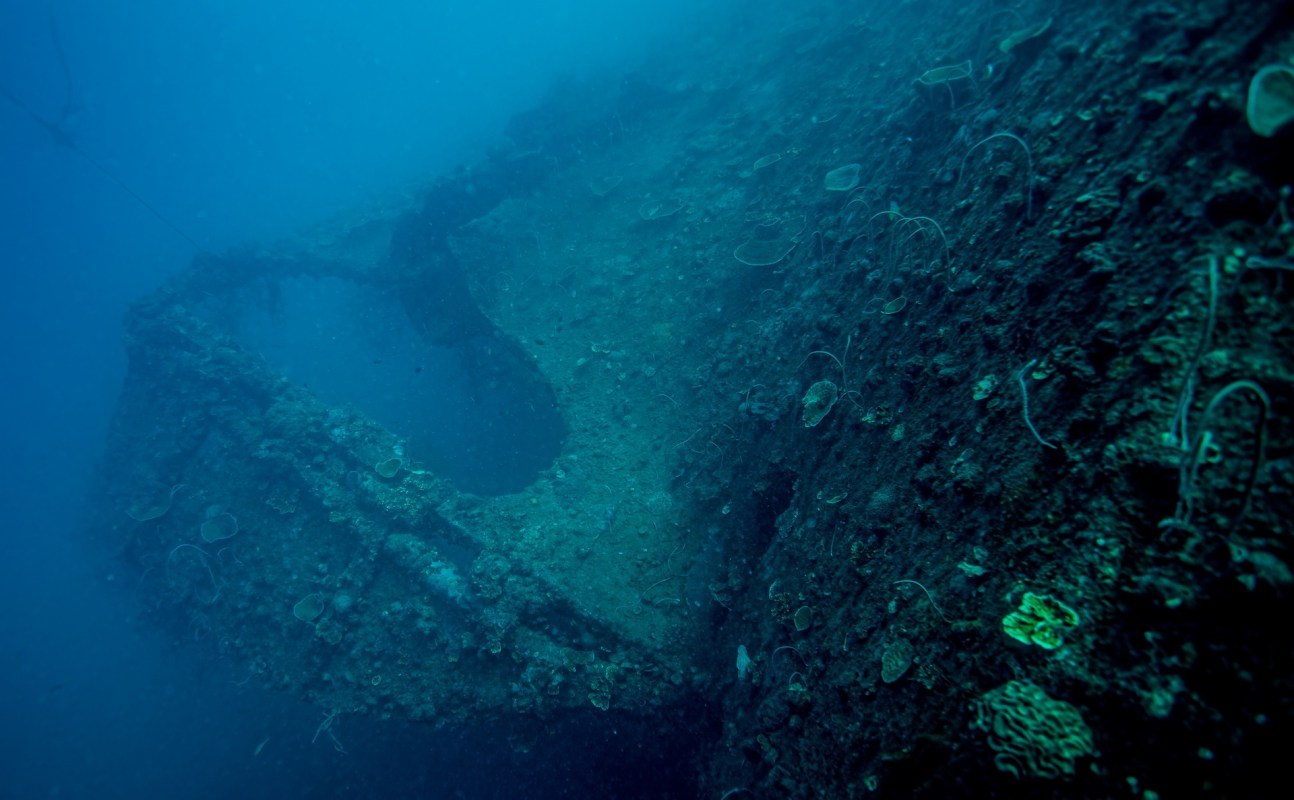
Researchers have said a wreck found off Luzon in the Philippines is the Hōfuku Maru, a Japanese transport ship that went down in the South China Sea about 80 years ago with roughly 1,200 Allied prisoners of war trapped below deck.
What happened?
As CNN detailed, the Hōfuku Maru was sailing with a Japanese convoy on September 21, 1944, when U.S. warplanes, apparently believing it was carrying military cargo, struck it with a torpedo.
The blast broke the ship apart, and it sank within minutes, killing most of the British and Dutch POWs packed into its holds.
A digitized Japanese document identifying where the convoy was attacked provided the crucial lead, according to Hellships Memorial Foundation search director Tim Beckensall. That clue, along with years of archival work and underwater surveys by the foundation, led researchers to a wreck near Zambales province.
CNN reported that researchers then checked those details against a U.S. aircraft action report before moving on to sonar, technical dives, and 3D imaging.
Maritime archaeologist Calvin Mires said that despite "really low visibility," the evidence strongly pointed to the ship's identity, including its size, layout, and the fact that the wreck is broken in two.
TCD Picks » Quince Spotlight
💡These best-sellers from Quince deliver affordable, sustainable luxury for all




The search will be featured in a two-part season premiere of Expedition Unknown on Discovery Channel.
Why does it matter?
The Hōfuku Maru was one of Japan's so-called "hell ships" — unmarked vessels used to transport prisoners of war under brutal conditions. During the war, 56 of those ships carried more than 62,000 POWs, and 19 were sunk by Allied fire. Five wrecks remain missing.
Finding the Hōfuku Maru gives historians and governments a site where they can honor the dead. Divers encountered human remains on the decks, meaning that this is not just an archaeological site but also a war grave.
The Cultural Heritage Agency of the Netherlands said the wreck will not be excavated out of respect for the victims and their families, and the exact coordinates are not being released publicly.
The discovery also helps preserve a fading historical record. Beckensall described the ships' holds in stark terms.
"We're talking about a dark hold that's metal," he said. "It stinks, it's boiling hot. There's no sanitary conditions. They're not being fed properly, if at all. Hardly any water."
What are people saying?
Explorer Josh Gates, who presents Expedition Unknown, said, "The tragic legacy of the Hellships is a chapter of World War II that many people have never heard of."
He added, "The men who died aboard these ships made the ultimate sacrifice and have been waiting 80 years to be found."
Mires said the rediscovery hit especially hard because "the POW ships are really a forgotten part of the battles and the war, and they're dramatic and horrific and monumental on all levels."

Get TCD's free newsletters for easy tips, smart advice, and a chance to earn $5,000 toward home upgrades. To see more stories like this one, change your Google preferences here.







