


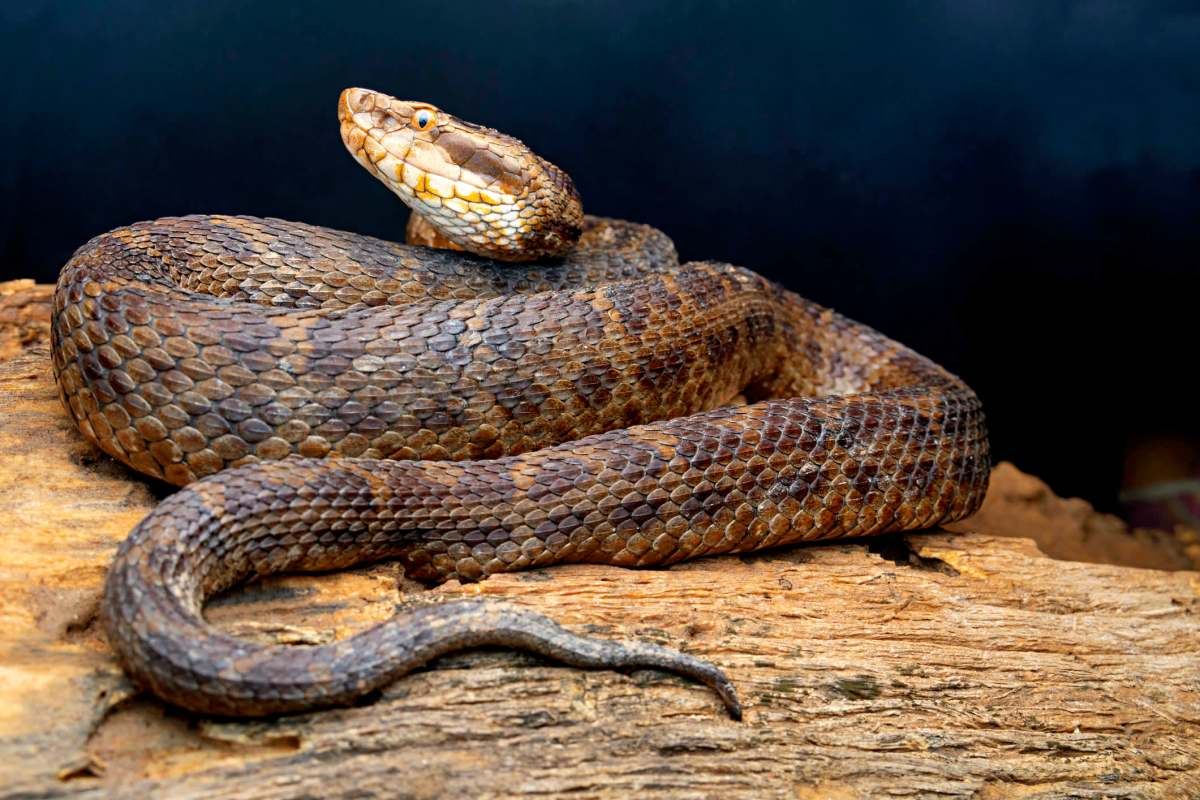
A snake long thought to be a single species for about 160 years has turned out to be several different animals living across Asia's high mountain regions.
Using genetic data alongside museum material more than a century old, researchers determined that the Himalayan pit viper group comprises five species, three of which were previously unknown to science.
What happened?
Reported in the journal ZooKeys, the study revises the scientific picture of one of the Himalayas' most elusive venomous snakes. Since its description in 1864, the Himalayan pit viper has generally been regarded as a single widespread species.
According to ScienceDaily, an international team reassessed the snakes through genetics, skeletal comparisons, physical traits, and ecological observations.
That analysis supported five species-level lineages: the Himalayan pit viper in the narrow scientific sense, Gloydius chambensis, which was described in 2022, and three other newly recognized species from Pakistan and Nepal.
For Daniel Jablonski of Comenius University Bratislava, the result underscores how much diversity these mountain regions still conceal.
TCD Picks » Quince Spotlight
💡These best-sellers from Quince deliver affordable, sustainable luxury for all




"These mountain systems still harbor overlooked vertebrate diversity and hold important clues to the biogeography of Asia," Jablonski said.
Historic museum holdings proved central to the study, including the Himalayan pit viper's original type specimen.
Why does it matter?
This kind of finding goes beyond simply naming snakes. Reptiles and amphibians help keep ecosystems in balance by serving as predators, environmental indicators, and natural pest controllers.
A better understanding of which species are present also matters because pit vipers are venomous and considered an ecologically and medically relevant group. Getting species counts right is a basic step toward conservation planning.
It also underscores how fragmentary biodiversity knowledge remains in remote areas where difficult terrain and years of instability have limited research.
"This finding highlights how little we still know about a region long shaped by socio-political instability," Rafaqat Masroor of the Pakistan Museum of Natural History emphasized.
Species cannot be effectively protected if researchers do not yet recognize them as distinct. Once hidden biodiversity is identified, conservation efforts can become more precise.
What's being done?
The study points to a practical way forward: pairing new fieldwork with the long-term record preserved in natural history museums. DNA extracted from snakes collected in the late 1800s and early 1900s helped confirm the snakes' identifications, showing that historical collections can still answer modern questions.
The work also lays the groundwork for further studies in the Himalayas. Frank Tillack of the Museum für Naturkunde Berlin, Leibniz Institute for Evolution and Biodiversity Research, said the goal is to keep addressing those gaps in knowledge.
"Our work aims to close these gaps in knowledge and to lay the groundwork and provide inspiration for further, in-depth studies on this ecologically and medically relevant group," Tillack said.
Natural history collections can play an active role in both species identification and conservation planning.
Even in places that have been studied for generations, scientists are still discovering species and rethinking how ecosystems function. Each new identification can help sharpen conservation priorities.
"Pakistan's high mountains are still full of biological surprises," Masroor said.
Sylvia Hofmann from the Museum Koenig, part of the Leibniz Institute for the Analysis of Biodiversity Change, said, "Museum specimens are not just records of the past. They are active research tools and essential infrastructure for future science."

Get TCD's free newsletters for easy tips, smart advice, and a chance to earn $5,000 toward home upgrades. To see more stories like this one, change your Google preferences here.






