


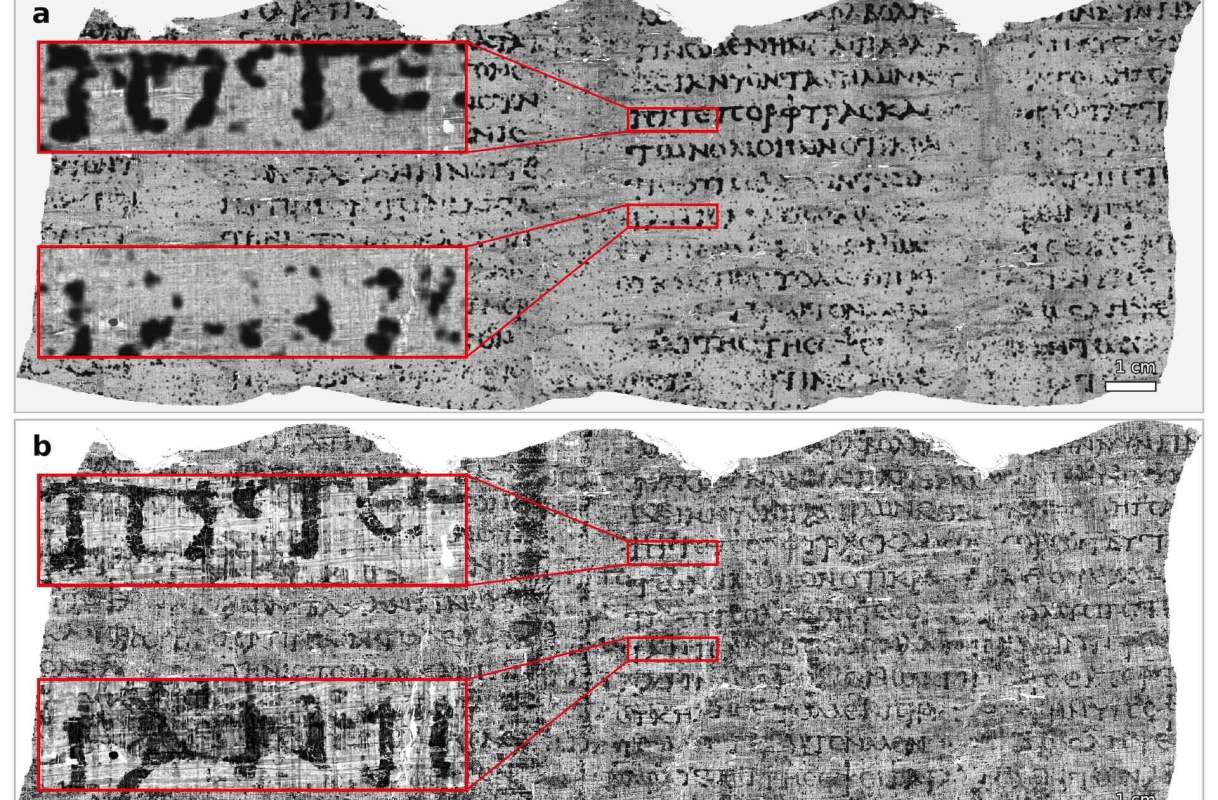
A carbonized scroll buried in the eruption of Mount Vesuvius had remained unreadable.
Researchers now report that one Herculaneum papyrus has been read across all of its surviving text through virtual unwrapping alone, without physically opening the scroll.
What happened?
At the center of the breakthrough is PHerc. 1667, one of the delicate papyri recovered from the Roman town of Herculaneum, Smithsonian Magazine and The Washington Post reported.
The Vesuvius Challenge, offering over $1 million in cash prizes, had spurred scientists to work on this problem for years. Earlier scans produced only isolated letters and brief excerpts, but CT imaging paired with machine-learning analysis has now been used to detect ink inside the blackened, tightly rolled papyrus.
"The tech actually does look like magic, but it's not," Brent Seales, a computer scientist at the University of Kentucky, said. "It's the remarkable means to a higher calling: the restoration of lost voices from the ancient world through the texts that they wrote in these fragile, enigmatic scrolls."
A clue in the final preserved column — the name Aristocreon, identified in the post as the nephew and disciple of the Stoic philosopher Chrysippus — points to a date in the second century B.C. The text itself appears to be "a philosophical treatise on ethics," specifically "a Stoic work."
TCD Picks » Quince Spotlight
💡These best-sellers from Quince deliver affordable, sustainable luxury for all




One sample line from the scroll reads, "We will inquire into something, but we will not grasp it, if in some way we depart from ourselves and from our own nature."
Claudio Vergara, another papyrologist on the Vesuvius Challenge team, explained, "By 'our own nature,' the author appears to refer to human rationality and our innate inclination toward goodness (echoing Stoic philosophy), perhaps suggesting the use of reason and listening to one's inner drive are leading and crucial principles for seeking knowledge and virtue."
Why does it matter?
The Herculaneum scrolls are among the only surviving intact libraries from the ancient world, and many are too delicate to be physically opened without being destroyed.
Non-destructive reading technology allows researchers to recover text without damaging the scroll itself.
The breakthrough also has implications beyond archaeology. The same kinds of imaging, pattern detection, and digital reconstruction tools can help experts study fragile artifacts, preserve cultural heritage, and make lost knowledge more widely accessible online.
What's being done?
Researchers have recovered all surviving text from a single scroll for the first time. The five-foot-long scroll includes roughly 20 columns of ancient Greek philosophy, accessible for the first time in nearly 2,000 years.
Teams involved with the wider Vesuvius Challenge and related efforts such as the Scroll Prize have spent years refining a workflow that includes scanning the scrolls, virtually pulling apart their compressed layers, and teaching machine-learning systems to recognize faint ink traces that are difficult for humans to see in raw scan data.
The readout of PHerc. 1667 appears to be the result of gradual advances in imaging, software, and collaboration among classicists, engineers, and computer scientists.

Get TCD's free newsletters for easy tips, smart advice, and a chance to earn $5,000 toward home upgrades. To see more stories like this one, change your Google preferences here.






