


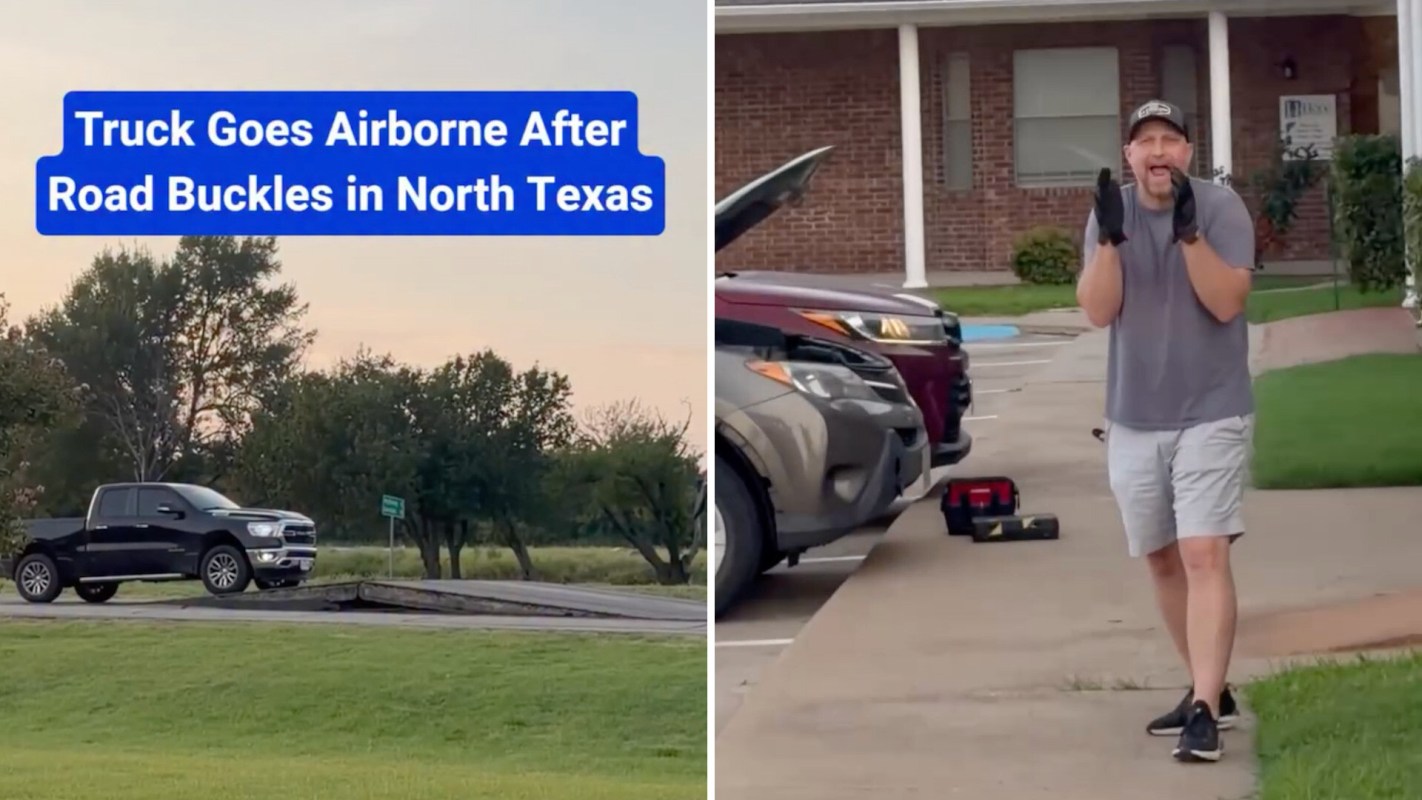
After intense summer temperatures warped the pavement in Greenville, Texas, one section of road turned into an unintended ramp, and a passing pickup popped briefly into the air.
The dramatic moment, captured on eyewitness video, showed how soaring temperatures can turn everyday infrastructure into a safety hazard in a matter of seconds.
What happened?
The Weather Channel posted eyewitness video from Joe Ramsey Boulevard in Greenville showing heat forcing part of the road upward. In the footage, a pickup crosses the bulge, leaves the pavement for a moment, and then slams back down.
The outlet described the moment this way: "Extreme summer heat caused a section of Joe Ramsey Boulevard in Greenville, Texas, to buckle, creating an unexpected ramp that sent a passing pickup truck briefly airborne."
The video also captured the stunned reaction of someone watching it happen: "Oh my God!"
Comments ranged from disbelief to dark humor. One commenter wrote, "That drive home was silent," while another added, "I swear I dream this happens to me at least once a month."
TCD Picks » Quince Spotlight
💡These best-sellers from Quince deliver affordable, sustainable luxury for all




Why does it matter?
Heat-related road buckling can create sudden hazards. Roads, bridges, and rail lines are designed to withstand a range of temperatures, but prolonged or extreme heat can cause materials to expand, soften, or crack. When that happens, an ordinary drive can quickly become dangerous.
A buckled road can damage vehicles, trigger crashes, delay emergency response, and lead to costly repairs. That can mean surprise expenses, injuries, traffic backups, and detours. It can also disrupt commuting, deliveries, and access to businesses and essential services.
Worsening extreme weather disasters threaten lives and livelihoods by putting public health, community safety, and economic stability at risk all at once. Extreme heat can increase the likelihood of heat illness, strain power grids, and damage transportation systems that people rely on to reach work, school, medical care, and shelter. When infrastructure fails, the effects extend far beyond one dramatic moment on camera.
The Greenville footage showed how quickly those risks can emerge. A road that looks normal one moment can become hazardous the next when temperatures climb high enough.
TCD Picks » Quince Spotlight
💡These best-sellers from Quince deliver affordable, sustainable luxury for all
What can I do?
For drivers, extreme heat is a road safety issue, not just a comfort issue. During heat waves, slow down, leave more following distance, and stay alert for warped pavement, tire blowouts, disabled vehicles, or crews making emergency repairs.
It is also wise to keep extra water in the car, check tire pressure regularly, and make sure coolant and air conditioning systems are working properly. High temperatures affect both roads and vehicles, increasing the chances of breakdowns in dangerous conditions.
At the community level, local agencies can reduce risk by inspecting roads during heat events, posting warnings, making rapid repairs, and investing in more heat-resilient infrastructure materials over time. While those upgrades can be expensive, they may help prevent crashes, vehicle damage, and larger disruptions later.

Get TCD's free newsletters for easy tips, smart advice, and a chance to earn $5,000 toward home upgrades. To see more stories like this one, change your Google preferences here.






