


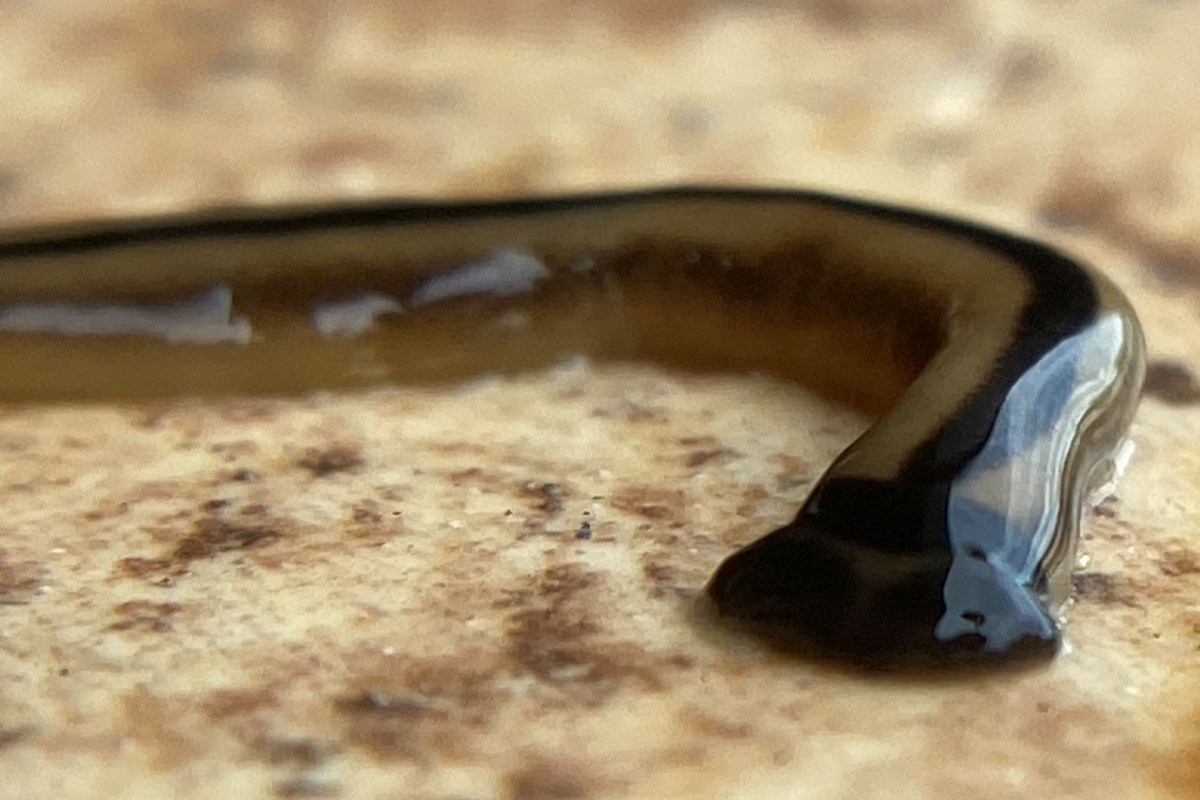
Though entomologists are rarely startled by the insects they encounter, Theresa Dellinger was recently "freaked out" when she picked up a planter in her backyard and discovered a long worm with a strange flat head.
What happened?
According to Outdoor Life, Dellinger found the worm in Montgomery County, where it was tucked into a damp, moss-covered patch under a planter in her yard. Dellinger works at Virginia Tech as a specialist in insect identification and diagnostics.
After discovering the weird worm, Dellinger did some research and found out it was called a hammerhead flatworm.
Hammerhead flatworms can reportedly stretch well beyond a foot long and, while they are native to Asia, spread to the United States a century ago.
If you come across one of these worms, known for its flat, shovel-shaped head, long body, and sometimes striking coloration, Dellinger advised against handling it with bare hands.
Though hammerhead worms do not bite or sting, Outdoor Life noted that some species carry a neurotoxin related to the one found in pufferfish, meaning they could pose a risk via cuts in the skin or bodily fluids in the eyes, nose, or mouth.
TCD Picks » Quince Spotlight
💡These best-sellers from Quince deliver affordable, sustainable luxury for all




Why does it matter?
Dellinger also warned that if you decide to kill one, it is best to avoid cutting the insect.
"If you find a hammerhead worm, don't cut it up because they can regenerate into new individuals," Dellinger said, per Outdoor Life.
Dellinger added that while the species is invasive, little is known about how it impacts native soils.
"We don't know a whole lot about hammerhead worms because there's not a lot of funding to study these things," Dellinger continued.
What can I do?
If you find a hammerhead flatworm and choose to remove it, Dellinger said the most important step is containment. She recommended placing it in a sealed container, then using the freezer, direct sunlight, salt, soapy water, or hand sanitizer to kill it.
What she does not recommend is spreading salt or pesticides broadly around a yard. Those methods can harm beneficial insects, other invertebrates, and even plants, potentially creating more problems than the worm itself.
Removing one worm may help in a particular spot, but it is unlikely to eliminate a population that is already established.

Get TCD's free newsletters for easy tips, smart advice, and a chance to earn $5,000 toward home upgrades. To see more stories like this one, change your Google preferences here.






