


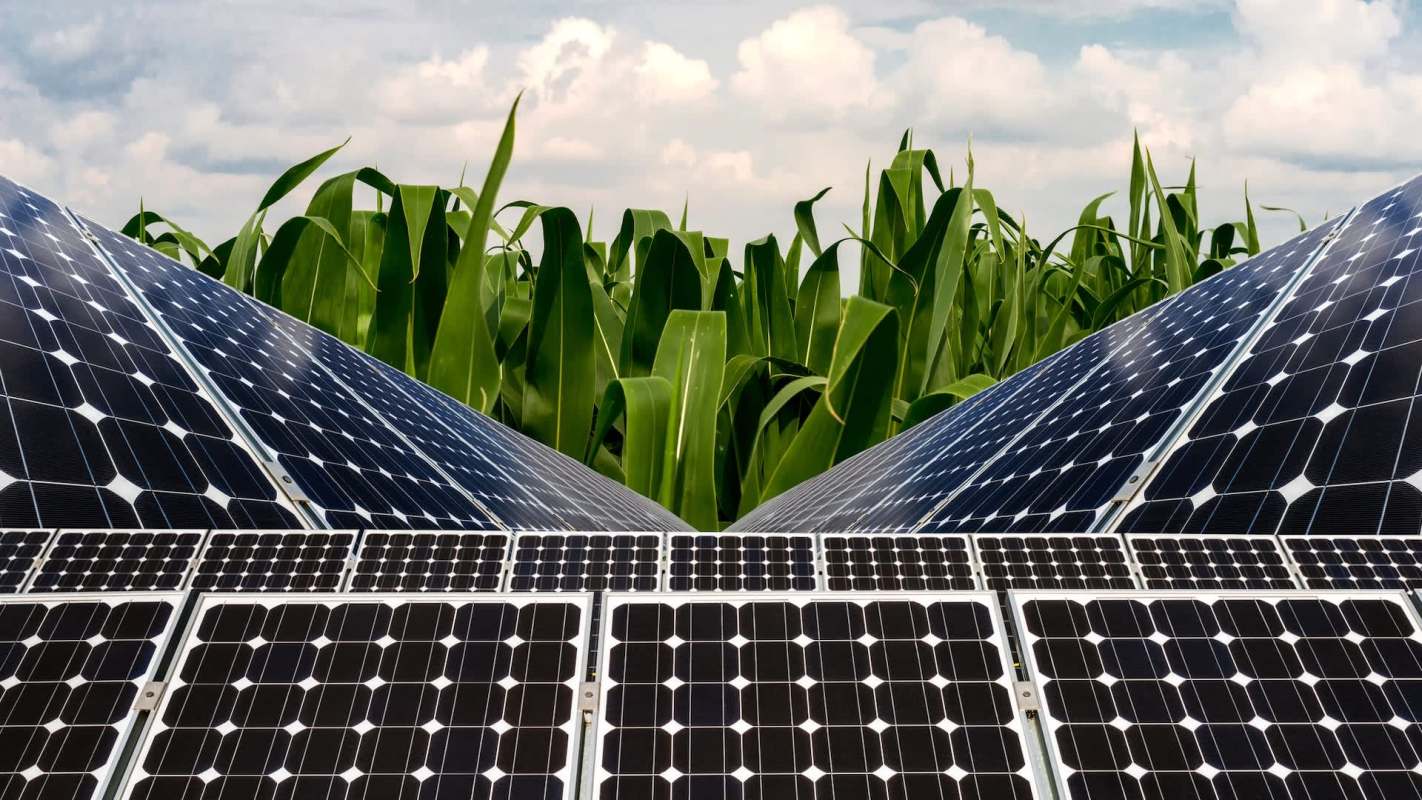
A farm in Hadley, Massachusetts, has spent the last several years successfully growing its crops underneath a solar panel array — a practice called "agrivoltaics."
John Czajkowski Farm uses 832 solar panels spaced 26 feet apart to maximize both crop growth and energy capture. And it's working.
Here's what to know
The solar panels cover 2.2 acres of farmland where Joe Czajkowski grows sweet corn, broccoli, lettuce, cilantro, and soon asparagus, according to the Daily Hampshire Gazette.
"It's worked really well for us. You shouldn't have to work too hard to convince people it's a good thing," Czajkowski told the area outlet.
Czajkowski noted that the amount of corn growing under panels comes in at around 80% of the open-field corn, but the quality is the same.
Meanwhile, the solar panels are cutting the farm's electric bills, increasing property tax revenue for the town, and helping charge an electric van that transports the produce to the University of Massachusetts.
TCD Picks » Quince Spotlight
💡These best-sellers from Quince deliver affordable, sustainable luxury for all




Other area farms are also looking into agrivoltaics as a means of efficiently doubling land to benefit food systems, bottom lines, and the environment.
What's being done?
Massachusetts State Rep. Homar Gómez, whose district includes Hadley, said he supports creating more opportunities for farms and making it easier to move solar projects forward.
Unlike solar farms that convert farmland entirely to energy production, the agrivoltaic approach keeps land in active agricultural use while adding renewable energy — eliminating the "solar vs. farmland" debate in terms of how to use limited land.
Since the panels provide shade and alter airflow, they can benefit soil moisture and temperature — a huge plus in hot and dry conditions. Keeping the land productive for food while adding such a big renewable energy force is a big win.
Where can I learn more?
The project in Hadley is part of a bigger push to pair solar with active farmland. These stories take a close look at similar dual-use efforts:
• Across vegetable farms, growers are uncovering potential in solar-shaded cropland without abandoning food production.
• Midwest farmers and developers are teaming up to grow produce beneath solar panels.
• In arid regions, solar structures help keep farmland productive while limiting pressure on scarce land.
• In New York, a farm of tomorrow model pairs solar generation with long-term land productivity.
Across these examples, solar panels show up as another working piece of farm operations.

Get TCD's free newsletters for easy tips, smart advice, and a chance to earn $5,000 toward home upgrades. To see more stories like this one, change your Google preferences here.






