


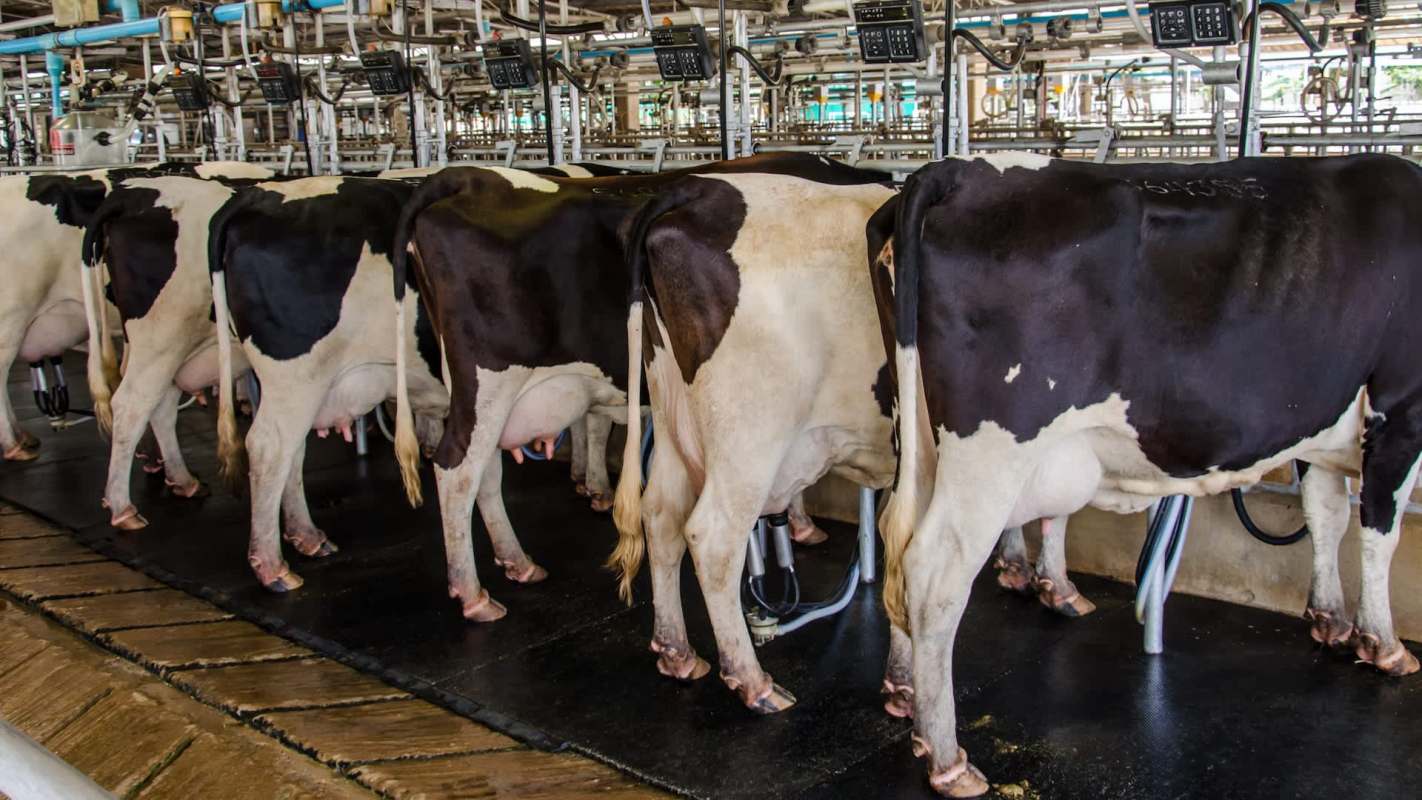
Early in 2024, H5N1 bird flu reached dairy herds in the United States and presented an unexpected pattern that left veterinarians searching for answers.
Rather than showing up mainly as a lung infection, the virus concentrated in cows' udders — and researchers now believe they understand why.
What's happening?
According to ScienceDaily, researchers at the University of Pittsburgh School of Public Health have traced the unusual spread of H5N1 in dairy cattle to the way the virus attaches to cells.
Published in Science Advances, the study offers an explanation for why infected cows developed severe mastitis — inflammation of the mammary glands — instead of the respiratory illness many scientists expected.
The outbreak began in Texas Panhandle dairy herds, where cows developed necrotizing mastitis, a painful udder condition that damages tissue. Suresh Kuchipudi, Ph.D., chair of Infectious Diseases and Microbiology at Pitt Public Health and senior author of the study, said the discovery came as a shock to experts.
"Mastitis is a classic disease in milk-production animals, and veterinarians were dutifully looking to all the usual suspects for the source, like bacterial pathogens," Kuchipudi said in a University of Pittsburgh news release. "When the real culprit turned out to be bird flu, everyone in the field was caught completely by surprise. We hadn't even remotely considered that cattle could be a host for H5N1."
TCD Picks » Quince Spotlight
💡These best-sellers from Quince deliver affordable, sustainable luxury for all




In collaboration with Lauren E. Pepi, Ph.D., a Harvard Medical School researcher focused on glycomics, the team determined that the virus binds to only one receptor subtype: N-linked sialic acid receptors. Those receptors were widespread in udder tissue but largely absent from airway tissue.
Why does it matter?
The results help explain why bird flu spread through dairy herds in 2024 without producing the clear respiratory symptoms that usually point to an influenza infection.
When a virus behaves differently in a new host species, it can delay detection and allow outbreaks to spread before farmers and veterinarians understand what they are dealing with.
Kuchipudi said, "If a cow is infected, it sheds a lot of virus into the milk." He added that this created "concerns about occupational risk for farm workers" and noted that feeding raw milk to pets has been linked to cat deaths.
Researchers say pasteurized milk remains the safer option because the process destroys the virus, while raw milk can pose health risks to both people and animals.
What's being done?
To map where the virus can attach inside cattle, the team combined binding experiments, tissue staining, and ultra-high-resolution imaging. Researchers say that the level of detail could help forecast how H5N1 might behave in other species before another unexpected outbreak.
Kuchipudi said the study shows that simply knowing a broad class of flu receptors exists in an animal is not enough.
"Glycan biology is very complex," he said, according to the release. "We realized that, to understand what was really going on, we would need to use more innovative technologies and map out the fine-detailed architecture that enables the virus to bind to cells."
Researchers said the same screening approach could help reveal vulnerable tissues in different animals and predict whether infections are likely to appear as respiratory, mammary, or even neurological disease.
That kind of targeted surveillance could help farmers, veterinarians, and public health agencies respond more quickly.
"We can preemptively screen different species and different tissues within them for susceptibility," Kuchipudi said. "The lessons learned could potentially help prevent us from being caught by surprise again."

Get TCD's free newsletters for easy tips, smart advice, and a chance to earn $5,000 toward home upgrades. To see more stories like this one, change your Google preferences here.







